

On This Day in Health: November 8, 1895
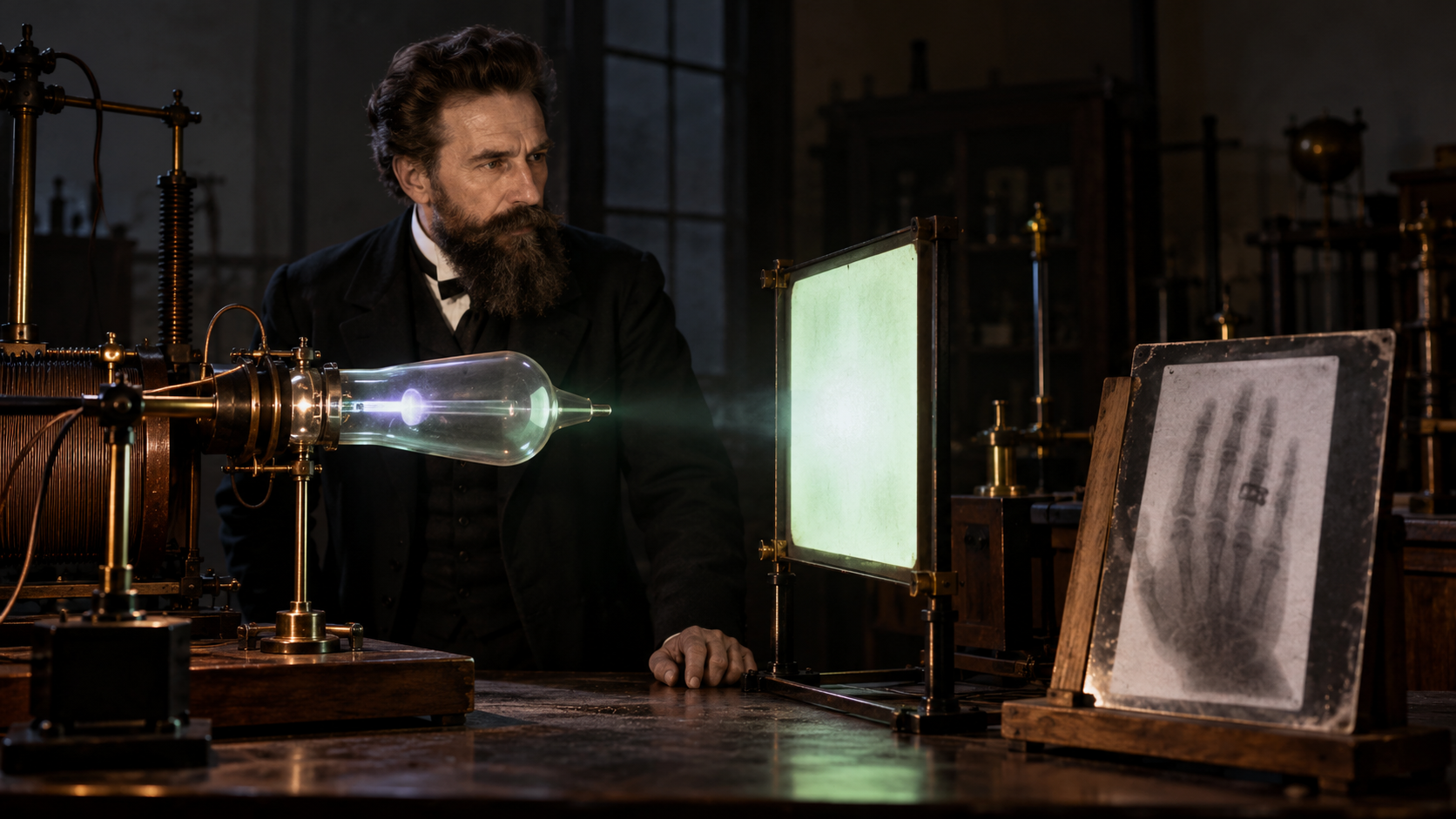
On November 8, 1895, physicist Wilhelm Conrad Rontgen noticed a fluorescent screen glowing during experiments with a covered cathode-ray tube in Wurzburg. This date matters because it fixes a broad medical story to a specific moment, place, and group of people. It also shows how health history is shaped carefully by institutions and practical choices as well as laboratory discoveries.
The background was already developing before that day. Researchers were studying electrical discharges in evacuated glass tubes and the poorly understood rays produced inside them. Rontgen darkened his laboratory and shielded the tube, then saw effects at a distance that ordinary visible light could not explain. Those conditions defined what participants could attempt and what patients or communities could reasonably expect. The available tools, social expectations, and professional structures all shaped the result. Change also depended on cooperation among people whose roles were not always recorded equally. They explain why later accounts sometimes compress years of preparation into a single anniversary. Looking at that preparation keeps credit broad and makes the turning point easier to understand without turning it into a miracle story.
What happened on the date was consequential but limited. He systematically tested the unknown rays and produced shadow images of objects and bones, including the famous image of his wife's hand. He called them X-rays and rapidly published experiments that others could reproduce. Early users did not understand ionizing-radiation injury. Long exposures and unshielded equipment caused burns, cancer, and deaths, while striking images could also be overinterpreted without clinical context. The distinction is important: the event did not instantly solve the underlying health problem, and later progress depended on follow-up research, training, policy, funding, and public trust. Contemporary evidence also helps separate what participants knew then from interpretations added after the result became famous.
Its longer legacy reaches beyond the original setting. Radiography quickly entered diagnosis, surgery, dentistry, and military medicine, and later led toward fluoroscopy, computed tomography, mammography, and image-guided treatment. Modern imaging pairs technical quality with dose reduction, shielding, trained interpretation, quality assurance, and justification for each exposure, while ultrasound and MRI offer alternatives when their strengths fit the question. Seen in context, the anniversary is useful because it connects a concrete historical episode with continuing questions about evidence, access, safety, and responsibility in health care. That connection is stronger when the people affected, the limits of the achievement, and the work still unfinished remain part of the account.
He systematically tested the unknown rays and produced shadow images of objects and bones, including the famous image of his wife's hand. He called them X-rays and rapidly published experiments that others could reproduce.
Early users did not understand ionizing-radiation injury. Long exposures and unshielded equipment caused burns, cancer, and deaths, while striking images could also be overinterpreted without clinical context.
Radiography quickly entered diagnosis, surgery, dentistry, and military medicine, and later led toward fluoroscopy, computed tomography, mammography, and image-guided treatment.
Researchers were studying electrical discharges in evacuated glass tubes and the poorly understood rays produced inside them. Rontgen darkened his laboratory and shielded the tube, then saw effects at a distance that ordinary visible light could not explain.
physicist Wilhelm Conrad Rontgen noticed a fluorescent screen glowing during experiments with a covered cathode-ray tube in Wurzburg.
Modern imaging pairs technical quality with dose reduction, shielding, trained interpretation, quality assurance, and justification for each exposure, while ultrasound and MRI offer alternatives when their strengths fit the question.
Explore more of "On This Day ..."
Discover more events from the same date across news, politics, technology, sports, and other fields. Each link highlights significant moments that shaped history on different fronts.