

On This Day in Health: December 11, 1876
On December 11, 1876, Gaston Labat was born in the Seychelles and later became an influential physician and teacher of regional anesthesia in France and the United States. This anniversary fixes a broad health story to a specific moment, place, and group of people. It also shows that medical change grows from observation, institutions, practical tools, and sustained cooperation rather than from one dramatic act alone.
The background was already developing before that day. Local anesthetics created the possibility of blocking pain without general anesthesia, but clinicians needed reliable anatomy, needles, positioning, and dose guidance to reach nerves safely. Those conditions shaped what clinicians, researchers, patients, and communities could attempt and what they could reasonably expect. The available evidence, technology, professional rules, and social assumptions all affected the result. Many contributors worked outside the part of the story that was later celebrated. Patients and families also supplied observations, accepted risks, and lived with consequences that formal histories often reduced to a few technical lines. Looking at that preparation keeps credit broad and prevents a complex change from becoming a simple hero story.
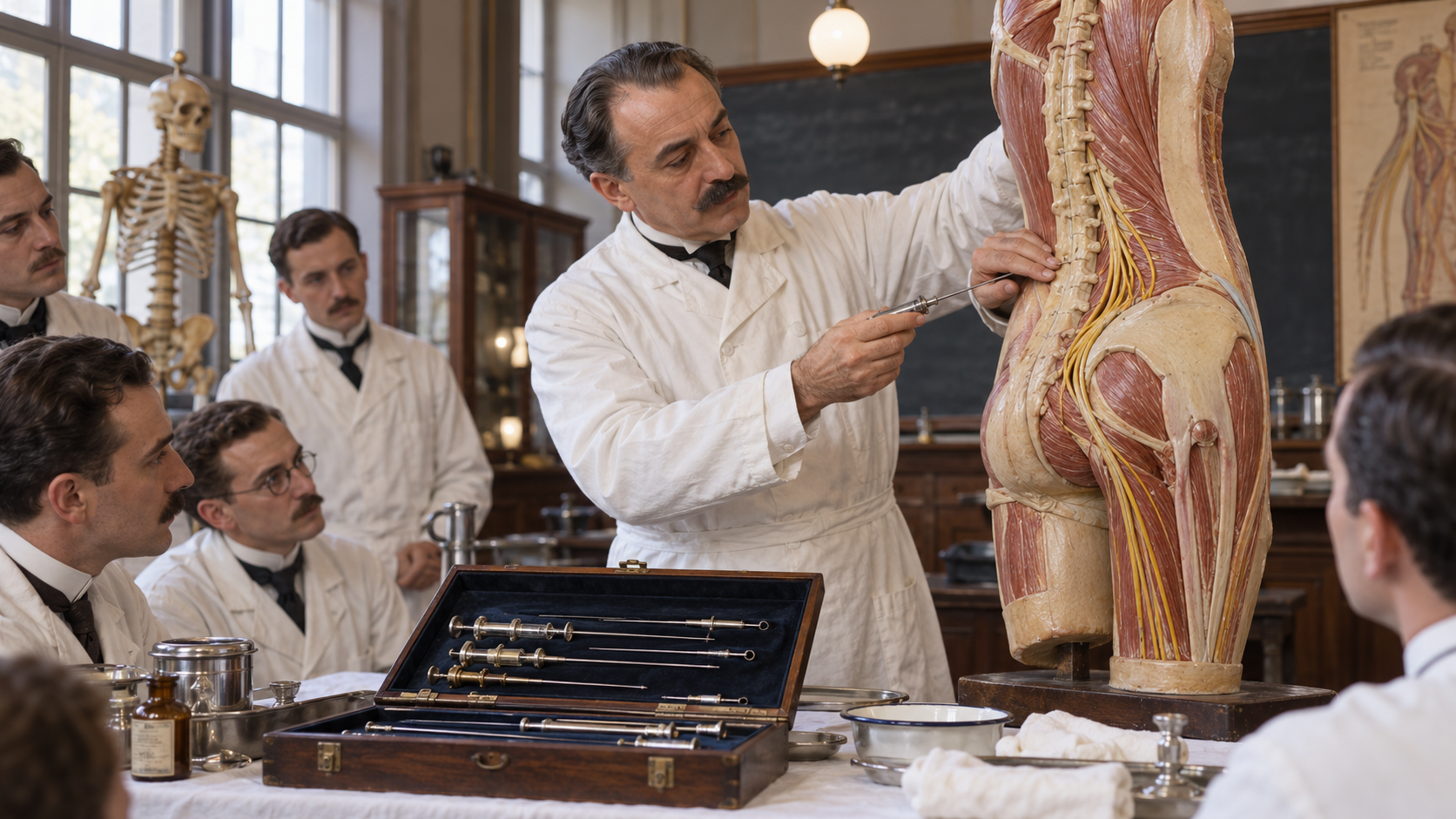
What happened on the date was consequential but limited. Labat organized practical approaches to spinal and peripheral nerve blocks, designed equipment, and published a major textbook that helped clinicians reproduce techniques systematically. Early practice lacked ultrasound guidance, modern sterile supplies, lipid rescue, detailed pharmacology, and consistent monitoring. Blocks could fail or cause nerve, vascular, infectious, or toxic complications. The distinction matters because the event did not instantly solve the underlying health problem. Later progress depended on replication, training, regulation, funding, safer equipment, and public trust. Different hospitals and communities could adopt the advance at very different speeds, especially when cost, infrastructure, or social exclusion limited access. Contemporary records also help separate what participants knew at the time from interpretations added after the result became famous.
Its longer legacy reaches beyond the original setting. His work helped regional anesthesia become a teachable discipline used for surgery, obstetrics, trauma, and pain control rather than an isolated technical trick. Ultrasound and nerve stimulation now improve targeting, but success still depends on anatomy, drug limits, consent, monitoring, and plans for local-anesthetic toxicity. Seen in context, the anniversary connects a concrete historical episode with continuing questions about evidence, access, safety, and responsibility in health care. That connection is strongest when the people affected, the limits of the achievement, and the work still unfinished remain part of the account.
Labat organized practical approaches to spinal and peripheral nerve blocks, designed equipment, and published a major textbook that helped clinicians reproduce techniques systematically.
Early practice lacked ultrasound guidance, modern sterile supplies, lipid rescue, detailed pharmacology, and consistent monitoring. Blocks could fail or cause nerve, vascular, infectious, or toxic complications.
His work helped regional anesthesia become a teachable discipline used for surgery, obstetrics, trauma, and pain control rather than an isolated technical trick.
Local anesthetics created the possibility of blocking pain without general anesthesia, but clinicians needed reliable anatomy, needles, positioning, and dose guidance to reach nerves safely.
Gaston Labat was born in the Seychelles and later became an influential physician and teacher of regional anesthesia in France and the United States.
Ultrasound and nerve stimulation now improve targeting, but success still depends on anatomy, drug limits, consent, monitoring, and plans for local-anesthetic toxicity.
Explore more of "On This Day ..."
Discover more events from the same date across news, politics, technology, sports, and other fields. Each link highlights significant moments that shaped history on different fronts.