

On This Day in Life: January 1, 1892
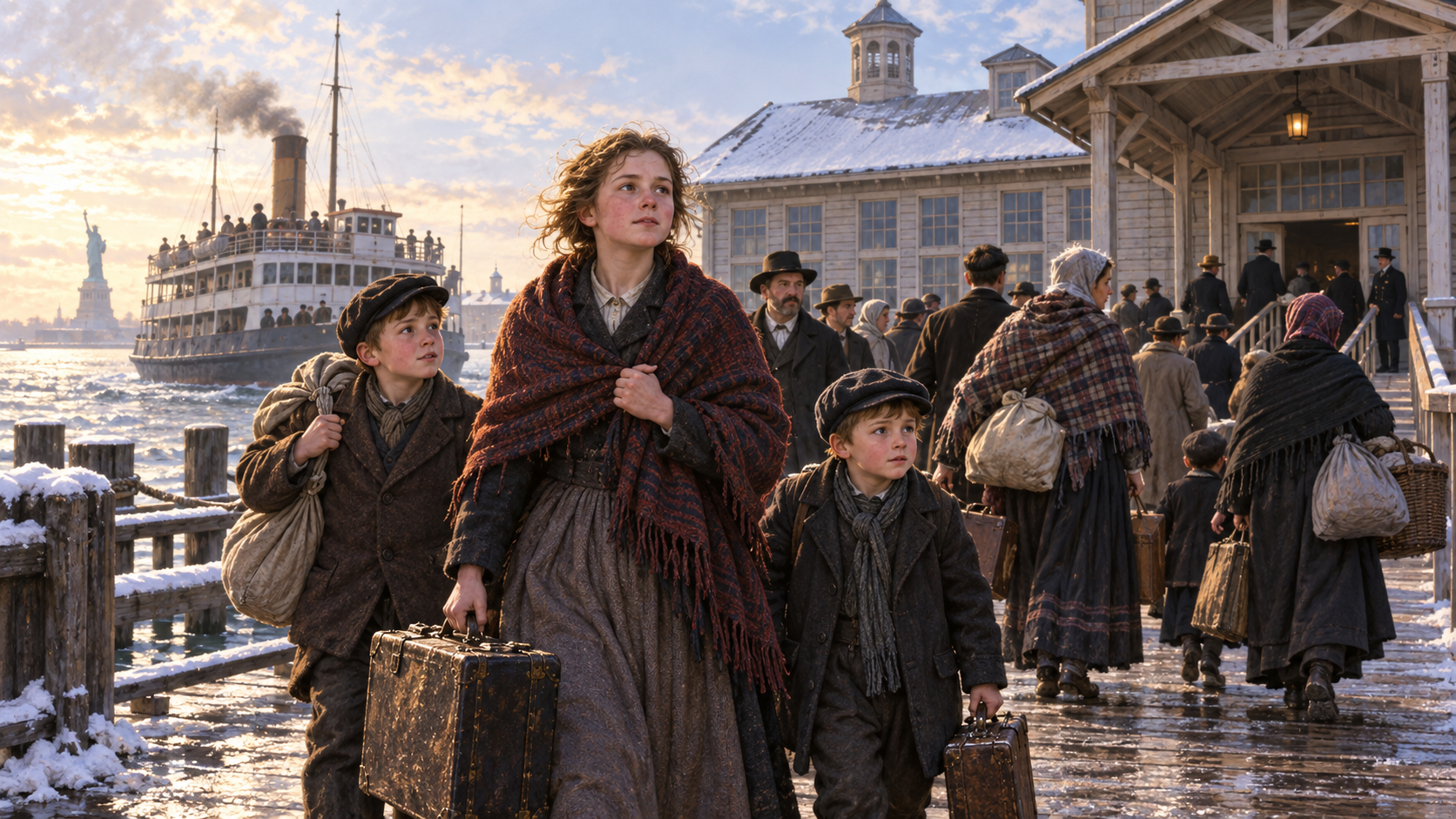
On January 1, 1892, Ellis Island opened as the United States’ first federal immigration station. A steamship carried the day’s first group from ships anchored in New York Harbor to the island’s new wooden processing building. The first immigrant registered there was Annie Moore, a 17-year-old from County Cork, Ireland, who arrived with her younger brothers Anthony and Philip to join their parents in New York. Officials presented her with a gold coin to mark the occasion. Her brief welcome became the human symbol of a much larger federal system that would examine, question, admit, detain, or exclude millions of people arriving at one of the nation’s busiest gateways.
Ellis Island opened during a major shift in American immigration policy. For much of the nineteenth century, states and local authorities handled arriving passengers; New York’s principal station had been Castle Garden in lower Manhattan. Congress took direct federal control in 1890 as immigration increased and national restrictions grew. The island was expanded with landfill, and a station large enough to process shiploads of steerage passengers was constructed. First- and second-class travelers usually received a cursory inspection aboard their ships, while steerage passengers were ferried to Ellis Island. The system reflected both an administrative need to manage volume and a political desire to decide more systematically who could enter.
For most arrivals, inspection was demanding but short. Doctors watched people climb the stairs for signs of physical difficulty, then conducted medical checks; inspectors asked about identity, occupation, money, destination, and family contacts. Shipping manifests supplied the official names against which passengers were checked, undermining the later myth that clerks routinely renamed immigrants at the island. Most passed through within several hours. A minority were held for additional medical or legal review, sometimes for days or weeks, and some were sent back. Families could be separated by illness or adverse decisions, giving the station its reputation as both an island of hope and an island of tears.
The original wooden complex burned in 1897 without loss of life, and a fireproof main building opened in 1900. By the time the station closed in 1954, more than 12 million immigrants had been processed on Ellis Island, with peak years in the early twentieth century. Their settlement reshaped American neighborhoods, workplaces, food, language, religion, and family life, even as nativism and restrictive laws narrowed the gateway after World War I. Restored as part of a national monument, the main building now houses the National Museum of Immigration. The opening day endures because it connects a vast demographic transformation to individual journeys like Annie Moore’s—a teenager stepping ashore with two brothers on a cold New Year’s Day.
The federal government assumed control of immigration processing in 1890, replacing New York’s state-run Castle Garden station. Ellis Island was enlarged and equipped to handle growing passenger traffic in the harbor.
Ocean liners separated passengers by ticket class. Steerage travelers, who made up most immigrants, were transferred by ferry for the fuller medical and legal inspection conducted on the island.
Annie Moore’s selection as the first registered arrival gave officials a ceremonial opening-day story. Her family’s plan—to reunite with parents already in New York—was common among newcomers building chains of migration.
Admission was never guaranteed, but rejection was not the usual result. Most travelers completed processing in hours; detention and exclusion fell on a much smaller share facing medical, legal, or financial concerns.
The station’s records now help descendants reconstruct family histories, while the preserved buildings make immigration bureaucracy tangible. Both the welcome and the anxiety of arrival remain central to its public memory.
Ellis Island tells only part of U.S. immigration history. Many people entered through other ports or land borders, and Asian immigrants often encountered a different federal system at Angel Island in San Francisco Bay.
Explore more of "On This Day ..."
Discover more events from the same date across news, politics, technology, sports, and other fields. Each link highlights significant moments that shaped history on different fronts.