

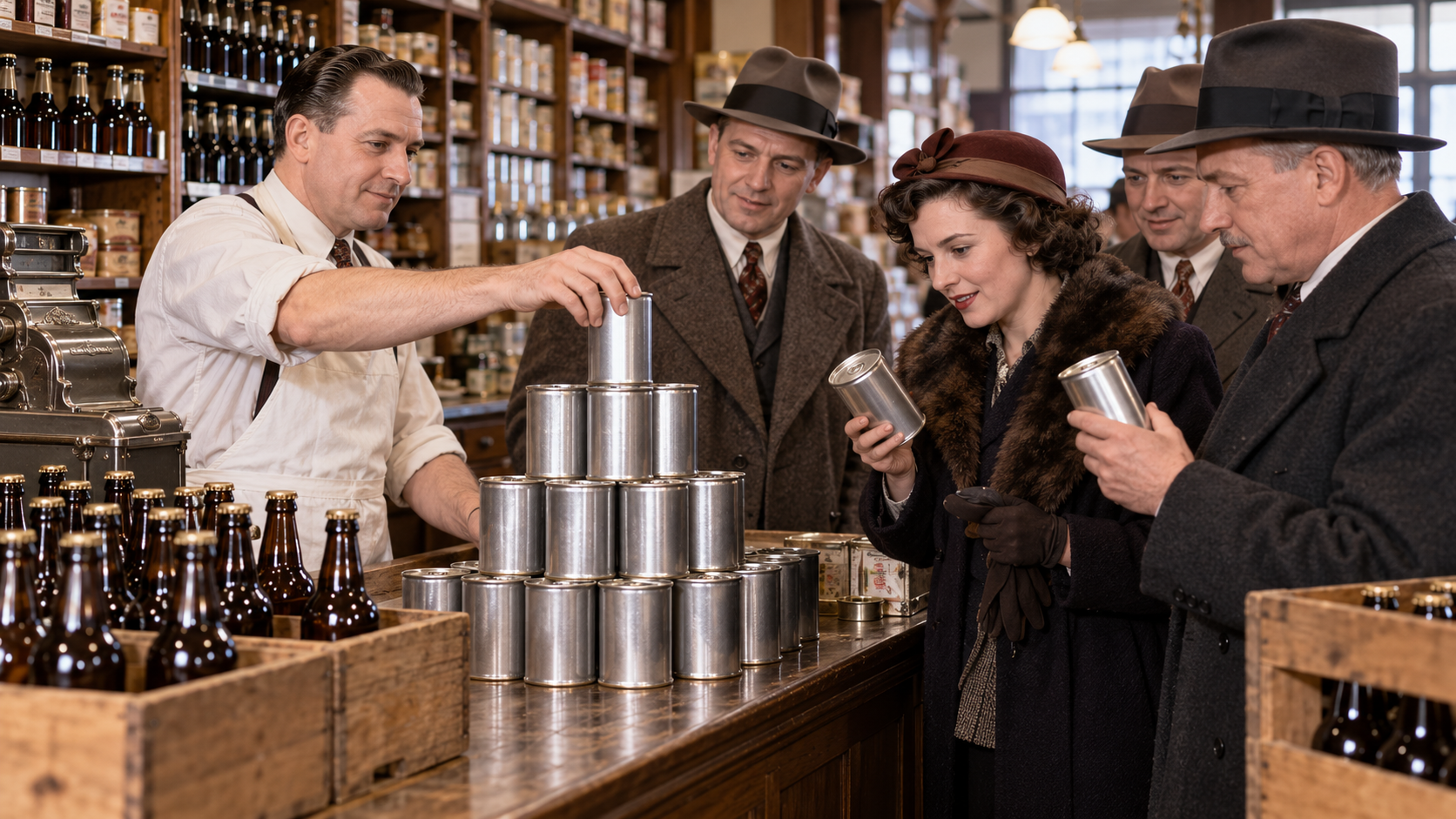
On This Day in Lifestyles: January 24, 1935
On January 24, 1935, customers in Richmond, Virginia, could buy Krueger’s beer in cans, marking the first commercially successful sale of canned beer. The Gottfried Krueger Brewing Company introduced its Cream Ale and Finest Beer in a sturdy steel package developed with the American Can Company. The experiment followed years of engineering work to create a container strong enough to withstand carbonation without affecting flavor or bursting. A familiar drink had entered a new kind of package, beginning a shift that would reach grocery shelves, picnics, refrigerators, and backyard gatherings.
Before cans, beer generally traveled in glass bottles or reusable kegs. Bottles were heavy, breakable, and expensive to ship, while breweries had to manage deposits and returned containers. The early beer can was not delicate—it required a separate opener to punch holes in its flat top—but it stacked efficiently and did not shatter. Lighter shipping loads gave breweries access to markets farther from their plants. For shoppers, cans were easy to chill, carry, and store, making beer more convenient for travel and informal entertaining.
Krueger did not begin in its nearby New Jersey market. It tested the cans in Richmond, where a poor reception would be less damaging to the brand. The response was positive, and other breweries quickly adopted the format. Packaging styles evolved from flat tops to cone tops and, decades later, pull tabs and stay-tabs. Aluminum eventually replaced much of the heavier steel. Each change reduced effort for consumers and helped turn the drink container into an object of design, marketing, and collecting as well as a practical vessel.
The 1935 launch also foreshadowed a wider transformation in consumer life. Durable, portable packaging supported supermarkets, long-distance distribution, outdoor recreation, and the growing habit of buying drinks for home use. It also created a lasting environmental challenge: single-use containers demanded new systems for litter control and recycling. Modern cans are lighter and widely recoverable, but their convenience still carries a responsibility to collect and reuse materials. On this day, an ordinary package helped reshape how beverages moved from factory to table—and how consumers thought about portability, branding, and waste. Cans also changed what a beverage label could do. A printed metal surface traveled with the product, carrying color, type, and brand recognition into homes and public spaces. Package design became part of the drinking experience, while collectors later preserved cans as small records of local breweries, changing tastes, and graphic style.
Beer packaging had to contain significant internal pressure without leaking, bursting, or changing the drink's taste.
The American Can Company developed a strong lined steel container before Krueger agreed to a commercial test.
Cans stacked easily, avoided broken glass, and cost less to transport than returnable bottles.
Those advantages made packaged beer practical for home refrigerators, travel, picnics, and a wider retail market.
Early flat-top steel cans needed a separate opener; later designs introduced pull tabs, stay-tabs, and lighter aluminum.
The same convenience that encouraged single-use packaging also made collection and recycling an important part of consumer life.
Explore more of “This Day in Lifestyles”
Discover more moments in everyday life, design, education, travel, food, fashion, and culture. Each story connects a calendar date with an event that changed how people lived.