

On This Day in Lifestyles: February 5, 1919
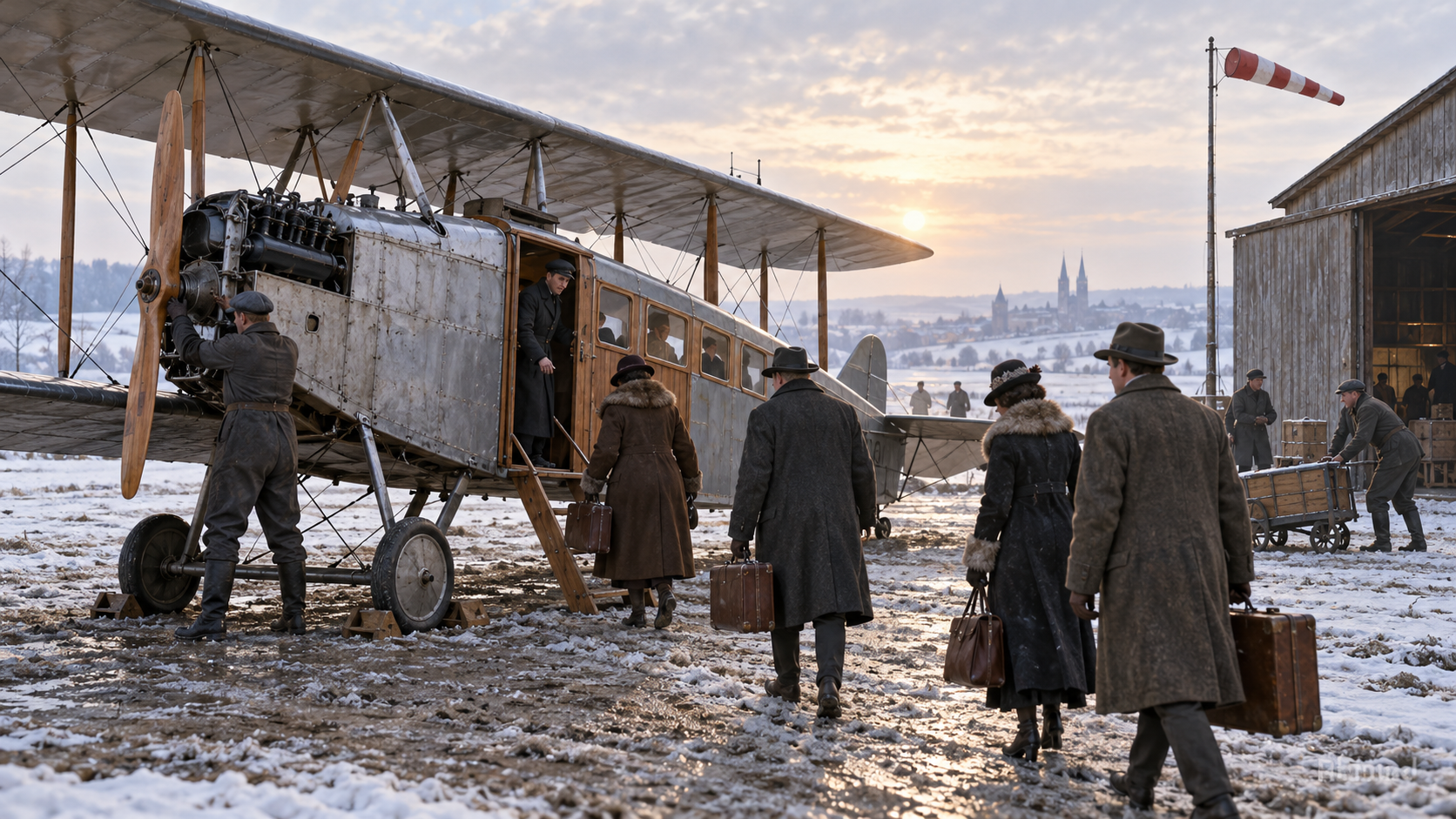
On February 5, 1919, Deutsche Luft-Reederei began a scheduled daily service between Berlin and Weimar. The route is widely remembered as the first sustained daily passenger airline operation. Travelers climbed into converted wartime aircraft that were noisy, cold, and modest by later standards, but the timetable itself was revolutionary: flight was becoming a service people could plan around. What happened that day brought a long-developing idea into public view. The headline was important, but so was the experience around it: people could finally enter, read, watch, use, or discuss a change that previously belonged mostly to plans and specialists.
The First World War had accelerated aircraft design, pilot training, navigation, and manufacturing. Peace left governments and companies searching for civilian uses for those capabilities. Weimar was especially important because Germany’s new National Assembly was meeting there, creating demand for fast movement of officials, documents, and news between the political center and Berlin. Aviation answered a practical need while demonstrating commercial promise. The background reveals how social need, technology, commerce, and imagination had gradually converged. No milestone appears from nowhere; it depends on earlier experiments, patient labor, institutions willing to invest, and audiences prepared to make the new development meaningful.
Early passengers encountered travel very different from the sealed cabins and polished terminals of later decades. Weather could disrupt schedules, luggage was limited, and ground facilities were simple. Yet regularity changed public imagination. An airplane no longer had to be only a military machine or exhibition attraction; it could connect cities according to a published routine and compress a journey that otherwise required hours on rails. Contemporaries experienced both promise and friction. New systems rarely fit existing routines perfectly, so users and organizers learned through practice. Publicity amplified the breakthrough, but personal encounters—curiosity, inconvenience, pride, resistance, or delight—gave it emotional force.
The route helped establish expectations that still define airline life: booking a place, arriving at an airfield, trusting a timetable, and measuring distance in hours rather than days. Commercial aviation would expand unevenly and at great environmental cost, but it reshaped tourism, business, migration, and family relationships. The 1919 service marks an early step from extraordinary flight toward ordinary mobility. The anniversary endures because the underlying questions remain current. Who gets to participate, what values a system expresses, and how change reshapes relationships are not settled once. The historical moment offers a clear starting point for understanding choices still visible today. The anniversary also reminds us that everyday life is where large historical forces become personal, repeated, debated, and ultimately durable.
Deutsche Luft-Reederei started sustained daily passenger service between Berlin and Weimar.
This detail helps place the anniversary in its original setting.
Germany’s National Assembly was meeting in Weimar, creating demand for faster movement of people, documents, and news.
The wider context explains why the moment drew public attention.
Converted aircraft were noisy and exposed to weather, with simple ground facilities and far fewer comforts than later airliners.
Its legacy remains visible in contemporary culture and everyday life.
Explore more of “This Day in Lifestyles”
Discover more moments in everyday life, design, education, travel, food, fashion, and culture. Each story connects a calendar date with an event that changed how people lived.