

On This Day in Lifestyles: February 24, 1938
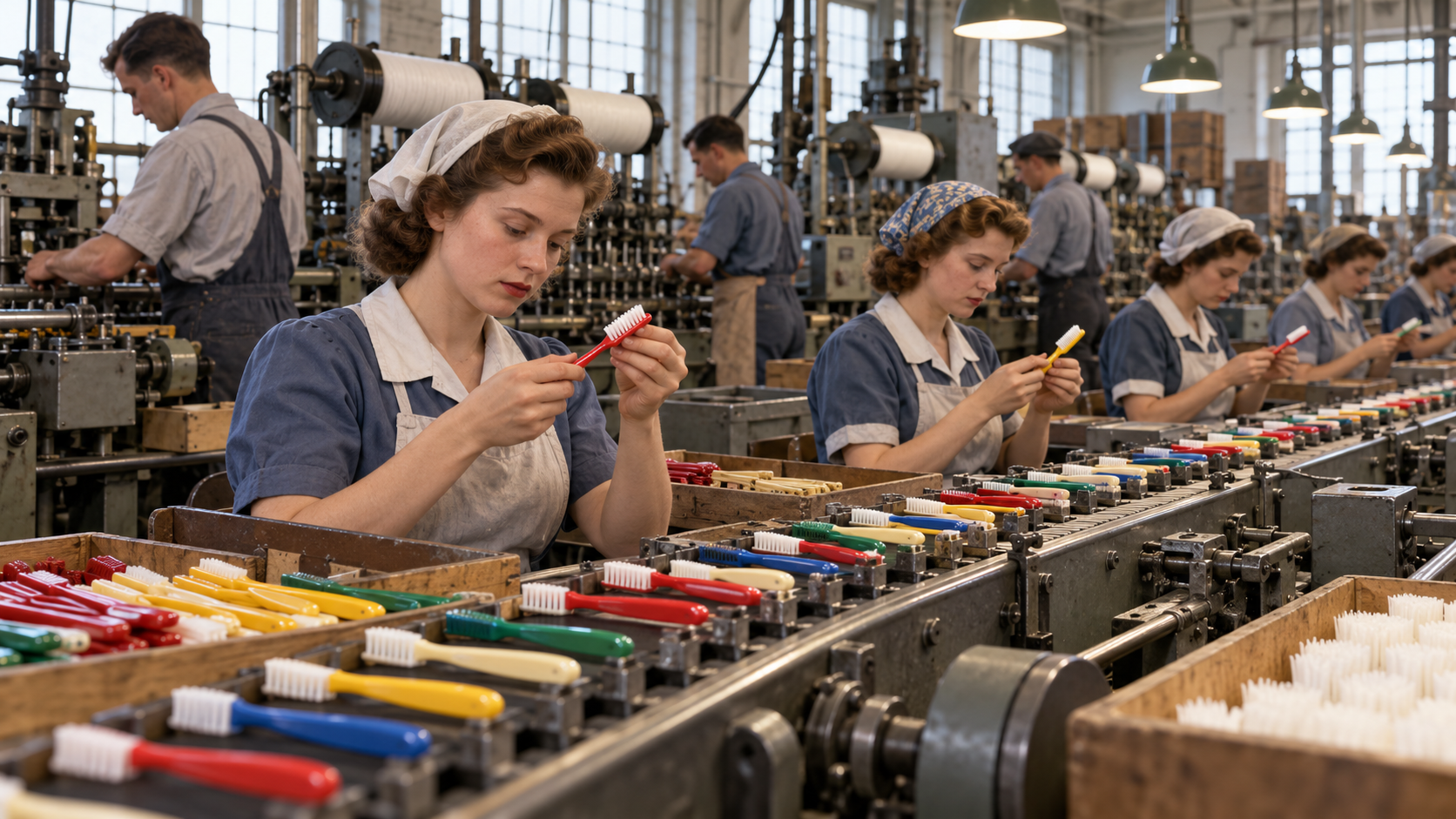
On February 24, 1938, DuPont began commercial production of nylon-bristle toothbrushes, among the first widely marketed consumer uses of the new synthetic fiber. Bristles that had traditionally come from animal hair could now be manufactured with more uniform properties. A small bathroom object introduced households to a material that would soon appear in clothing, wartime equipment, furnishings, and countless products. The occasion became memorable because a large historical shift took a form people could see and feel. It joined public significance with an ordinary action, turning an abstract change into a shared experience that could be described at dinner tables and remembered later.
DuPont chemist Wallace Carothers and his research team had developed nylon through years of polymer experiments. The company promoted the fiber as a triumph of modern chemistry, while toothbrush manufacturer Dr. West’s incorporated it into a new design. The product arrived before nylon stockings, giving consumers an early tactile encounter with synthetic material through a repetitive and intimate routine. Seen against its background, the moment was the product of sustained work rather than sudden inspiration. Earlier advocates, craftspeople, researchers, performers, organizers, or users supplied the knowledge and pressure that allowed the event to happen when it did.
The new bristles promised consistency and resistance to moisture, although early versions could be stiff by modern standards. Packaging and advertising connected scientific innovation with cleanliness, efficiency, and modern living. The toothbrush also showed how industrial research reached the home: an abstract chain of molecules became something held twice a day, purchased at a drugstore, and judged by comfort and durability. Its first effects unfolded through details: schedules, rooms, tools, printed pages, broadcasts, conversation, and the movement of bodies through new routines. Those details show how history enters life—not as a slogan, but as hundreds of small adjustments made by real people.
Synthetic bristles eventually became standard, while toothbrush shapes, softness, electric motion, and dental guidance continued to evolve. Nylon’s success also contributed to a plastics economy that now faces serious waste and environmental challenges, especially for mixed-material objects that are difficult to recycle. The 1938 production milestone captures both sides of consumer innovation: improved performance and a material legacy that demands responsible design. Later generations inherited both the achievement and its unresolved tensions. The event helped establish a durable practice or institution, yet its meaning continues to evolve as society asks harder questions about inclusion, power, environmental cost, memory, and cultural ownership. The anniversary also reminds us that everyday life is where large historical forces become personal, repeated, debated, and ultimately durable.
Manufacturers replaced traditional animal-hair bristles with uniform synthetic nylon fibers.
This detail helps place the anniversary in its original setting.
The toothbrush became one of the first everyday consumer products to introduce nylon to the public.
The wider context explains why the moment drew public attention.
Synthetic bristles improved consistency but became part of a plastics waste stream that is hard to recycle.
Its legacy remains visible in contemporary culture and everyday life.
Explore more of “This Day in Lifestyles”
Discover more moments in everyday life, design, education, travel, food, fashion, and culture. Each story connects a calendar date with an event that changed how people lived.