

On This Day in Lifestyles: March 12, 1912
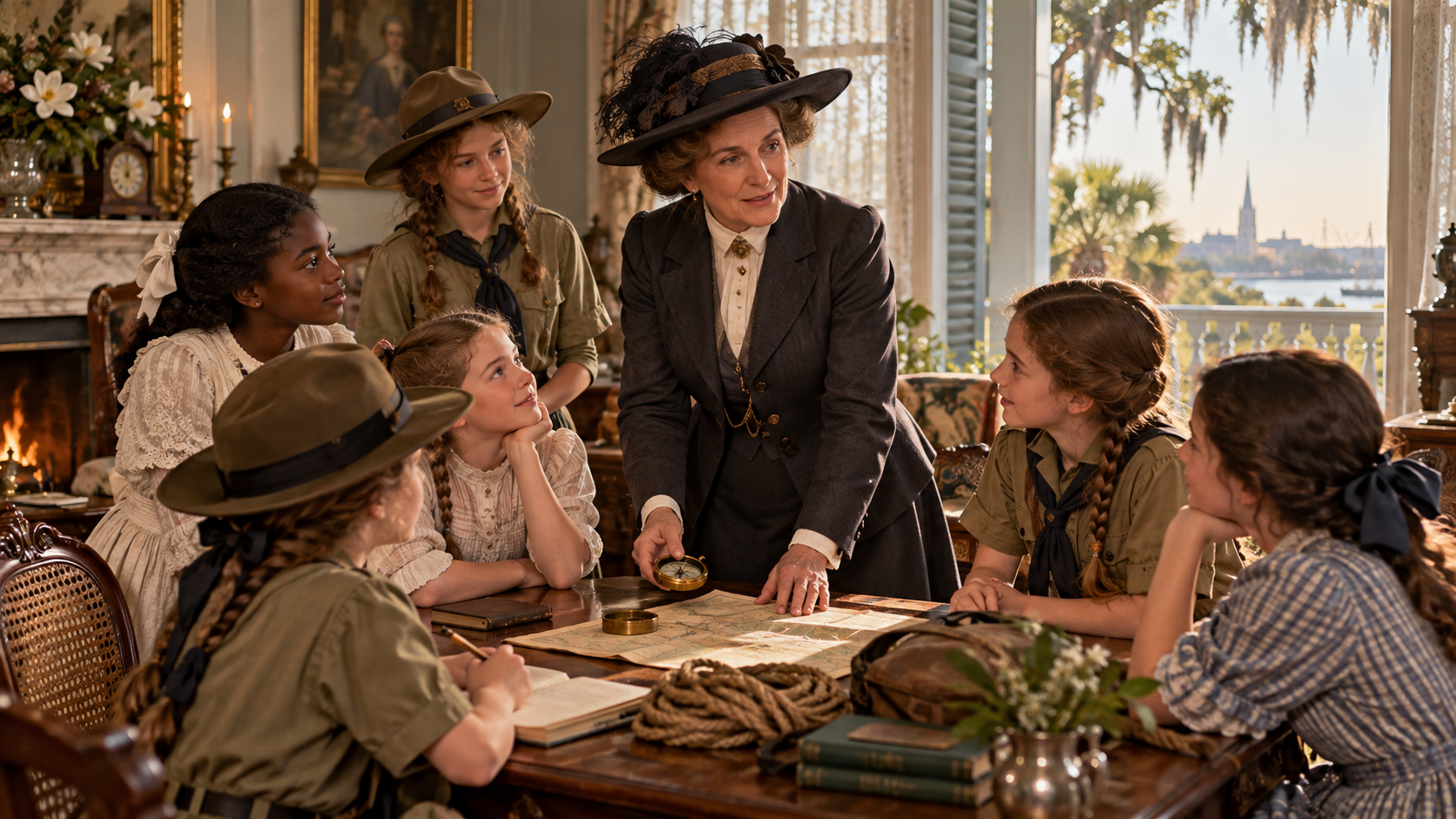
On March 12, 1912, Juliette Gordon Low gathered eighteen girls in Savannah, Georgia, to organize the first American Girl Guide troop, soon known as Girl Scouts. Drawing on the international scouting movement, she envisioned an organization where girls could learn outdoor, practical, creative, civic, and leadership skills together. The date matters in lifestyle history because girls gained organized space to practice independence, skill, service, and leadership. Rather than remaining an isolated announcement or demonstration, the moment gave people a new way to think about meeting in troops, earning badges, camping, volunteering, selling cookies, and learning by doing. Its importance became visible through familiar places, objects, and routines, where a broad historical change could be felt at human scale.
The early program challenged narrow expectations by encouraging hiking, camping, signaling, first aid, athletics, nature study, and public service. Uniforms and patrols created a shared identity, while adult volunteers adapted activities to local communities. The setting shaped how contemporaries understood the event. girls, troop leaders, families, volunteers, community partners, campers, and alumni encountered it through troop meetings, handbooks, camps, badges, service projects, neighborhood sales, and national programs. Those details show that social change usually travels through ordinary systems such as workplaces, schools, shops, homes, streets, or public institutions. What seems inevitable in hindsight depended on people testing, organizing, purchasing, teaching, maintaining, or protecting the idea in real time.
Meetings and camps gave generations of girls space to build friendships, take responsibility, practice cooperation, and attempt tasks that schools or families did not always offer. Cookie sales later became a distinctive lesson in planning, public speaking, budgeting, teamwork, and fundraising. In daily life, members planned activities, shared responsibility, practiced new skills, and carried service projects into their communities. The episode also exposed questions about changing gender expectations, affordability, accessibility, representation, safety, and the need to update traditions. Access and influence were never perfectly even, and later generations adapted the original development to different communities, values, and technologies. Still, the event changed expectations by making belonging and confidence built through practical experience easier to imagine, recognize, or demand.
Girl Scouts grew into a national organization whose badges and programs changed with technology, careers, community needs, and ideas about inclusion. Its history also reflects continuing work to make youth organizations accessible and representative. Today, echoes remain in troops, camps, STEM programs, outdoor education, community service, entrepreneurship, and lifelong alumni networks. Looking back helps separate the documented milestone from the myths that often accumulate around famous anniversaries. It also reminds us that lifestyle history is built from choices about design, health, work, leisure, communication, memory, and public space. On this day, the Savannah meeting began a durable structure for girls to learn by acting together.
Juliette Gordon Low gathered eighteen girls in Savannah, Georgia, to organize the first American Girl Guide troop, soon known as Girl Scouts. Drawing on the international scouting movement, she envisioned an organization where girls could learn outdoor, practical, creative, civic, and leadership skills together.
The early program challenged narrow expectations by encouraging hiking, camping, signaling, first aid, athletics, nature study, and public service. Uniforms and patrols created a shared identity, while adult volunteers adapted activities to local communities.
Meetings and camps gave generations of girls space to build friendships, take responsibility, practice cooperation, and attempt tasks that schools or families did not always offer. Cookie sales later became a distinctive lesson in planning, public speaking, budgeting, teamwork, and fundraising.
The larger theme was that girls gained organized space to practice independence, skill, service, and leadership.
Girl Scouts grew into a national organization whose badges and programs changed with technology, careers, community needs, and ideas about inclusion. Its history also reflects continuing work to make youth organizations accessible and representative.
Today the story remains visible in troops, camps, STEM programs, outdoor education, community service, entrepreneurship, and lifelong alumni networks.
Explore more of “This Day in Lifestyles”
Discover more moments in everyday life, design, education, travel, food, fashion, and culture. Each story connects a calendar date with an event that changed how people lived.