

On This Day in Lifestyles: March 17, 1762
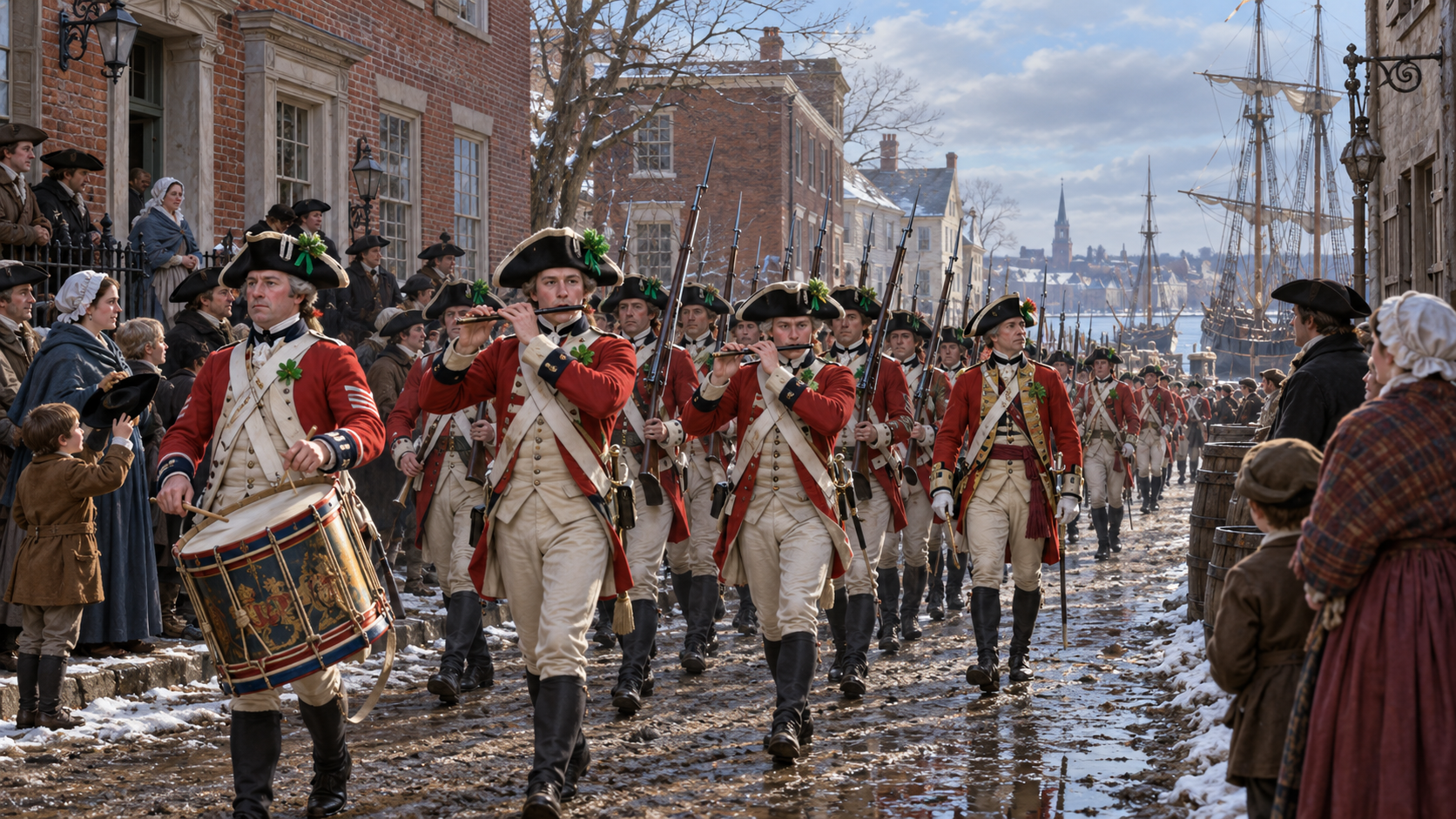
On March 17, 1762, Irish soldiers serving with the British army held an early St. Patrick’s Day march in colonial New York. Later institutions would shape the event into the enormous annual parade known today, and sources distinguish this informal 1762 gathering from more formally documented celebrations in subsequent years. The date matters in lifestyle history because a modest immigrant gathering developed into a major public expression of identity. Rather than remaining an isolated announcement or demonstration, the moment gave people a new way to think about marching, making music, gathering with community, remembering home, and claiming visibility in a city. Its importance became visible through familiar places, objects, and routines, where a broad historical change could be felt at human scale.
For immigrants and soldiers far from home, the feast day offered religious, social, and cultural connection. Music, marching, tavern gatherings, green ribbons, and mutual-aid networks allowed Irish identity to appear publicly within a city still governed as a British colony. The setting shaped how contemporaries understood the event. Irish soldiers, immigrants, clergy, musicians, neighborhood associations, spectators, workers, and later generations encountered it through military units, churches, taverns, benevolent societies, streets, newspapers, parades, and family tradition. Those details show that social change usually travels through ordinary systems such as workplaces, schools, shops, homes, streets, or public institutions. What seems inevitable in hindsight depended on people testing, organizing, purchasing, teaching, maintaining, or protecting the idea in real time.
As Irish migration expanded, St. Patrick’s Day processions became occasions for community pride, political visibility, neighborhood association, and sometimes conflict over belonging. The celebration’s symbols changed across centuries, and modern Irish tricolors did not belong to the colonial event. In daily life, communities used an annual date to renew ties, display culture, organize support, and negotiate their place in public life. The episode also exposed questions about assimilation and difference, religious divisions, stereotyping, commercialization, parade governance, and historical mythmaking. Access and influence were never perfectly even, and later generations adapted the original development to different communities, values, and technologies. Still, the event changed expectations by making continuity and public belonging for an immigrant community easier to imagine, recognize, or demand.
New York’s parade became one of the oldest and largest St. Patrick’s Day traditions in the world. Its long history reveals how immigrant festivals move from small community observances into civic spectacles shaped by religion, politics, commerce, and tourism. Today, echoes remain in parades, music, family gatherings, religious observance, cultural festivals, and global celebrations of Irish heritage. Looking back helps separate the documented milestone from the myths that often accumulate around famous anniversaries. It also reminds us that lifestyle history is built from choices about design, health, work, leisure, communication, memory, and public space. On this day, the 1762 march points to the small beginnings beneath a very large tradition.
Irish soldiers serving with the British army held an early St. Patrick’s Day march in colonial New York. Later institutions would shape the event into the enormous annual parade known today, and sources distinguish this informal 1762 gathering from more formally documented celebrations in subsequent years.
For immigrants and soldiers far from home, the feast day offered religious, social, and cultural connection. Music, marching, tavern gatherings, green ribbons, and mutual-aid networks allowed Irish identity to appear publicly within a city still governed as a British colony.
As Irish migration expanded, St. Patrick’s Day processions became occasions for community pride, political visibility, neighborhood association, and sometimes conflict over belonging. The celebration’s symbols changed across centuries, and modern Irish tricolors did not belong to the colonial event.
The larger theme was that a modest immigrant gathering developed into a major public expression of identity.
New York’s parade became one of the oldest and largest St. Patrick’s Day traditions in the world. Its long history reveals how immigrant festivals move from small community observances into civic spectacles shaped by religion, politics, commerce, and tourism.
Today the story remains visible in parades, music, family gatherings, religious observance, cultural festivals, and global celebrations of Irish heritage.
Explore more of “This Day in Lifestyles”
Discover more moments in everyday life, design, education, travel, food, fashion, and culture. Each story connects a calendar date with an event that changed how people lived.