

On This Day in Lifestyles: March 27, 1912
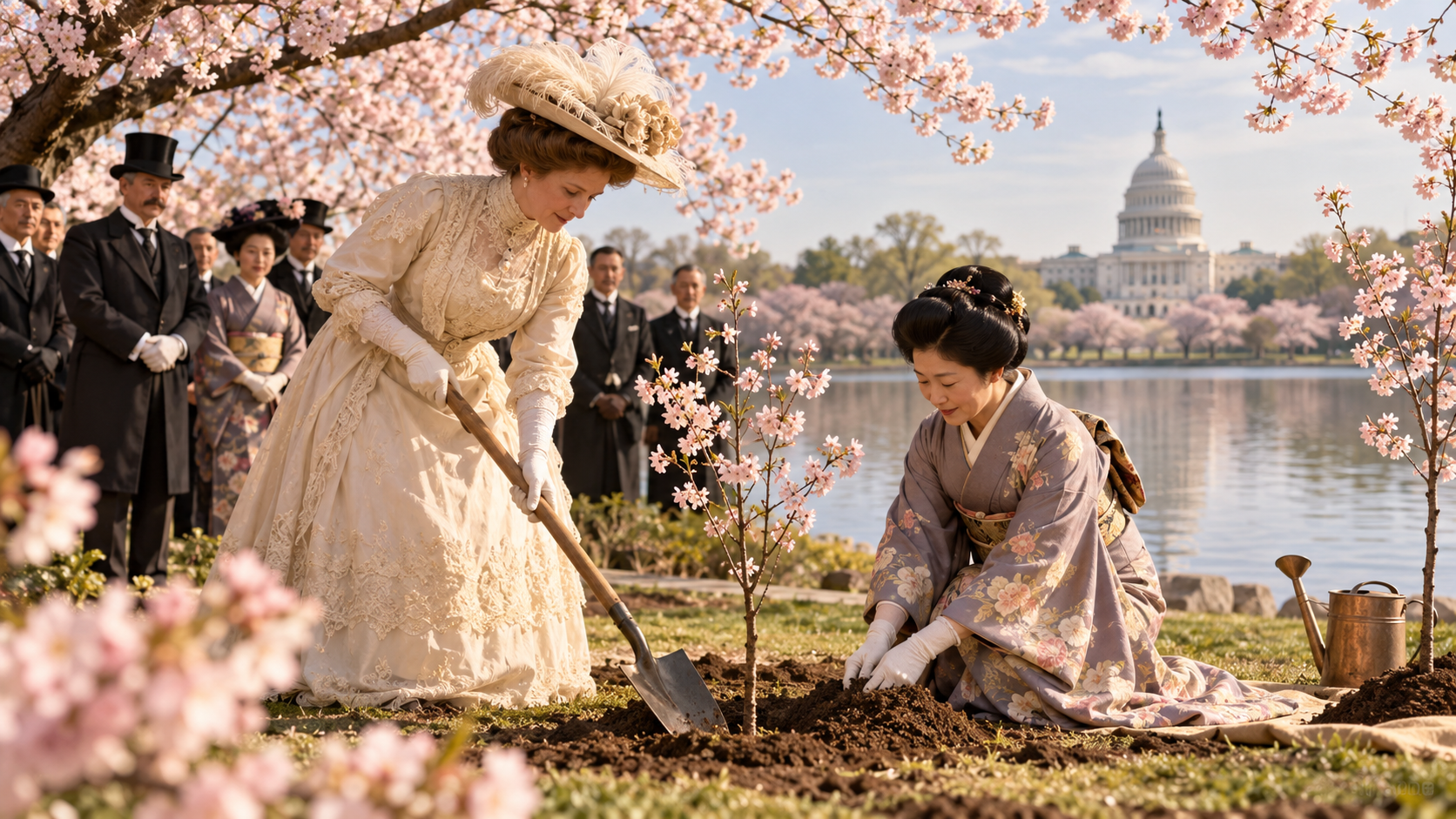
On March 27, 1912, First Lady Helen Herron Taft and Viscountess Iwa Chinda planted two Yoshino cherry trees beside Washington’s Tidal Basin. The ceremonial planting represented a much larger gift of more than three thousand trees from Japan after an earlier shipment had to be destroyed because of pests and disease. The date matters in lifestyle history because a diplomatic gift became a recurring public season in the life of a city. Rather than remaining an isolated announcement or demonstration, the moment gave people a new way to think about walking, picnicking, photographing blossoms, hosting visitors, and marking spring in shared space. Its importance became visible through familiar places, objects, and routines, where a broad historical change could be felt at human scale.
The exchange grew from civic advocacy, diplomacy, horticultural expertise, and a shared interest in beautifying the capital. Selecting, shipping, inspecting, and planting living trees required cooperation far beyond the brief ceremony, while the landscape itself would take years to mature. The setting shaped how contemporaries understood the event. the two nations’ representatives, horticulturists, park workers, residents, tourists, photographers, families, and festival organizers encountered it through diplomacy, gardens, public parks, newspapers, festivals, travel promotion, weather forecasts, and social media. Those details show that social change usually travels through ordinary systems such as workplaces, schools, shops, homes, streets, or public institutions. What seems inevitable in hindsight depended on people testing, organizing, purchasing, teaching, maintaining, or protecting the idea in real time.
As the trees grew, spring blossoms changed how residents and visitors used the waterfront. Picnics, walks, photography, festivals, family outings, courtship, and tourism gathered around a seasonal display whose timing could never be perfectly scheduled. In daily life, people began planning spring outings around a brief natural event that turned a government landscape into a communal garden. The episode also exposed questions about fragile trees, crowd pressure, climate shifts, maintenance, historical interpretation, and balancing tourism with ecological care. Access and influence were never perfectly even, and later generations adapted the original development to different communities, values, and technologies. Still, the event changed expectations by making shared seasonal beauty tied to international friendship easier to imagine, recognize, or demand.
The National Cherry Blossom Festival celebrates both the gift and the U.S.-Japan relationship, while arborists continually replace and care for aging trees. Climate, flooding, crowds, and construction make stewardship as important as spectacle. Today, echoes remain in blossom forecasts, park walks, festivals, cultural programs, photography, tourism, and long-term tree care. Looking back helps separate the documented milestone from the myths that often accumulate around famous anniversaries. It also reminds us that lifestyle history is built from choices about design, health, work, leisure, communication, memory, and public space. On this day, the two saplings planted in 1912 grew into a civic ritual measured in petals and return visits.
First Lady Helen Herron Taft and Viscountess Iwa Chinda planted two Yoshino cherry trees beside Washington’s Tidal Basin. The ceremonial planting represented a much larger gift of more than three thousand trees from Japan after an earlier shipment had to be destroyed because of pests and disease.
The exchange grew from civic advocacy, diplomacy, horticultural expertise, and a shared interest in beautifying the capital. Selecting, shipping, inspecting, and planting living trees required cooperation far beyond the brief ceremony, while the landscape itself would take years to mature.
As the trees grew, spring blossoms changed how residents and visitors used the waterfront. Picnics, walks, photography, festivals, family outings, courtship, and tourism gathered around a seasonal display whose timing could never be perfectly scheduled.
The larger theme was that a diplomatic gift became a recurring public season in the life of a city.
The National Cherry Blossom Festival celebrates both the gift and the U.S.-Japan relationship, while arborists continually replace and care for aging trees. Climate, flooding, crowds, and construction make stewardship as important as spectacle.
Today the story remains visible in blossom forecasts, park walks, festivals, cultural programs, photography, tourism, and long-term tree care.
Explore more of “This Day in Lifestyles”
Discover more moments in everyday life, design, education, travel, food, fashion, and culture. Each story connects a calendar date with an event that changed how people lived.