

On This Day in Lifestyles: April 4, 1964
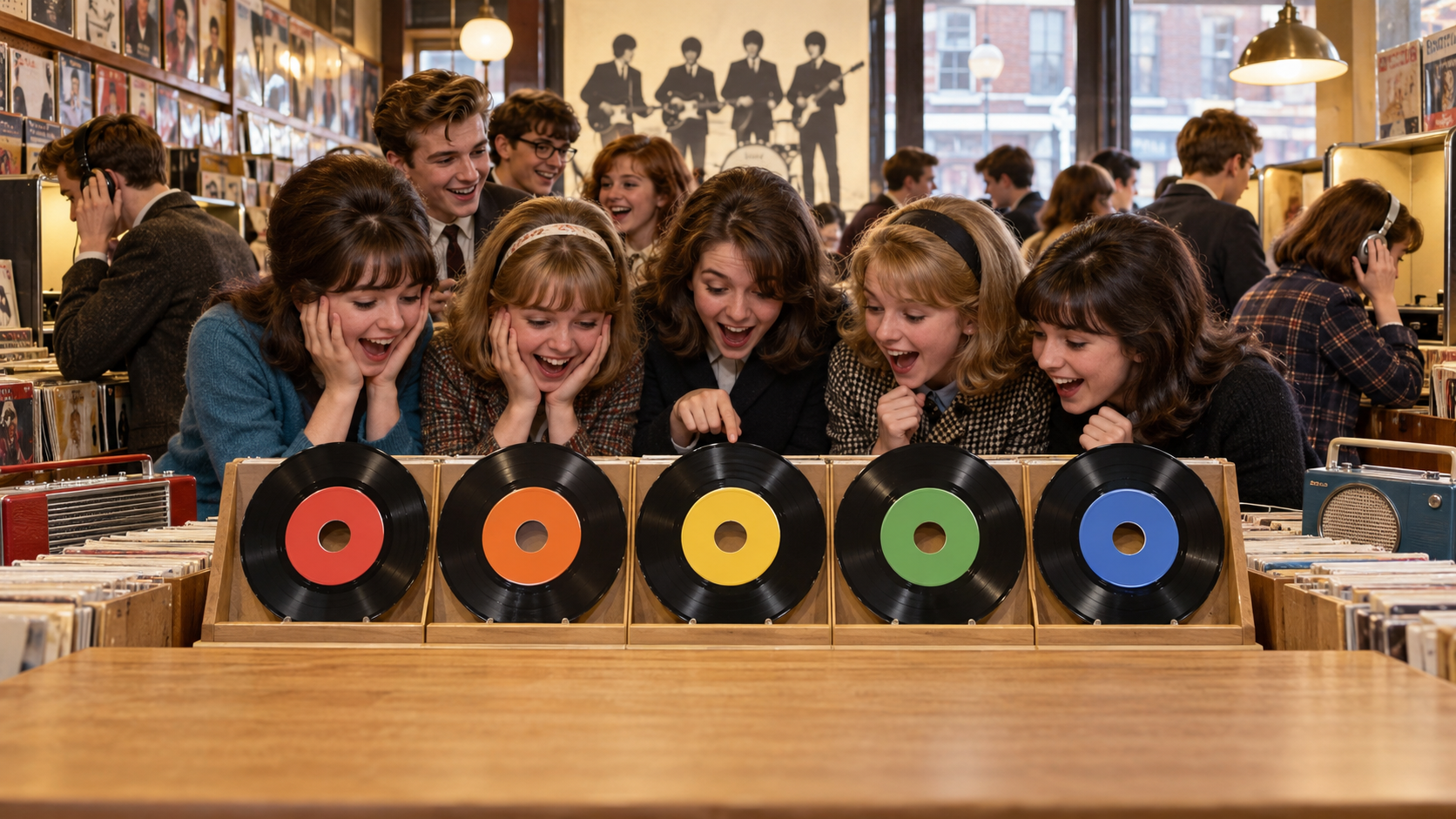
On April 4, 1964, The Beatles occupied the top five positions on Billboard’s Hot 100, an unmatched concentration of hit records that confirmed the force of Beatlemania in the United States. The date matters in lifestyle history because shared music gives everyday style and emotion a public rhythm. It was not merely a headline for institutions or specialists; it touched the settings, objects, expectations, and shared rituals through which people organized ordinary days. Young listeners bought singles, copied haircuts, traded magazines, gathered around radios, and argued about favorite songs. Seen at human scale, the episode shows how a public milestone becomes meaningful through repeated personal choices, conversations, and memories.
Their television appearances, radio play, record releases, photographs, and merchandise had created a fast-moving media phenomenon across the Atlantic. The setting is essential to understanding why the event attracted attention. New ideas rarely arrive in isolation: they meet existing technology, commerce, custom, law, and desire. Contemporary newspapers, broadcasts, public spaces, shops, schools, workplaces, or homes carried the story outward, giving people practical ways to interpret it. Some welcomed the change, others doubted it, and many first encountered it indirectly. That mixture of novelty and familiarity helped the moment travel from a single date into a broader change in behavior.
The chart sweep showed how teenagers, broadcasting, and the recording industry could combine to make popular music a central language of identity, fashion, and belonging. In daily life, the consequences appeared through altered routines, new expectations, and different ways of spending time or money. British groups followed into American markets, while albums, concerts, fan communities, and youth-oriented media gained greater cultural weight. The benefits were never the whole story; major changes also exposed questions about access, responsibility, fairness, cost, and who had power to define progress. Those tensions deserve a place beside the celebration because they show how culture actually develops. The event mattered not because everyone experienced it in the same way, but because it opened a durable argument about how people wanted to live.
Today, echoes of the event remain visible in global fandoms, streaming charts, coordinated releases, artist branding, and the speed with which music crosses borders. Familiarity can make that inheritance easy to overlook, yet the practices surrounding it were built through years of experimentation, adaptation, criticism, and use. Looking back does more than celebrate an anniversary. It reveals the chain between public decisions and private habits, between ambitious ideas and the small acts that make them ordinary. On this day, five chart positions captured the moment pop fandom became an organizing force in modern culture. Remembering the full setting lets the milestone feel less like a frozen fact and more like a living part of modern experience.
The Beatles occupied the top five positions on Billboard’s Hot 100, an unmatched concentration of hit records that confirmed the force of Beatlemania in the United States.
Their television appearances, radio play, record releases, photographs, and merchandise had created a fast-moving media phenomenon across the Atlantic.
The chart sweep showed how teenagers, broadcasting, and the recording industry could combine to make popular music a central language of identity, fashion, and belonging.
The milestone mattered because shared music gives everyday style and emotion a public rhythm.
British groups followed into American markets, while albums, concerts, fan communities, and youth-oriented media gained greater cultural weight.
Its influence remains visible in global fandoms, streaming charts, coordinated releases, artist branding, and the speed with which music crosses borders.
Explore more of “This Day in Lifestyles”
Discover more moments in everyday life, design, education, travel, food, fashion, and culture. Each story connects a calendar date with an event that changed how people lived.