

On This Day in Lifestyles: May 4, 1959
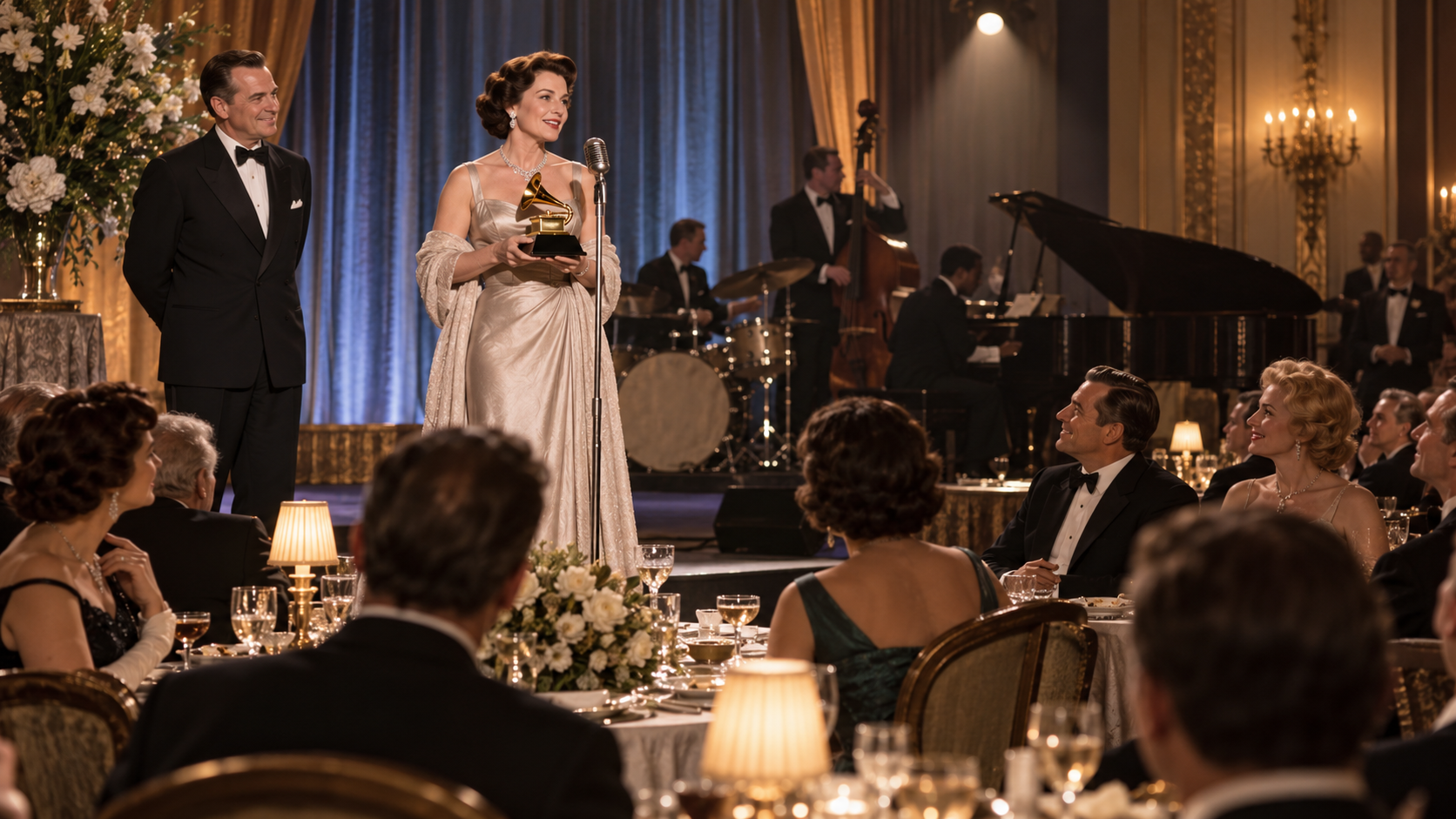
On May 4, 1959, the Recording Academy presented its first Grammy Awards at simultaneous ceremonies in Los Angeles and New York, formally recognizing achievements in recorded music. The date matters in lifestyle history because awards become lifestyle institutions when they influence listening habits, careers, fashion, conversation, and the stories a culture tells about taste. It was not merely a headline for institutions or specialists; it touched the settings, objects, expectations, and shared rituals through which people organized ordinary days. Guests in evening clothes gathered around banquet tables while performers and behind-the-scenes craftspeople received small gramophone trophies before an audience of peers. Seen at human scale, the episode shows how a public milestone becomes meaningful through repeated personal choices, conversations, and memories.
The inaugural program was an industry dinner rather than the massive television spectacle familiar today. Categories reflected the breadth of the record business, from pop and jazz to classical performance, comedy, arranging, and engineering. The setting is essential to understanding why the event attracted attention. New ideas rarely arrive in isolation: they meet existing technology, commerce, custom, law, and desire. Contemporary newspapers, broadcasts, public spaces, shops, schools, workplaces, or homes carried the story outward, giving people practical ways to interpret it. Some welcomed the change, others doubted it, and many first encountered it indirectly. That mixture of novelty and familiarity helped the moment travel from a single date into a broader change in behavior.
The awards gave musicians, producers, composers, and technical specialists a shared institution for celebrating records as creative works. They also helped listeners discover artists and gave record companies a new language for prestige and promotion. In daily life, the consequences appeared through altered routines, new expectations, and different ways of spending time or money. The ceremony expanded into a global broadcast whose choices still provoke arguments about genre, popularity, artistry, representation, and who gets to define excellence. The benefits were never the whole story; major changes also exposed questions about access, responsibility, fairness, cost, and who had power to define progress. Those tensions deserve a place beside the celebration because they show how culture actually develops. The event mattered not because everyone experienced it in the same way, but because it opened a durable argument about how people wanted to live.
Today, the legacy remains visible: Grammy night now drives playlists, social media, red-carpet fashion, touring attention, and debate far beyond the recording industry. Familiarity can make that inheritance easy to overlook, yet the practices surrounding it were built through years of experimentation, adaptation, criticism, and use. Looking back does more than celebrate an anniversary. It reveals the chain between public decisions and private habits, between ambitious ideas and the small acts that make them ordinary. On this day, a modest pair of dinners created a yearly ritual for measuring the sound of an era. Remembering the full setting lets the milestone feel less like a frozen fact and more like a living part of modern experience.
On May 4, 1959, the Recording Academy presented its first Grammy Awards at simultaneous ceremonies in Los Angeles and New York, formally recognizing achievements in recorded music.
The inaugural program was an industry dinner rather than the massive television spectacle familiar today. Categories reflected the breadth of the record business, from pop and jazz to classical performance, comedy, arranging, and engineering.
The awards gave musicians, producers, composers, and technical specialists a shared institution for celebrating records as creative works. They also helped listeners discover artists and gave record companies a new language for prestige and promotion.
The event matters in lifestyle history because awards become lifestyle institutions when they influence listening habits, careers, fashion, conversation, and the stories a culture tells about taste.
The ceremony expanded into a global broadcast whose choices still provoke arguments about genre, popularity, artistry, representation, and who gets to define excellence.
The legacy remains visible today: Grammy night now drives playlists, social media, red-carpet fashion, touring attention, and debate far beyond the recording industry.
Explore more of “This Day in Lifestyles”
Discover more moments in everyday life, design, education, travel, food, fashion, and culture. Each story connects a calendar date with an event that changed how people lived.