

On This Day in Lifestyles: June 11, 1982
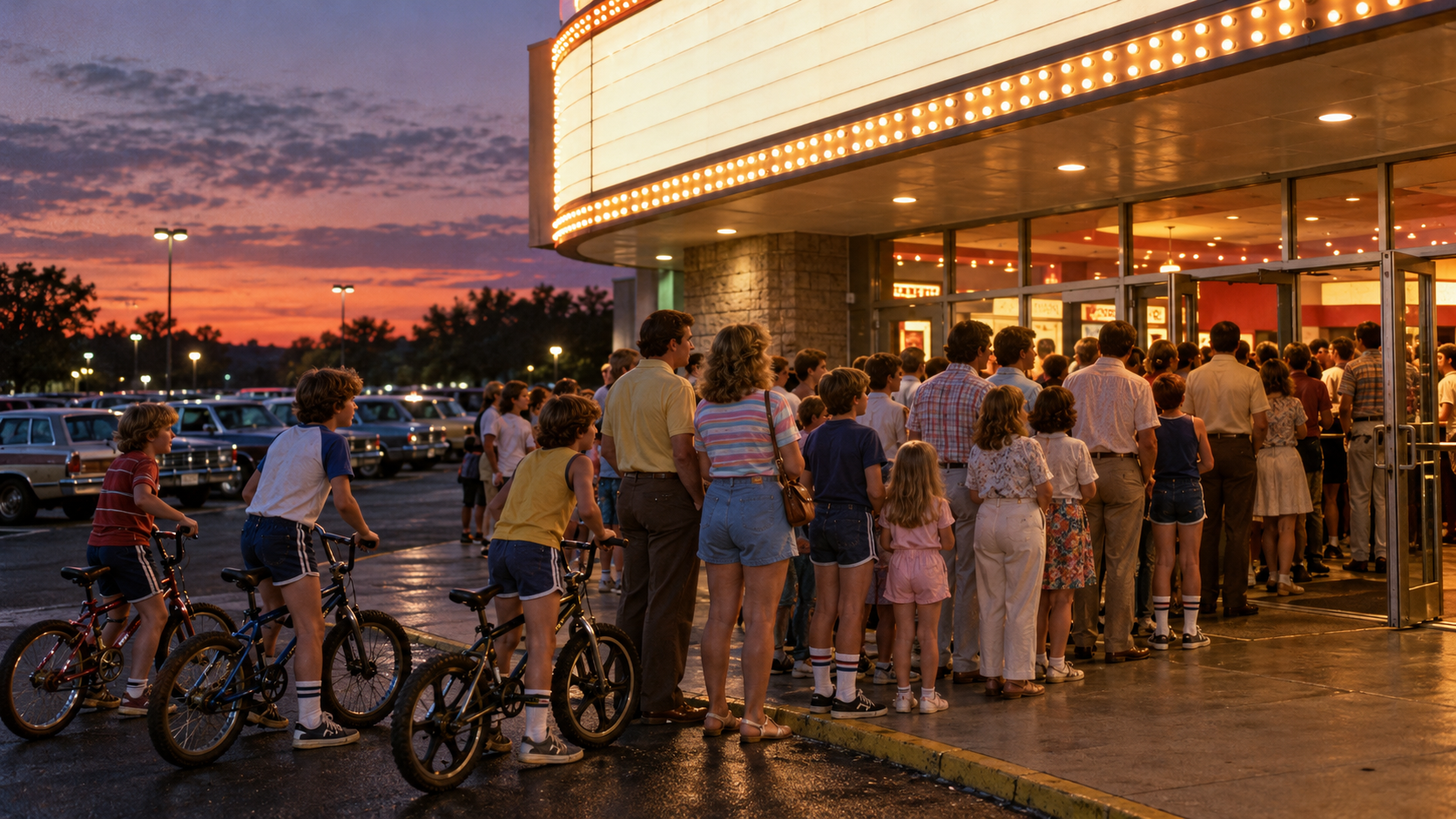
On June 11, 1982, Steven Spielberg’s E.T. the Extra-Terrestrial opened in American theaters, inviting audiences into a suburban story about childhood, loneliness, family, and friendship. The date matters in lifestyle history because a film becomes lifestyle history when its emotions and images leave the theater and enter family talk, play, products, and memory. It was not merely a headline for institutions or specialists; it touched the settings, objects, expectations, and shared rituals through which people organized ordinary days. Children and adults stood in long opening-weekend lines, then sat in dark auditoriums where laughter, fear, and tears became a temporary community. Seen at human scale, the episode shows how a public milestone becomes meaningful through repeated personal choices, conversations, and memories.
The film centered its science-fiction premise on a child’s emotional perspective and an ordinary California home. Practical effects, expressive lighting, John Williams’s score, and young performers helped make the stranded visitor feel vulnerable rather than threatening. The setting is essential to understanding why the event attracted attention. New ideas rarely arrive in isolation: they meet existing technology, commerce, custom, law, and desire. Contemporary newspapers, broadcasts, public spaces, shops, schools, workplaces, or homes carried the story outward, giving people practical ways to interpret it. Some welcomed the change, others doubted it, and many first encountered it indirectly. That mixture of novelty and familiarity helped the moment travel from a single date into a broader change in behavior.
Families encountered the film together in crowded theaters, and its images soon flowed into toys, lunch boxes, costumes, bicycles, home video, and playground imagination. Its enormous popularity confirmed that a blockbuster could pair spectacle with tenderness and a child’s sense of scale. In daily life, the consequences appeared through altered routines, new expectations, and different ways of spending time or money. E.T. became a reference point for family science fiction and 1980s nostalgia, while its commercial tie-ins also illustrated how movies could spread through the entire consumer landscape of childhood. The benefits were never the whole story; major changes also exposed questions about access, responsibility, fairness, cost, and who had power to define progress. Those tensions deserve a place beside the celebration because they show how culture actually develops. The event mattered not because everyone experienced it in the same way, but because it opened a durable argument about how people wanted to live.
Today, the legacy remains visible: The movie’s mix of suburban detail, child-centered wonder, practical craftsmanship, and emotional directness continues to influence family storytelling. Familiarity can make that inheritance easy to overlook, yet the practices surrounding it were built through years of experimentation, adaptation, criticism, and use. Looking back does more than celebrate an anniversary. It reveals the chain between public decisions and private habits, between ambitious ideas and the small acts that make them ordinary. On this day, a small story of friendship made the summer movie feel both enormous and deeply personal. Remembering the full setting lets the milestone feel less like a frozen fact and more like a living part of modern experience.
On June 11, 1982, Steven Spielberg's E.T. the Extra-Terrestrial opened in American theaters, inviting audiences into a suburban story about childhood, loneliness, family, and friendship.
The film centered its science-fiction premise on a child's emotional perspective and an ordinary California home. Practical effects, expressive lighting, John Williams's score, and young performers helped make the stranded visitor feel vulnerable rather than threatening.
Families encountered the film together in crowded theaters, and its images soon flowed into toys, lunch boxes, costumes, bicycles, home video, and playground imagination. Its enormous popularity confirmed that a blockbuster could pair spectacle with tenderness and a child's sense of scale.
The event matters in lifestyle history because a film becomes lifestyle history when its emotions and images leave the theater and enter family talk, play, products, and memory.
E.T. became a reference point for family science fiction and 1980s nostalgia, while its commercial tie-ins also illustrated how movies could spread through the entire consumer landscape of childhood.
The legacy remains visible today: The movie's mix of suburban detail, child-centered wonder, practical craftsmanship, and emotional directness continues to influence family storytelling.
Explore more of “This Day in Lifestyles”
Discover more moments in everyday life, design, education, travel, food, fashion, and culture. Each story connects a calendar date with an event that changed how people lived.