

On This Day in Life: August 3, 1946
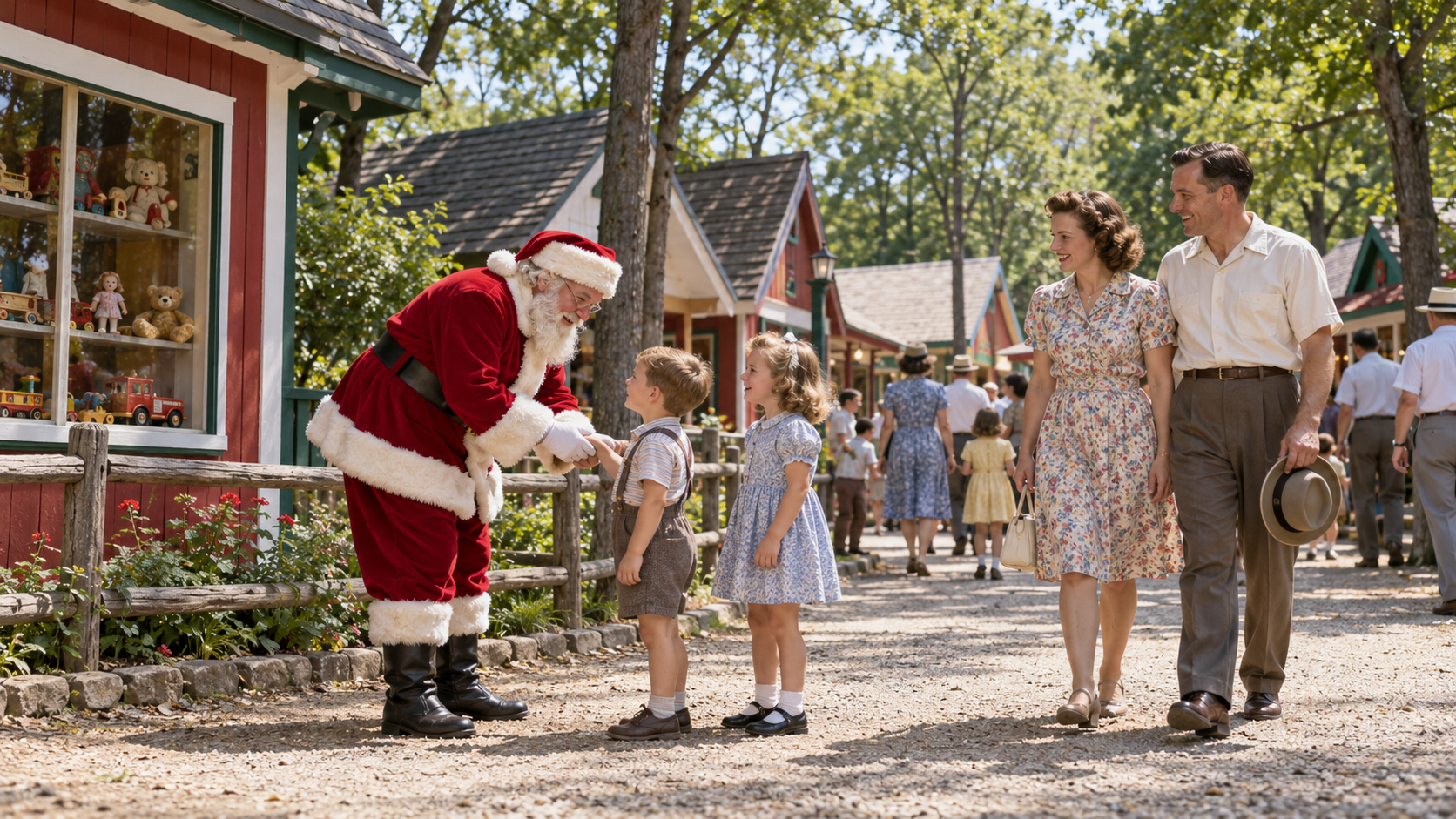
On August 3, 1946, Louis J. Koch opened Santa Claus Land in the small town of Santa Claus, Indiana, creating a family attraction organized around a single holiday theme. The date matters in lifestyle history because a small postwar attraction helped make immersive family destinations part of vacation culture. It was not merely a headline for institutions or specialists; it touched the settings, objects, expectations, and shared rituals through which people organized ordinary days. Families in practical 1940s summer clothes approached simple gabled buildings and toy displays while Santa greeted children beneath shade trees in rural southern Indiana. Seen at human scale, the episode shows how a public milestone becomes meaningful through repeated personal choices, conversations, and memories.
Koch believed visiting children should be able to meet Santa in the town that carried his name. The opening park was modest: a toy shop and displays, a restaurant, themed children’s rides, a miniature circus, the House of Dolls, and appearances by Santa. It did not yet have the roller coasters or water attractions associated with its modern successor. The setting is essential to understanding why the event attracted attention. New ideas rarely arrive in isolation: they meet existing technology, commerce, custom, law, and desire. Contemporary newspapers, public spaces, shops, schools, workplaces, or homes carried the story outward, giving people practical ways to interpret it. Some welcomed the change, others doubted it, and many first encountered it indirectly. That mixture of novelty and familiarity helped the moment travel from a single date into a broader change in behavior.
The park treated a coherent story, setting, and character as the framework for a full family outing. That approach differed from amusement grounds built mainly around independent rides and helped demonstrate the commercial appeal of themed environments, roadside travel, souvenirs, and shared childhood ritual. In daily life, the consequences appeared through altered routines, new expectations, and different ways of spending time or money. The Koch family expanded the attraction for decades. Santa Claus Land became Holiday World in 1984 when Halloween and Fourth of July areas joined the Christmas section, and Splashin’ Safari followed in 1993. The original park is often described as the nation’s first theme park. The benefits were never the whole story; major changes also exposed questions about access, responsibility, fairness, cost, and who had power to define progress. Those tensions deserve a place beside the celebration because they show how culture actually develops. The event mattered not because everyone experienced it in the same way, but because it opened a durable argument about how people wanted to live.
Today, the legacy remains visible: theme parks combine design, hospitality, food, rides, characters, and merchandising on a far larger scale, while Holiday World still links that industry to a family-owned postwar beginning. Familiarity can make that inheritance easy to overlook, yet the practices surrounding it were built through years of experimentation, adaptation, criticism, and use. Looking back does more than celebrate an anniversary. It reveals the chain between public decisions and private habits, between ambitious ideas and the small acts that make them ordinary. On this day, one historical moment became part of the texture of modern life. Remembering the full setting lets the milestone feel less like a frozen fact and more like a living part of experience.
On August 3, 1946, Louis J. Koch opened Santa Claus Land in the small town of Santa Claus, Indiana, creating a family attraction organized around a single holiday theme.
Koch believed visiting children should be able to meet Santa in the town that carried his name. The opening park was modest: a toy shop and displays, a restaurant, themed children's rides, a miniature circus, the House of Dolls, and appearances by Santa. It did not yet have the roller coasters or water attractions associated with its modern successor.
The park treated a coherent story, setting, and character as the framework for a full family outing. That approach differed from amusement grounds built mainly around independent rides and helped demonstrate the commercial appeal of themed environments, roadside travel, souvenirs, and shared childhood ritual.
The event matters in lifestyle history because a small postwar attraction helped make immersive family destinations part of vacation culture.
The Koch family expanded the attraction for decades. Santa Claus Land became Holiday World in 1984 when Halloween and Fourth of July areas joined the Christmas section, and Splashin' Safari followed in 1993. The original park is often described as the nation's first theme park.
The legacy remains visible today: theme parks combine design, hospitality, food, rides, characters, and merchandising on a far larger scale, while Holiday World still links that industry to a family-owned postwar beginning.
Explore more of "On This Day ..."
Discover more events from the same date across news, politics, technology, sports, and other fields. Each link highlights significant moments that shaped history on different fronts.