

On This Day in Lifestyles: August 11, 1919
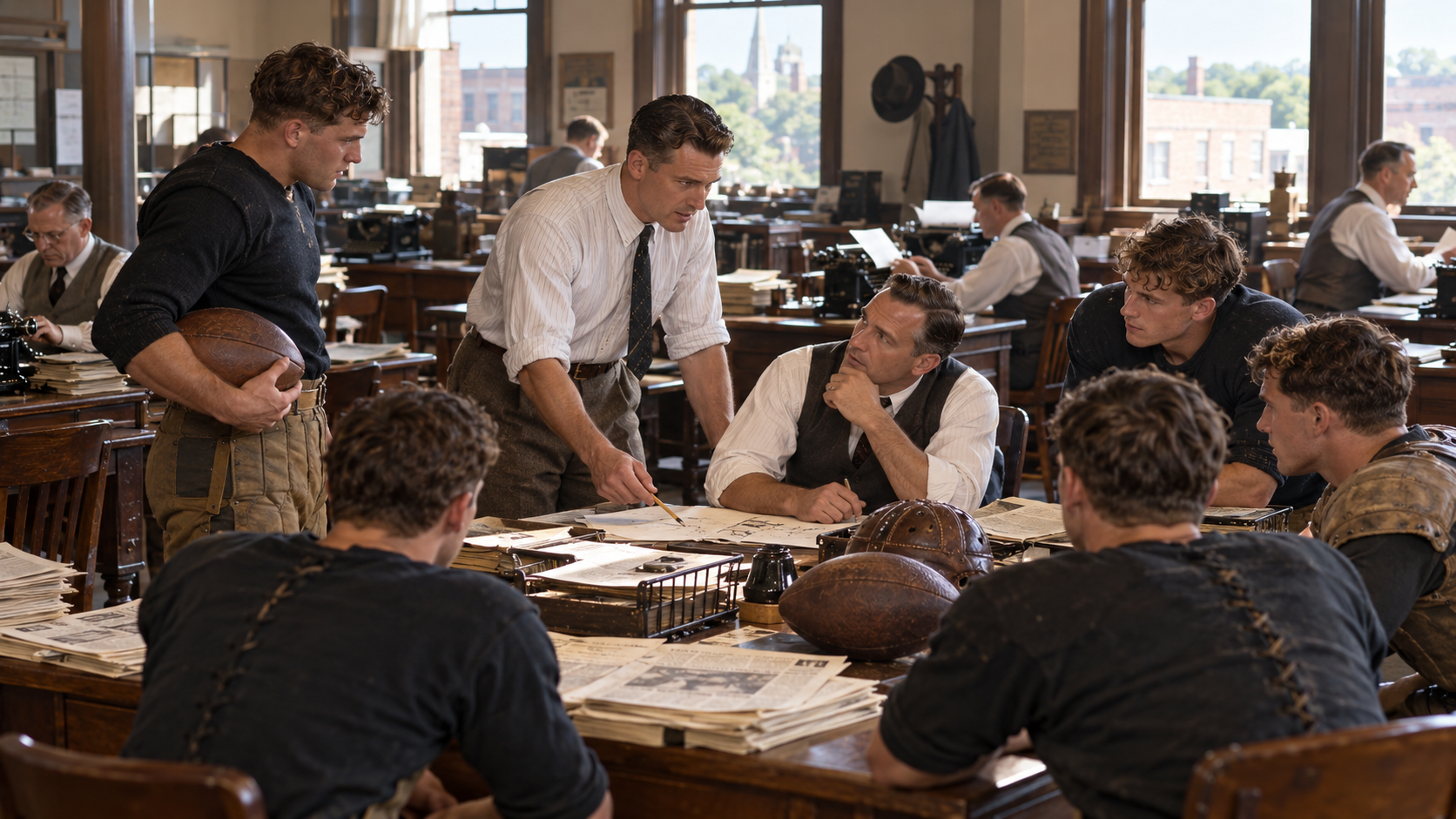
On August 11, 1919, football players and supporters met in the Green Bay Press-Gazette editorial rooms to organize the team that became the Green Bay Packers. The date matters in lifestyle history because a newsroom meeting grew into a community institution and a recurring piece of American weekend life. It was not merely a headline for institutions or specialists; it touched the settings, objects, expectations, and shared rituals through which people organized ordinary days. In a crowded Wisconsin newspaper office, young men in shirtsleeves gathered around desks, typewriters, proofs, and football gear while Lambeau and Calhoun discussed the new team. Seen at human scale, the episode shows how a public milestone becomes meaningful through repeated personal choices, conversations, and memories.
Former high-school rivals Curly Lambeau and George Calhoun called the meeting. Lambeau obtained money for uniforms and equipment from his employer, the Indian Packing Company, giving the new club its enduring name. The early roster mixed local athletes with experienced players and competed against regional independent teams. The setting is essential to understanding why the event attracted attention. New ideas rarely arrive in isolation: they meet existing technology, commerce, custom, law, and desire. Contemporary newspapers, public spaces, shops, schools, workplaces, or homes carried the story outward, giving people practical ways to interpret it. Some welcomed the change, others doubted it, and many first encountered it indirectly. That mixture of novelty and familiarity helped the moment travel from a single date into a broader change in behavior.
The team gave a small industrial city a shared autumn ritual before radio and television made professional football a national weekly spectacle. Local workplaces, newspapers, fans, and volunteer organizers supplied the relationships and attention that kept an uncertain club alive. In daily life, the consequences appeared through altered routines, new expectations, and different ways of spending time or money. Green Bay joined the new professional association in 1921 and developed into one of the sport’s most successful franchises. Its nonprofit corporate structure and widely held community stock helped preserve a rare bond between a major-league team and a comparatively small home market. The benefits were never the whole story; major changes also exposed questions about access, responsibility, fairness, cost, and who had power to define progress. Those tensions deserve a place beside the celebration because they show how culture actually develops. The event mattered not because everyone experienced it in the same way, but because it opened a durable argument about how people wanted to live.
Today, the legacy remains visible: Packers games organize travel, tailgating, family traditions, local business, and civic identity, demonstrating how professional sport can become part of a place’s social calendar. Familiarity can make that inheritance easy to overlook, yet the practices surrounding it were built through years of experimentation, adaptation, criticism, and use. Looking back does more than celebrate an anniversary. It reveals the chain between public decisions and private habits, between ambitious ideas and the small acts that make them ordinary. On this day, one historical moment became part of the texture of modern life. Remembering the full setting lets the milestone feel less like a frozen fact and more like a living part of experience.
On August 11, 1919, football players and supporters met in the Green Bay Press-Gazette editorial rooms to organize the team that became the Green Bay Packers.
Former high-school rivals Curly Lambeau and George Calhoun called the meeting. Lambeau obtained money for uniforms and equipment from his employer, the Indian Packing Company, giving the new club its enduring name. The early roster mixed local athletes with experienced players and competed against regional independent teams.
The team gave a small industrial city a shared autumn ritual before radio and television made professional football a national weekly spectacle. Local workplaces, newspapers, fans, and volunteer organizers supplied the relationships and attention that kept an uncertain club alive.
The event matters in lifestyle history because a newsroom meeting grew into a community institution and a recurring piece of American weekend life.
Green Bay joined the new professional association in 1921 and developed into one of the sport's most successful franchises. Its nonprofit corporate structure and widely held community stock helped preserve a rare bond between a major-league team and a comparatively small home market.
The legacy remains visible today: Packers games organize travel, tailgating, family traditions, local business, and civic identity, demonstrating how professional sport can become part of a place's social calendar.
Explore more of “This Day in Lifestyles”
Discover more moments in everyday life, design, education, travel, food, fashion, and culture. Each story connects a calendar date with an event that changed how people lived.