

On This Day in Lifestyles: September 19, 1982
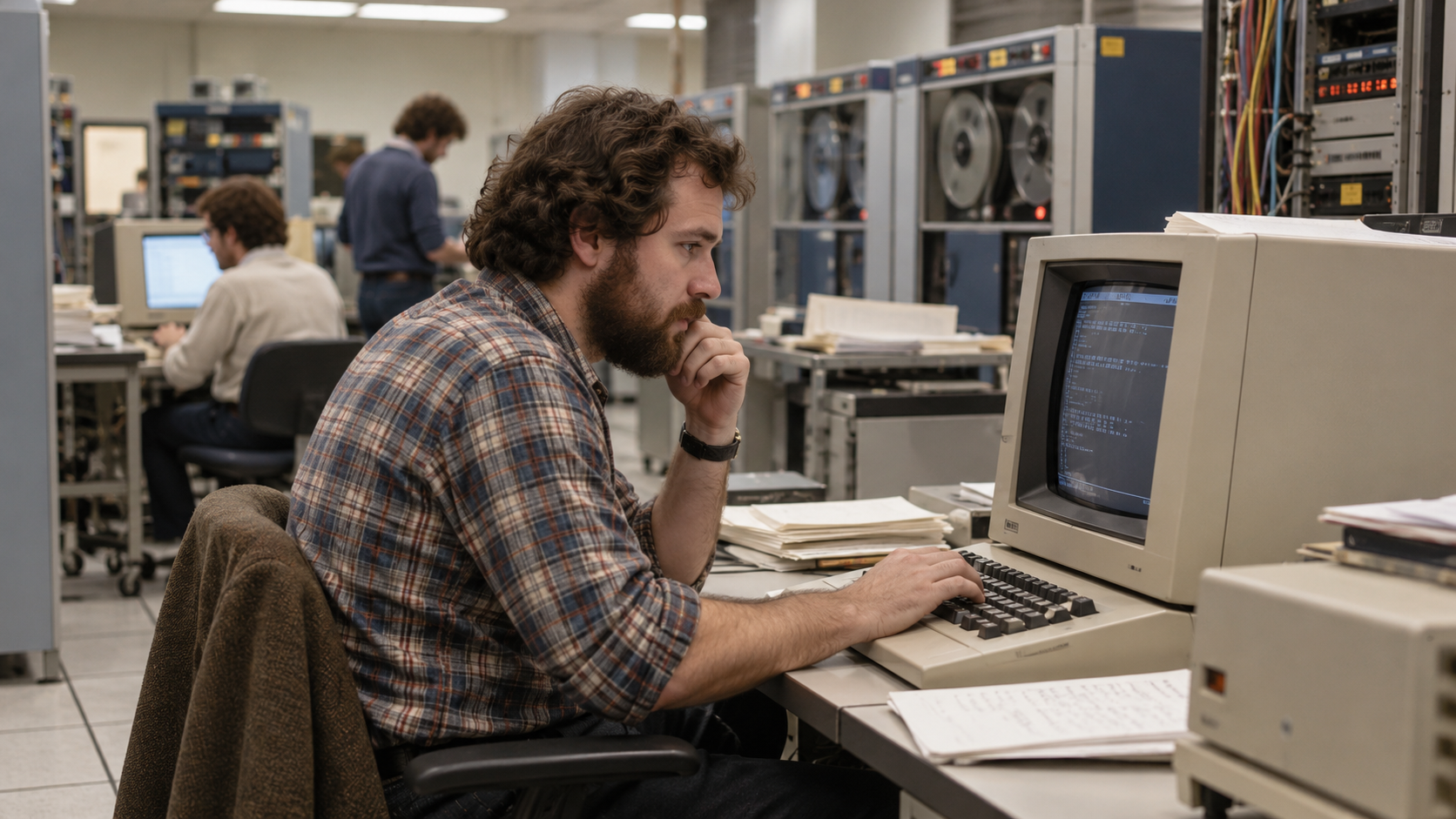
On September 19, 1982, Carnegie Mellon computer scientist Scott Fahlman posted the sideways smiley 🙂 and frowny 🙁 as markers for tone on an electronic bulletin board. The date matters in lifestyle history because three punctuation marks became a practical answer to the emotional thinness of online text. It was not merely a headline for institutions or specialists; it touched the settings, objects, expectations, and shared rituals through which people organized ordinary days. Fahlman sat at an early-1980s terminal in a Carnegie Mellon computer room, composing a short message while monochrome screens and large shared machines surrounded him. Seen at human scale, the episode shows how a public milestone becomes meaningful through repeated personal choices, conversations, and memories.
A playful discussion on the university network had caused confusion about which messages were serious. Fahlman suggested a compact sequence that could survive the plain-text systems of the time and recommended reading it sideways. Archived backup tapes later preserved the original post and its timestamp. The setting is essential to understanding why the event attracted attention. New ideas rarely arrive in isolation: they meet existing technology, commerce, custom, law, and desire. Contemporary newspapers, public spaces, shops, schools, workplaces, or homes carried the story outward, giving people practical ways to interpret it. Some welcomed the change, others doubted it, and many first encountered it indirectly. That mixture of novelty and familiarity helped the moment travel from a single date into a broader change in behavior.
The idea spread through connected academic and technical communities, offering writers a quick way to add emotional context that voice, gesture, and facial expression normally supply. Fahlman did not invent every typographic face, but his message is a clear documented origin for the modern networked emoticon tradition. In daily life, the consequences appeared through altered routines, new expectations, and different ways of spending time or money. Users developed countless faces, abbreviations, reaction images, stickers, and standardized emoji. These tools add warmth, irony, emphasis, identity, and play, yet they can also be ambiguous across cultures, devices, generations, workplaces, and accessibility software. The benefits were never the whole story; major changes also exposed questions about access, responsibility, fairness, cost, and who had power to define progress. Those tensions deserve a place beside the celebration because they show how culture actually develops. The event mattered not because everyone experienced it in the same way, but because it opened a durable argument about how people wanted to live.
Today, the legacy remains visible: people negotiate tone through emoji, GIFs, reactions, punctuation, voice notes, and memes, continually inventing cues for communication without physical presence. Familiarity can make that inheritance easy to overlook, yet the practices surrounding it were built through years of experimentation, adaptation, criticism, and use. Looking back does more than celebrate an anniversary. It reveals the chain between public decisions and private habits, between ambitious ideas and the small acts that make them ordinary. On this day, one historical moment became part of the texture of modern life. Remembering the full setting lets the milestone feel less like a frozen fact and more like a living part of experience.
On September 19, 1982, Carnegie Mellon computer scientist Scott Fahlman posted the sideways smiley 🙂 and frowny 🙁 as markers for tone on an electronic bulletin board.
A playful discussion on the university network had caused confusion about which messages were serious. Fahlman suggested a compact sequence that could survive the plain-text systems of the time and recommended reading it sideways. Archived backup tapes later preserved the original post and its timestamp.
The idea spread through connected academic and technical communities, offering writers a quick way to add emotional context that voice, gesture, and facial expression normally supply. Fahlman did not invent every typographic face, but his message is a clear documented origin for the modern networked emoticon tradition.
The event matters in lifestyle history because three punctuation marks became a practical answer to the emotional thinness of online text.
Users developed countless faces, abbreviations, reaction images, stickers, and standardized emoji. These tools add warmth, irony, emphasis, identity, and play, yet they can also be ambiguous across cultures, devices, generations, workplaces, and accessibility software.
The legacy remains visible today: people negotiate tone through emoji, GIFs, reactions, punctuation, voice notes, and memes, continually inventing cues for communication without physical presence.
Explore more of “This Day in Lifestyles”
Discover more moments in everyday life, design, education, travel, food, fashion, and culture. Each story connects a calendar date with an event that changed how people lived.