

On This Day in Lifestyles: September 24, 1906
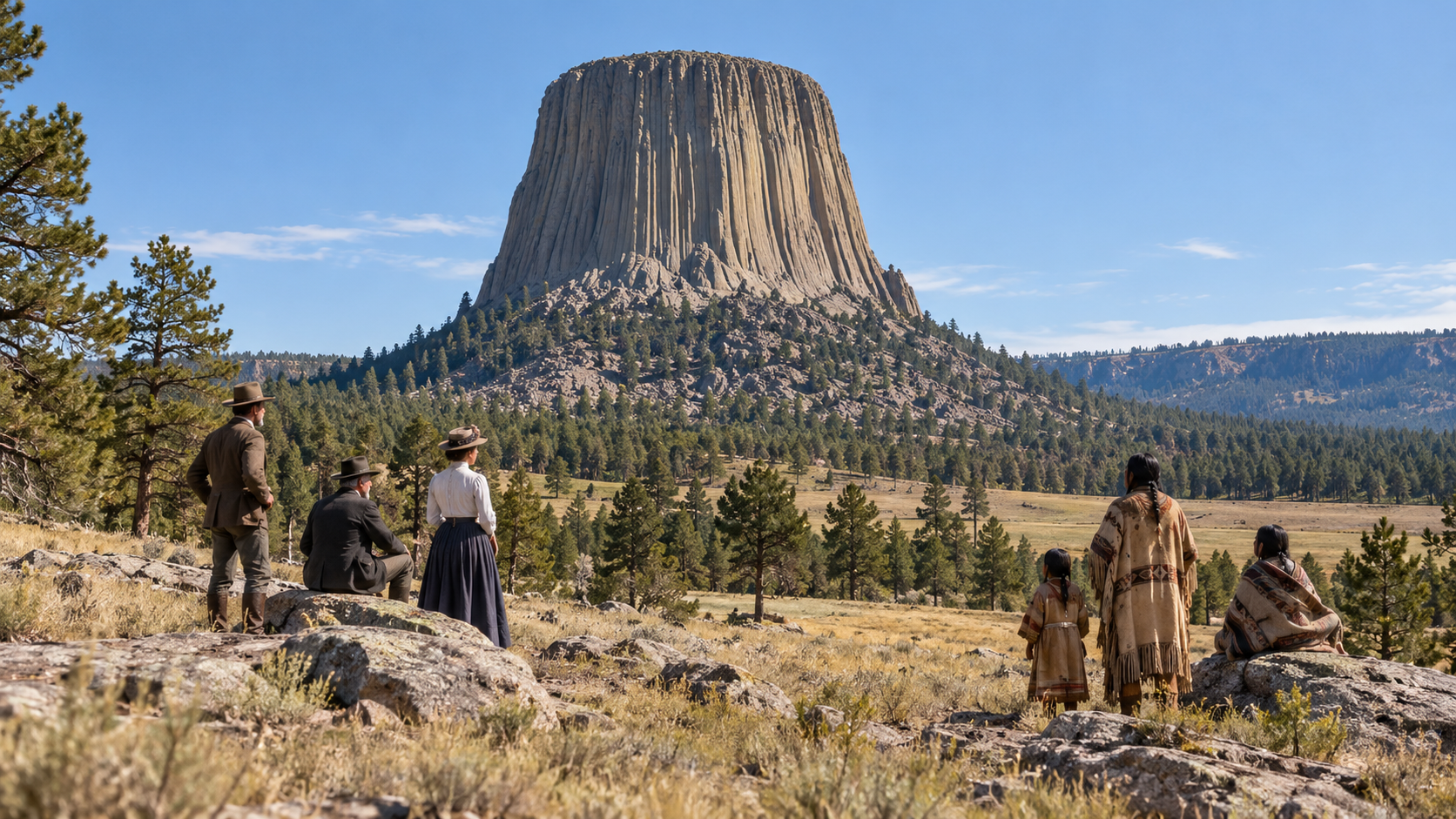
On September 24, 1906, President Theodore Roosevelt proclaimed Devils Tower in Wyoming the first national monument created under the Antiquities Act. The date matters in lifestyle history because a protected landscape created a new public promise about recreation, heritage, science, and stewardship. It was not merely a headline for institutions or specialists; it touched the settings, objects, expectations, and shared rituals through which people organized ordinary days. Devils Tower rose above prairie and pine while an early ranger, local visitors, and an Indigenous family viewed the formation from respectful distance without staging a ceremony. Seen at human scale, the episode shows how a public milestone becomes meaningful through repeated personal choices, conversations, and memories.
The striking columned formation rises above the Belle Fourche River and has deep cultural and spiritual importance for Indigenous nations of the northern Plains, who use names including Bear Lodge. Earlier proposals for a national park had failed, but the 1906 law gave presidents authority to protect federal sites of historic or scientific interest. The setting is essential to understanding why the event attracted attention. New ideas rarely arrive in isolation: they meet existing technology, commerce, custom, law, and desire. Contemporary newspapers, public spaces, shops, schools, workplaces, or homes carried the story outward, giving people practical ways to interpret it. Some welcomed the change, others doubted it, and many first encountered it indirectly. That mixture of novelty and familiarity helped the moment travel from a single date into a broader change in behavior.
The proclamation placed more than a thousand acres under protection and tested a new conservation tool only months after Congress passed it. The official name reflected a nineteenth-century translation and federal naming practice rather than the many Indigenous meanings attached to the place. In daily life, the consequences appeared through altered routines, new expectations, and different ways of spending time or money. Later presidents used the Antiquities Act to protect archaeological sites, landscapes, ecosystems, and places that eventually became national parks. Monument designations also generated lasting disputes about consultation, boundaries, grazing, extraction, recreation, tribal sovereignty, and executive authority. The benefits were never the whole story; major changes also exposed questions about access, responsibility, fairness, cost, and who had power to define progress. Those tensions deserve a place beside the celebration because they show how culture actually develops. The event mattered not because everyone experienced it in the same way, but because it opened a durable argument about how people wanted to live.
Today, the legacy remains visible: national monuments support travel, education, science, ceremony, wildlife, and local economies while requiring honest partnership with communities whose relationships to the land predate federal protection. Familiarity can make that inheritance easy to overlook, yet the practices surrounding it were built through years of experimentation, adaptation, criticism, and use. Looking back does more than celebrate an anniversary. It reveals the chain between public decisions and private habits, between ambitious ideas and the small acts that make them ordinary. On this day, one historical moment became part of the texture of modern life. Remembering the full setting lets the milestone feel less like a frozen fact and more like a living part of experience.
On September 24, 1906, President Theodore Roosevelt proclaimed Devils Tower in Wyoming the first national monument created under the Antiquities Act.
The striking columned formation rises above the Belle Fourche River and has deep cultural and spiritual importance for Indigenous nations of the northern Plains, who use names including Bear Lodge. Earlier proposals for a national park had failed, but the 1906 law gave presidents authority to protect federal sites of historic or scientific interest.
The proclamation placed more than a thousand acres under protection and tested a new conservation tool only months after Congress passed it. The official name reflected a nineteenth-century translation and federal naming practice rather than the many Indigenous meanings attached to the place.
The event matters in lifestyle history because a protected landscape created a new public promise about recreation, heritage, science, and stewardship.
Later presidents used the Antiquities Act to protect archaeological sites, landscapes, ecosystems, and places that eventually became national parks. Monument designations also generated lasting disputes about consultation, boundaries, grazing, extraction, recreation, tribal sovereignty, and executive authority.
The legacy remains visible today: national monuments support travel, education, science, ceremony, wildlife, and local economies while requiring honest partnership with communities whose relationships to the land predate federal protection.
Explore more of “This Day in Lifestyles”
Discover more moments in everyday life, design, education, travel, food, fashion, and culture. Each story connects a calendar date with an event that changed how people lived.