

On This Day in Lifestyles: October 13, 1792
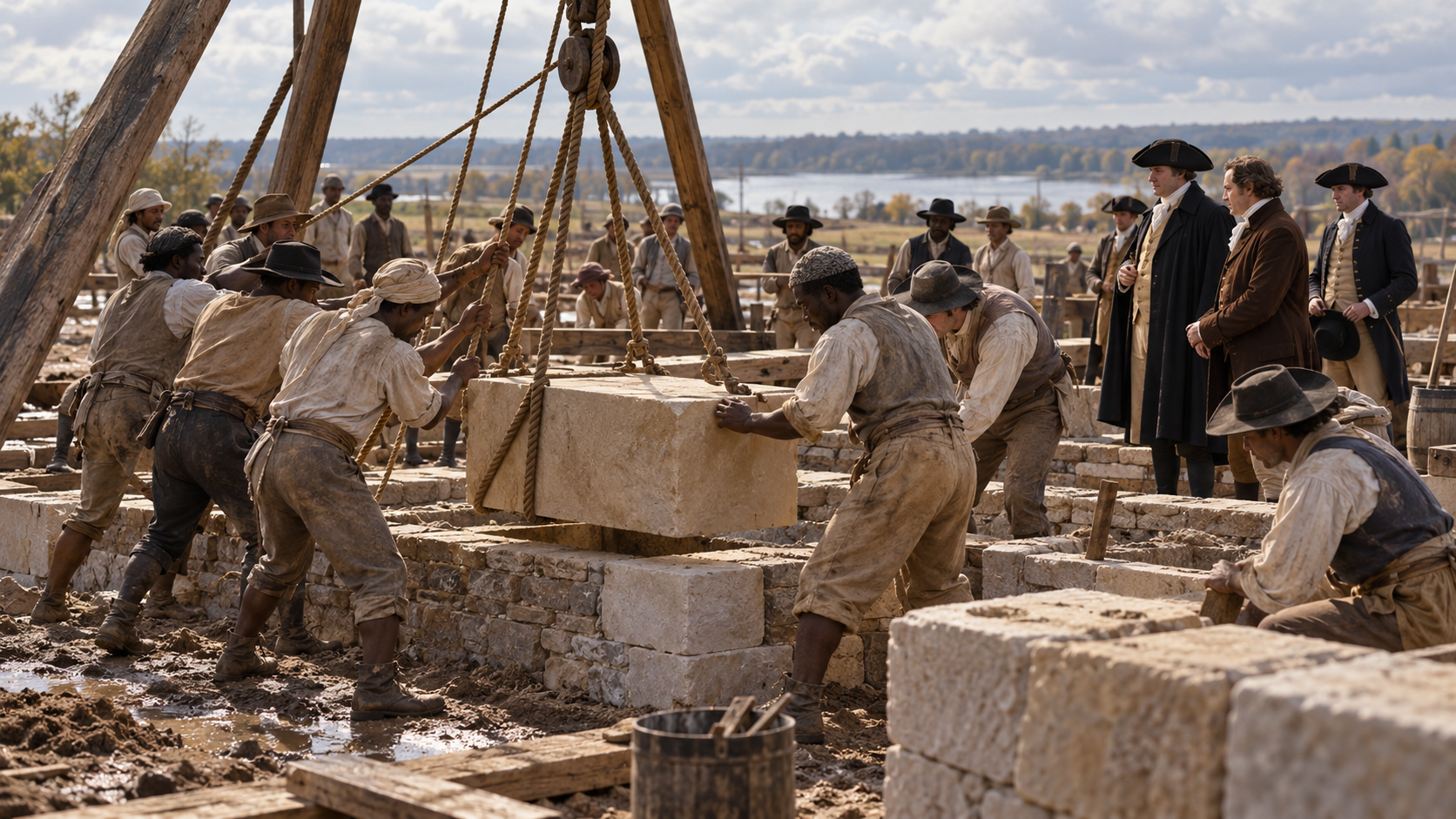
On October 13, 1792, the cornerstone of the building now known as the White House was laid during a Masonic ceremony in the new federal capital. The date matters in lifestyle history because a ceremonial foundation joined national symbolism to the often-overlooked labor of building a capital. It was not merely a headline for institutions or specialists; it touched the settings, objects, expectations, and shared rituals through which people organized ordinary days. Workers, stone masons, and officials gathered beside the shallow 1792 foundations as a dressed sandstone cornerstone was lowered with ropes and a wooden derrick Seen at human scale, the episode shows how a public milestone becomes meaningful through repeated personal choices, conversations, and memories.
Irish-born architect James Hoban had won the design competition for the President’s House, and construction began on land selected for Washington City. The cornerstone ceremony left an incomplete record, and the stone’s exact location is now unknown. Enslaved and free Black laborers, European immigrants, and local craftsmen quarried stone, cut timber, made bricks, and built the structure. The setting is essential to understanding why the event attracted attention. New ideas rarely arrive in isolation: they meet existing technology, commerce, custom, law, and desire. Contemporary newspapers, public spaces, shops, schools, workplaces, or homes carried the story outward, giving people practical ways to interpret it. Some welcomed the change, others doubted it, and many first encountered it indirectly. That mixture of novelty and familiarity helped the moment travel from a single date into a broader change in behavior.
The project gave physical form to a new executive office while the capital around it was still muddy, dispersed, and uncertain. Building methods, wages, skilled trades, forced labor, and supply networks all shaped the residence behind its classical appearance. Recognizing that labor complicates an older story focused only on architects and presidents. In daily life, the consequences appeared through altered routines, new expectations, and different ways of spending time or money. The house was occupied in 1800, burned in 1814, rebuilt, altered, and expanded as both workplace and national symbol. Its rooms and exterior became familiar through tours, photographs, television, ceremony, protest, and the continuous tension between a family’s home and a public institution. The benefits were never the whole story; major changes also exposed questions about access, responsibility, fairness, cost, and who had power to define progress. Those tensions deserve a place beside the celebration because they show how culture actually develops. The event mattered not because everyone experienced it in the same way, but because it opened a durable argument about how people wanted to live.
Today, the legacy remains visible: historic buildings are increasingly interpreted through architecture, politics, craft, and the lives of the enslaved and free workers who made them possible. Familiarity can make that inheritance easy to overlook, yet the practices surrounding it were built through years of experimentation, adaptation, criticism, and use. Looking back does more than celebrate an anniversary. It reveals the chain between public decisions and private habits, between ambitious ideas and the small acts that make them ordinary. On this day, one historical moment became part of the texture of modern life. Remembering the full setting lets the milestone feel less like a frozen fact and more like a living part of experience.
On October 13, 1792, the cornerstone of the building now known as the White House was laid during a Masonic ceremony in the new federal capital.
Irish-born architect James Hoban had won the design competition for the President's House, and construction began on land selected for Washington City. The cornerstone ceremony left an incomplete record, and the stone's exact location is now unknown. Enslaved and free Black laborers, European immigrants, and local craftsmen quarried stone, cut timber, made bricks, and built the structure.
The project gave physical form to a new executive office while the capital around it was still muddy, dispersed, and uncertain. Building methods, wages, skilled trades, forced labor, and supply networks all shaped the residence behind its classical appearance. Recognizing that labor complicates an older story focused only on architects and presidents.
The event matters in lifestyle history because a ceremonial foundation joined national symbolism to the often-overlooked labor of building a capital.
The house was occupied in 1800, burned in 1814, rebuilt, altered, and expanded as both workplace and national symbol. Its rooms and exterior became familiar through tours, photographs, television, ceremony, protest, and the continuous tension between a family's home and a public institution.
The legacy remains visible today: historic buildings are increasingly interpreted through architecture, politics, craft, and the lives of the enslaved and free workers who made them possible.
Explore more of “This Day in Lifestyles”
Discover more moments in everyday life, design, education, travel, food, fashion, and culture. Each story connects a calendar date with an event that changed how people lived.