

On This Day in Lifestyles: October 16, 1923
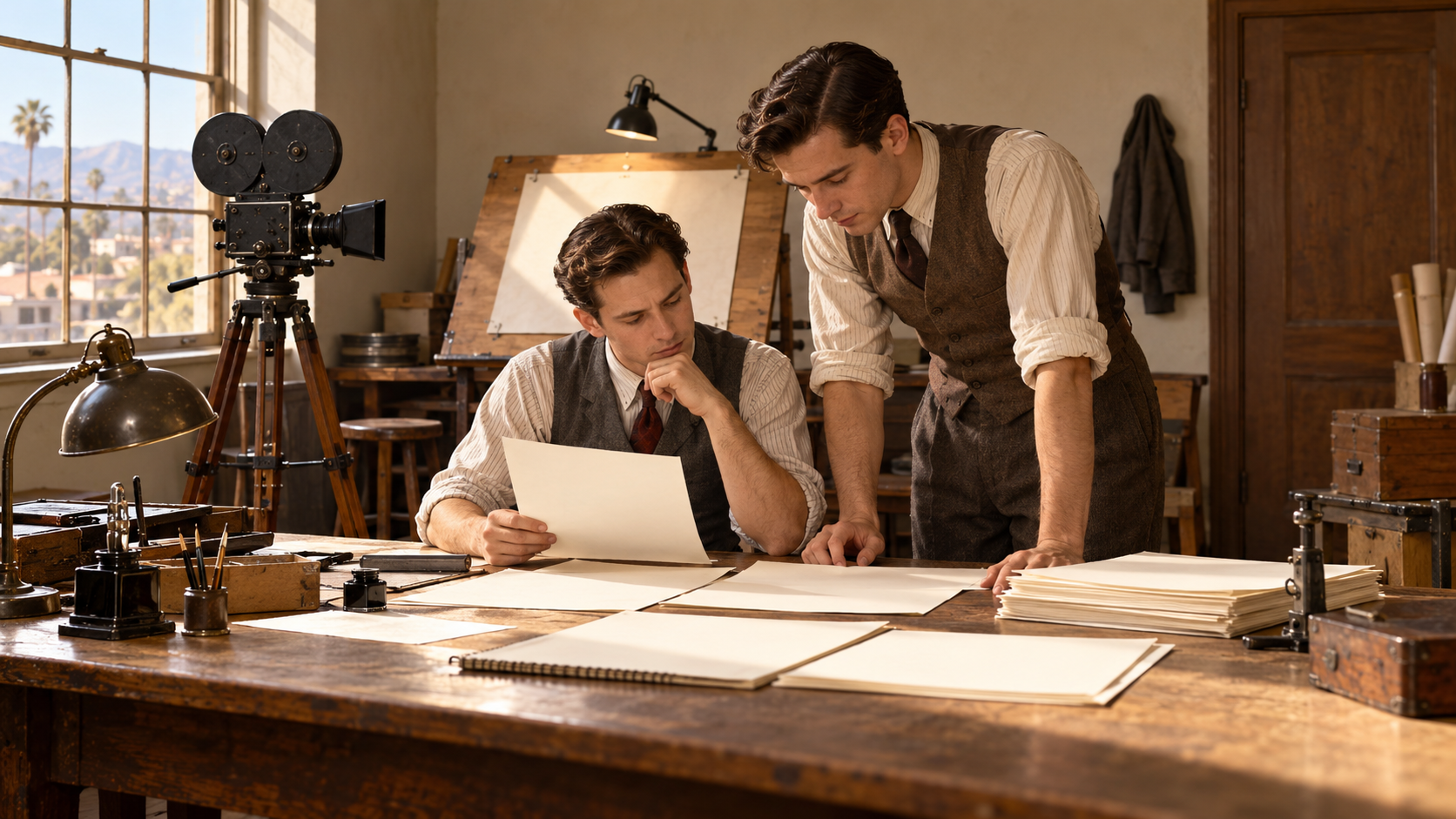
On October 16, 1923, Walt and Roy Disney formalized the agreement for their new Hollywood animation business after securing distribution for the Alice Comedies. The date matters in lifestyle history because a tiny creative partnership showed how art, technology, contracts, and routine production build a lasting institution. It was not merely a headline for institutions or specialists; it touched the settings, objects, expectations, and shared rituals through which people organized ordinary days. In a sparse 1923 Hollywood office, two brothers reviewed animation drawings beside a hand-cranked camera, stacks of paper, and a single drawing board Seen at human scale, the episode shows how a public milestone becomes meaningful through repeated personal choices, conversations, and memories.
Walt arrived in California after an earlier Kansas City studio failed, while Roy contributed money, organization, and business discipline. They worked from modest rented space with simple cameras, drawing boards, ink, paper, and a small staff. The early Alice films combined a live-action girl with an animated world and depended on outside distribution. The setting is essential to understanding why the event attracted attention. New ideas rarely arrive in isolation: they meet existing technology, commerce, custom, law, and desire. Contemporary newspapers, public spaces, shops, schools, workplaces, or homes carried the story outward, giving people practical ways to interpret it. Some welcomed the change, others doubted it, and many first encountered it indirectly. That mixture of novelty and familiarity helped the moment travel from a single date into a broader change in behavior.
The partnership joined creative experimentation to contracts, production schedules, and financial survival. Animation required teams to repeat drawings with tiny controlled changes, turning imagination into highly organized labor. Success was far from guaranteed, and rights disputes in later years pushed the brothers to develop new characters and tighter control over their work. In daily life, the consequences appeared through altered routines, new expectations, and different ways of spending time or money. The studio expanded into sound and color animation, features, television, theme parks, consumer products, and international media. Its growth helped define family entertainment and vertical integration while also prompting debates about labor, cultural power, consolidation, authorship, and ownership. The benefits were never the whole story; major changes also exposed questions about access, responsibility, fairness, cost, and who had power to define progress. Those tensions deserve a place beside the celebration because they show how culture actually develops. The event mattered not because everyone experienced it in the same way, but because it opened a durable argument about how people wanted to live.
Today, the legacy remains visible: animation studios combine artists, software, intellectual property, distribution, and merchandising on a scale far beyond the improvised rooms where the medium grew. Familiarity can make that inheritance easy to overlook, yet the practices surrounding it were built through years of experimentation, adaptation, criticism, and use. Looking back does more than celebrate an anniversary. It reveals the chain between public decisions and private habits, between ambitious ideas and the small acts that make them ordinary. On this day, one historical moment became part of the texture of modern life. Remembering the full setting lets the milestone feel less like a frozen fact and more like a living part of experience.
On October 16, 1923, Walt and Roy Disney formalized the agreement for their new Hollywood animation business after securing distribution for the Alice Comedies.
Walt arrived in California after an earlier Kansas City studio failed, while Roy contributed money, organization, and business discipline. They worked from modest rented space with simple cameras, drawing boards, ink, paper, and a small staff. The early Alice films combined a live-action girl with an animated world and depended on outside distribution.
The partnership joined creative experimentation to contracts, production schedules, and financial survival. Animation required teams to repeat drawings with tiny controlled changes, turning imagination into highly organized labor. Success was far from guaranteed, and rights disputes in later years pushed the brothers to develop new characters and tighter control over their work.
The event matters in lifestyle history because a tiny creative partnership showed how art, technology, contracts, and routine production build a lasting institution.
The studio expanded into sound and color animation, features, television, theme parks, consumer products, and international media. Its growth helped define family entertainment and vertical integration while also prompting debates about labor, cultural power, consolidation, authorship, and ownership.
The legacy remains visible today: animation studios combine artists, software, intellectual property, distribution, and merchandising on a scale far beyond the improvised rooms where the medium grew.
Explore more of “This Day in Lifestyles”
Discover more moments in everyday life, design, education, travel, food, fashion, and culture. Each story connects a calendar date with an event that changed how people lived.