

On This Day in Lifestyles: October 22, 1938
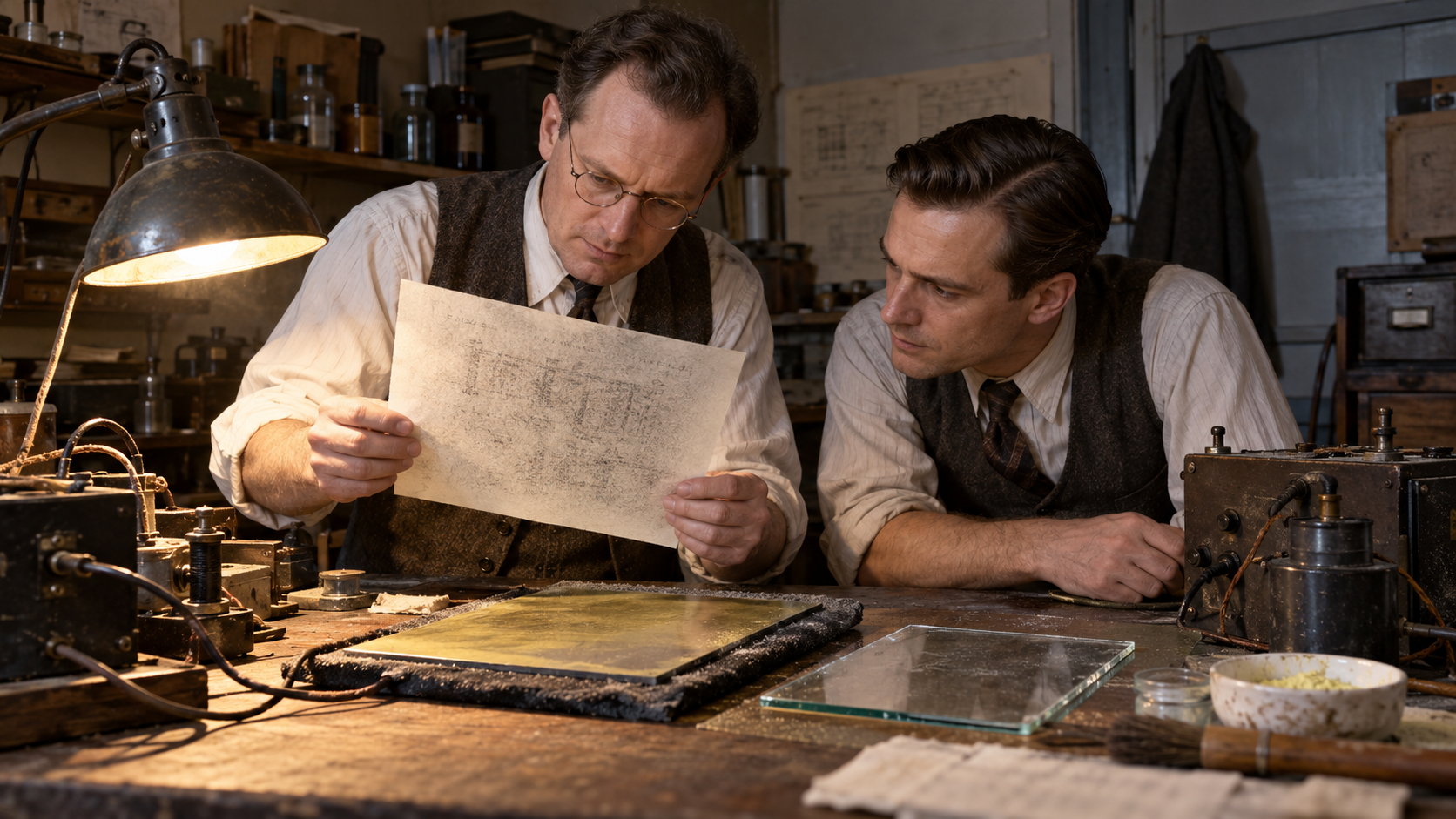
On October 22, 1938, Chester Carlson and Otto Kornei produced the first successful image using the dry copying process later called xerography. The date matters in lifestyle history because a smudged laboratory image began making duplication an ordinary office action. It was not merely a headline for institutions or specialists; it touched the settings, objects, expectations, and shared rituals through which people organized ordinary days. In a cramped 1938 Queens workroom, two inventors examined a faint powder image beside a sulfur-coated metal plate, glass slide, lamp, and simple apparatus Seen at human scale, the episode shows how a public milestone becomes meaningful through repeated personal choices, conversations, and memories.
In a rented room in Astoria, Queens, the experimenters wrote a date and place on a microscope slide, charged a sulfur-coated plate, exposed it to light, dusted it with powder, and transferred the image to wax paper. The result was crude, smudged, and small. Carlson had pursued the idea because copying patent documents by hand was slow and painful. The setting is essential to understanding why the event attracted attention. New ideas rarely arrive in isolation: they meet existing technology, commerce, custom, law, and desire. Contemporary newspapers, public spaces, shops, schools, workplaces, or homes carried the story outward, giving people practical ways to interpret it. Some welcomed the change, others doubted it, and many first encountered it indirectly. That mixture of novelty and familiarity helped the moment travel from a single date into a broader change in behavior.
The experiment proved that static electricity and light could make copies without wet chemicals or photographic processing. Companies rejected the invention for years before the Battelle Memorial Institute and Haloid supported development. A successful machine required reliable materials, paper handling, heat fusing, optics, maintenance, and a business model for offices. In daily life, the consequences appeared through altered routines, new expectations, and different ways of spending time or money. Plain-paper copiers transformed paperwork, schools, publishing, activism, administration, and the circulation of information. Easy duplication empowered collaboration and dissent but also multiplied waste, copyright disputes, confidential leaks, and the volume of documents organizations expected people to manage. The benefits were never the whole story; major changes also exposed questions about access, responsibility, fairness, cost, and who had power to define progress. Those tensions deserve a place beside the celebration because they show how culture actually develops. The event mattered not because everyone experienced it in the same way, but because it opened a durable argument about how people wanted to live.
Today, the legacy remains visible: scanners, printers, phone cameras, PDFs, and cloud sharing continue the same desire to reproduce and distribute information quickly. Familiarity can make that inheritance easy to overlook, yet the practices surrounding it were built through years of experimentation, adaptation, criticism, and use. Looking back does more than celebrate an anniversary. It reveals the chain between public decisions and private habits, between ambitious ideas and the small acts that make them ordinary. On this day, one historical moment became part of the texture of modern life. Remembering the full setting lets the milestone feel less like a frozen fact and more like a living part of experience.
On October 22, 1938, Chester Carlson and Otto Kornei produced the first successful image using the dry copying process later called xerography.
In a rented room in Astoria, Queens, the experimenters wrote a date and place on a microscope slide, charged a sulfur-coated plate, exposed it to light, dusted it with powder, and transferred the image to wax paper. The result was crude, smudged, and small. Carlson had pursued the idea because copying patent documents by hand was slow and painful.
The experiment proved that static electricity and light could make copies without wet chemicals or photographic processing. Companies rejected the invention for years before the Battelle Memorial Institute and Haloid supported development. A successful machine required reliable materials, paper handling, heat fusing, optics, maintenance, and a business model for offices.
The event matters in lifestyle history because a smudged laboratory image began making duplication an ordinary office action.
Plain-paper copiers transformed paperwork, schools, publishing, activism, administration, and the circulation of information. Easy duplication empowered collaboration and dissent but also multiplied waste, copyright disputes, confidential leaks, and the volume of documents organizations expected people to manage.
The legacy remains visible today: scanners, printers, phone cameras, PDFs, and cloud sharing continue the same desire to reproduce and distribute information quickly.
Explore more of “This Day in Lifestyles”
Discover more moments in everyday life, design, education, travel, food, fashion, and culture. Each story connects a calendar date with an event that changed how people lived.