

On This Day in Lifestyles: November 22, 1995
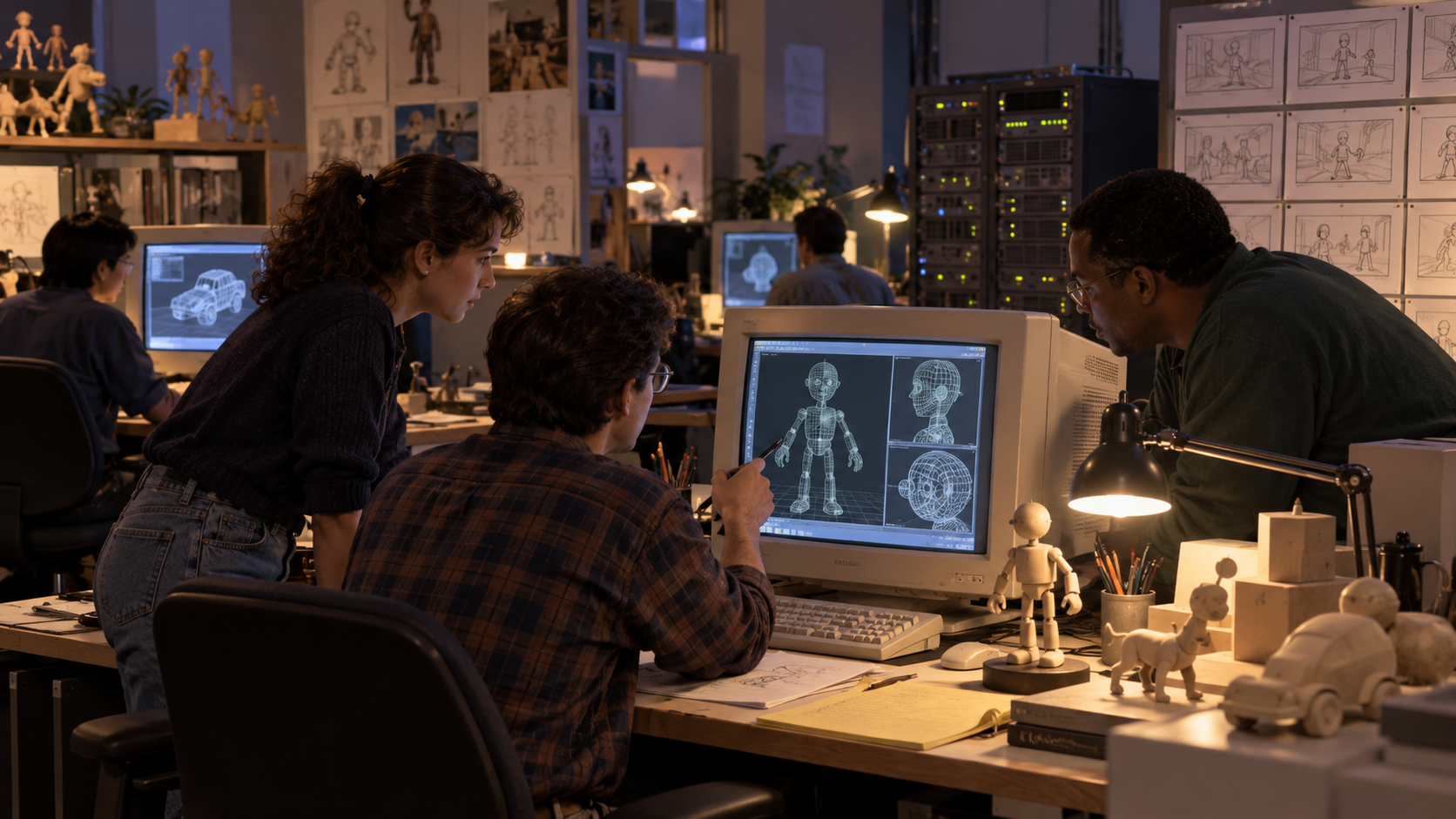
On November 22, 1995, Toy Story opened in United States theaters as the first fully computer-animated feature film. The date matters in lifestyle history because a family movie made years of invisible computing labor feel natural, expressive, and emotionally immediate. It was not merely a headline for institutions or specialists; it touched the settings, objects, expectations, and shared rituals through which people organized ordinary days. In a 1995 animation studio, artists studied storyboards and generic toy maquettes while bulky workstations rendered a simple digital scene overnight Seen at human scale, the episode shows how a public milestone becomes meaningful through repeated personal choices, conversations, and memories.
Pixar artists and engineers developed characters, environments, lighting, camera movement, and rendering through an integrated digital production. Computers of the period required careful planning and long render times, while story artists and animators relied on traditional principles of performance and editing. The collaboration joined technical research to a buddy story built for a broad audience. The setting is essential to understanding why the event attracted attention. New ideas rarely arrive in isolation: they meet existing technology, commerce, custom, law, and desire. Contemporary newspapers, public spaces, shops, schools, workplaces, or homes carried the story outward, giving people practical ways to interpret it. Some welcomed the change, others doubted it, and many first encountered it indirectly. That mixture of novelty and familiarity helped the moment travel from a single date into a broader change in behavior.
The film’s commercial and critical success demonstrated that computer imagery could sustain an emotionally engaging feature rather than serve only as spectacle or a short effect. It accelerated investment in digital animation, changed studio pipelines, and created new kinds of work for modelers, riggers, lighters, and software developers. In daily life, the consequences appeared through altered routines, new expectations, and different ways of spending time or money. Computer animation became a major form for family films worldwide, though hand-drawn, stop-motion, and hybrid methods continue. The film also launched a long franchise and became a touchstone for discussions about creativity, technology, teamwork, and the economics of entertainment. The benefits were never the whole story; major changes also exposed questions about access, responsibility, fairness, cost, and who had power to define progress. Those tensions deserve a place beside the celebration because they show how culture actually develops. The event mattered not because everyone experienced it in the same way, but because it opened a durable argument about how people wanted to live.
Today, the legacy remains visible: animated films, games, advertising, virtual production, and social media use digital tools descended from pipelines refined during this transition. Familiarity can make that inheritance easy to overlook, yet the practices surrounding it were built through years of experimentation, adaptation, criticism, and use. Looking back does more than celebrate an anniversary. It reveals the chain between public decisions and private habits, between ambitious ideas and the small acts that make them ordinary. On this day, one historical moment became part of the texture of modern life. Remembering the full setting lets the milestone feel less like a frozen fact and more like a living part of experience.
On November 22, 1995, Toy Story opened in United States theaters as the first fully computer-animated feature film.
Pixar artists and engineers developed characters, environments, lighting, camera movement, and rendering through an integrated digital production. Computers of the period required careful planning and long render times, while story artists and animators relied on traditional principles of performance and editing. The collaboration joined technical research to a buddy story built for a broad audience.
The film's commercial and critical success demonstrated that computer imagery could sustain an emotionally engaging feature rather than serve only as spectacle or a short effect. It accelerated investment in digital animation, changed studio pipelines, and created new kinds of work for modelers, riggers, lighters, and software developers.
The event matters in lifestyle history because a family movie made years of invisible computing labor feel natural, expressive, and emotionally immediate.
Computer animation became a major form for family films worldwide, though hand-drawn, stop-motion, and hybrid methods continue. The film also launched a long franchise and became a touchstone for discussions about creativity, technology, teamwork, and the economics of entertainment.
The legacy remains visible today: animated films, games, advertising, virtual production, and social media use digital tools descended from pipelines refined during this transition.
Explore more of “This Day in Lifestyles”
Discover more moments in everyday life, design, education, travel, food, fashion, and culture. Each story connects a calendar date with an event that changed how people lived.