

On This Day in Lifestyles: December 1, 1955
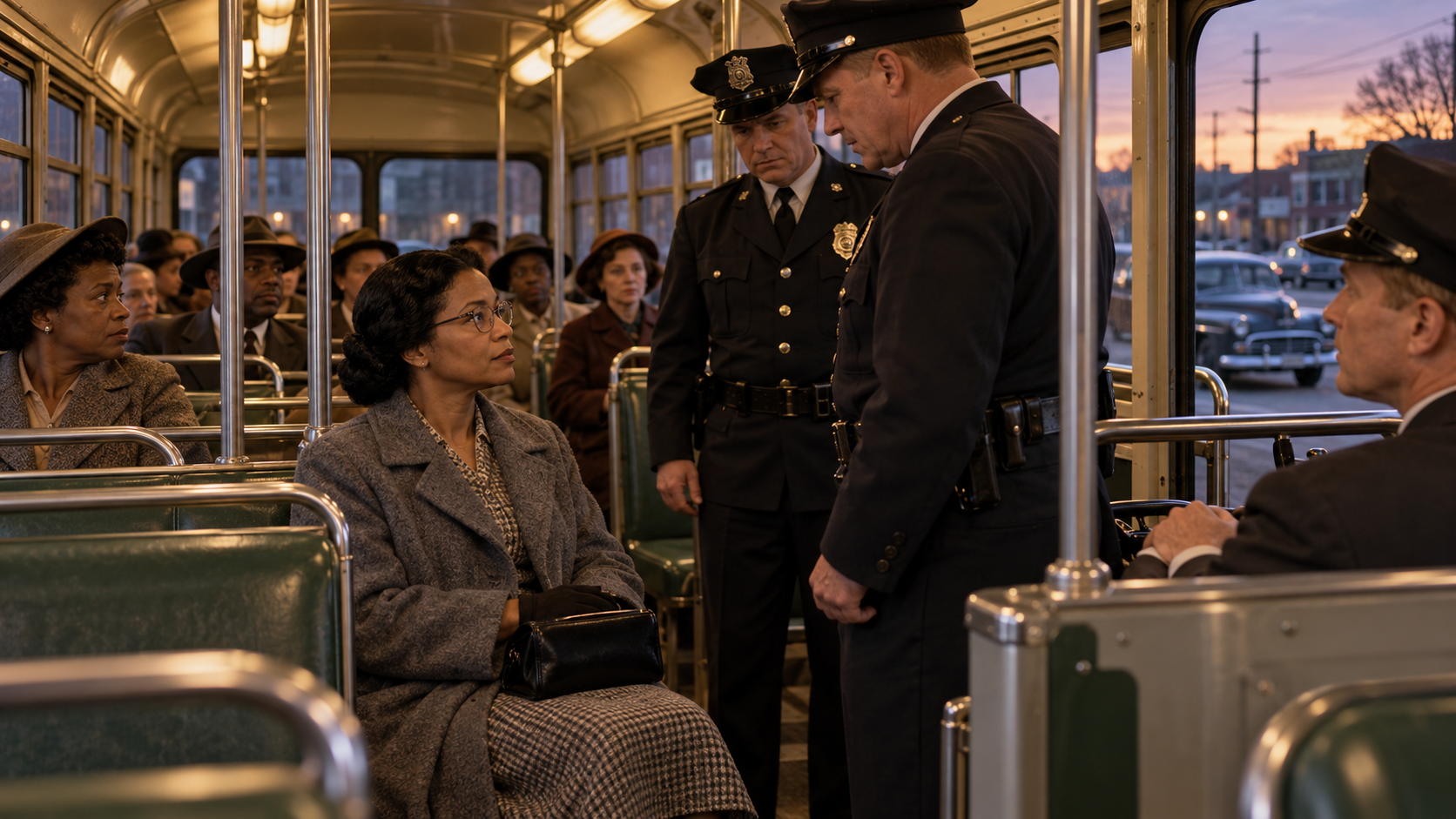
On December 1, 1955, Rosa Parks was arrested in Montgomery, Alabama, after refusing a driver’s order to give up her bus seat. The date matters in lifestyle history because a routine trip home exposed how public transportation rules shaped dignity, mobility, work, and community life. It was not merely a headline for institutions or specialists; it touched the settings, objects, expectations, and shared rituals through which people organized ordinary days. Inside a city bus at dusk, Parks sat calmly while the driver and police confronted her and other passengers watched in tense silence Seen at human scale, the episode shows how a public milestone becomes meaningful through repeated personal choices, conversations, and memories.
Parks was a longtime civil rights worker, not simply a tired passenger acting without preparation. Segregation law and local custom forced Black riders to endure unequal seating and daily humiliation. Her arrest created a test case around which the Women’s Political Council, local ministers, organizers, and thousands of bus riders could coordinate sustained action. The setting is essential to understanding why the event attracted attention. New ideas rarely arrive in isolation: they meet existing technology, commerce, custom, law, and desire. Contemporary newspapers, public spaces, shops, schools, workplaces, or homes carried the story outward, giving people practical ways to interpret it. Some welcomed the change, others doubted it, and many first encountered it indirectly. That mixture of novelty and familiarity helped the moment travel from a single date into a broader change in behavior.
The Montgomery Bus Boycott began four days later and continued for more than a year. Black residents organized carpools, walked long distances, raised funds, and endured harassment while challenging segregation through collective discipline and federal litigation. The campaign brought national attention to Rosa Parks, Martin Luther King Jr., and a broad network of local leadership. In daily life, the consequences appeared through altered routines, new expectations, and different ways of spending time or money. A Supreme Court ruling ultimately ended segregation on Montgomery buses, and the boycott became a model for later civil rights campaigns. Parks’s preserved fingerprints, court records, photographs, and personal papers also show how an ordinary public space can become the site of organized resistance. The benefits were never the whole story; major changes also exposed questions about access, responsibility, fairness, cost, and who had power to define progress. Those tensions deserve a place beside the celebration because they show how culture actually develops. The event mattered not because everyone experienced it in the same way, but because it opened a durable argument about how people wanted to live.
Today, the legacy remains visible: commuters, students, museums, and activists continue to connect transit access with civil rights, public policy, and belonging. Familiarity can make that inheritance easy to overlook, yet the practices surrounding it were built through years of experimentation, adaptation, criticism, and use. Looking back does more than celebrate an anniversary. It reveals the chain between public decisions and private habits, between ambitious ideas and the small acts that make them ordinary. On this day, one historical moment became part of the texture of modern life. Remembering the full setting lets the milestone feel less like a frozen fact and more like a living part of experience.
On December 1, 1955, Rosa Parks was arrested in Montgomery, Alabama, after refusing a driver's order to give up her bus seat.
Parks was a longtime civil rights worker, not simply a tired passenger acting without preparation. Segregation law and local custom forced Black riders to endure unequal seating and daily humiliation. Her arrest created a test case around which the Women's Political Council, local ministers, organizers, and thousands of bus riders could coordinate sustained action.
The Montgomery Bus Boycott began four days later and continued for more than a year. Black residents organized carpools, walked long distances, raised funds, and endured harassment while challenging segregation through collective discipline and federal litigation. The campaign brought national attention to Rosa Parks, Martin Luther King Jr., and a broad network of local leadership.
The event matters in lifestyle history because a routine trip home exposed how public transportation rules shaped dignity, mobility, work, and community life.
A Supreme Court ruling ultimately ended segregation on Montgomery buses, and the boycott became a model for later civil rights campaigns. Parks's preserved fingerprints, court records, photographs, and personal papers also show how an ordinary public space can become the site of organized resistance.
The legacy remains visible today: commuters, students, museums, and activists continue to connect transit access with civil rights, public policy, and belonging.
Explore more of “This Day in Lifestyles”
Discover more moments in everyday life, design, education, travel, food, fashion, and culture. Each story connects a calendar date with an event that changed how people lived.