

On This Day in Lifestyles: December 28, 1869
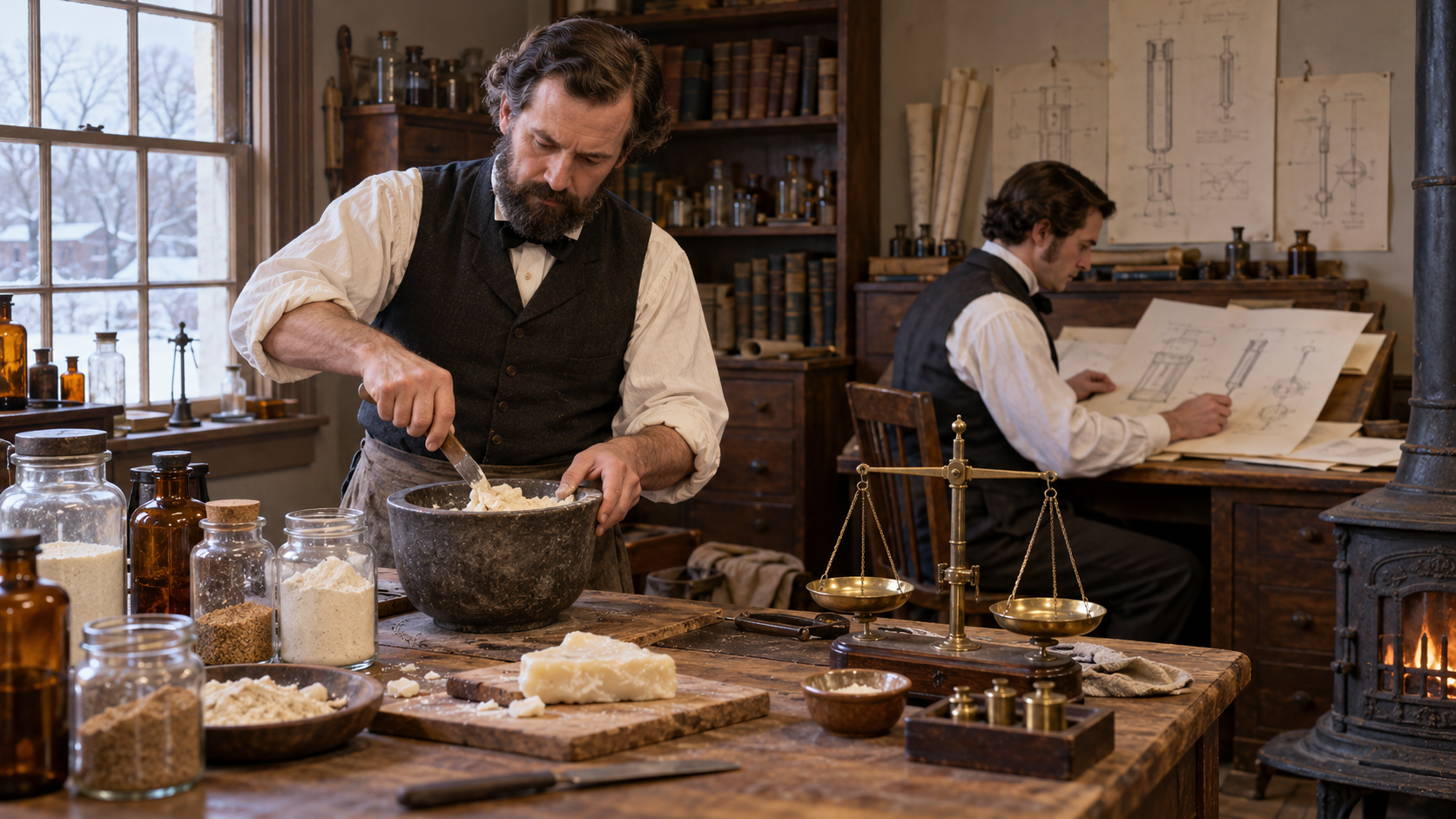
On December 28, 1869, William Finley Semple received U.S. Patent No. 98,304 for an improved chewing gum. The date matters in lifestyle history because a technical patent connected an ancient chewing habit to modern manufacturing, marketing, and pocket-sized consumption. It was not merely a headline for institutions or specialists; it touched the settings, objects, expectations, and shared rituals through which people organized ordinary days. An Ohio inventor demonstrated a small batch of gum beside mixing tools and patent drawings while a clerk examined the specification Seen at human scale, the episode shows how a public milestone becomes meaningful through repeated personal choices, conversations, and memories.
People had chewed natural resins for centuries, and commercial spruce and paraffin gums already existed. Semple, an Ohio dentist, proposed combining rubber with other substances to create a chewable material that could also act as a dentifrice. His specification even suggested ingredients and shapes, but he did not build the modern gum industry himself. The setting is essential to understanding why the event attracted attention. New ideas rarely arrive in isolation: they meet existing technology, commerce, custom, law, and desire. Contemporary newspapers, public spaces, shops, schools, workplaces, or homes carried the story outward, giving people practical ways to interpret it. Some welcomed the change, others doubted it, and many first encountered it indirectly. That mixture of novelty and familiarity helped the moment travel from a single date into a broader change in behavior.
The patent recorded one attempt to turn an old human habit into a standardized manufactured product. Other entrepreneurs later refined chicle-based recipes, flavoring, packaging, vending, advertising, and mass production. Gum became an inexpensive purchase associated with breath, concentration, childhood, sports, soldiers, and casual public behavior. In daily life, the consequences appeared through altered routines, new expectations, and different ways of spending time or money. Chewing gum grew into a global consumer category and a persistent source of litter, school rules, etiquette disputes, and dental claims. Sugar-free formulas and synthetic gum bases changed ingredients while packaging and brand culture multiplied. The patent illustrates that invention history is usually a chain, not a single origin story. The benefits were never the whole story; major changes also exposed questions about access, responsibility, fairness, cost, and who had power to define progress. Those tensions deserve a place beside the celebration because they show how culture actually develops. The event mattered not because everyone experienced it in the same way, but because it opened a durable argument about how people wanted to live.
Today, the legacy remains visible: gum remains part of checkout counters, travel kits, oral-care claims, sports routines, packaging waste, and everyday etiquette. Familiarity can make that inheritance easy to overlook, yet the practices surrounding it were built through years of experimentation, adaptation, criticism, and use. Looking back does more than celebrate an anniversary. It reveals the chain between public decisions and private habits, between ambitious ideas and the small acts that make them ordinary. On this day, one historical moment became part of the texture of modern life. Remembering the full setting lets the milestone feel less like a frozen fact and more like a living part of experience.
On December 28, 1869, William Finley Semple received U.S. Patent No. 98,304 for an improved chewing gum.
People had chewed natural resins for centuries, and commercial spruce and paraffin gums already existed. Semple, an Ohio dentist, proposed combining rubber with other substances to create a chewable material that could also act as a dentifrice. His specification even suggested ingredients and shapes, but he did not build the modern gum industry himself.
The patent recorded one attempt to turn an old human habit into a standardized manufactured product. Other entrepreneurs later refined chicle-based recipes, flavoring, packaging, vending, advertising, and mass production. Gum became an inexpensive purchase associated with breath, concentration, childhood, sports, soldiers, and casual public behavior.
The event matters in lifestyle history because a technical patent connected an ancient chewing habit to modern manufacturing, marketing, and pocket-sized consumption.
Chewing gum grew into a global consumer category and a persistent source of litter, school rules, etiquette disputes, and dental claims. Sugar-free formulas and synthetic gum bases changed ingredients while packaging and brand culture multiplied. The patent illustrates that invention history is usually a chain, not a single origin story.
The legacy remains visible today: gum remains part of checkout counters, travel kits, oral-care claims, sports routines, packaging waste, and everyday etiquette.
Explore more of “This Day in Lifestyles”
Discover more moments in everyday life, design, education, travel, food, fashion, and culture. Each story connects a calendar date with an event that changed how people lived.