

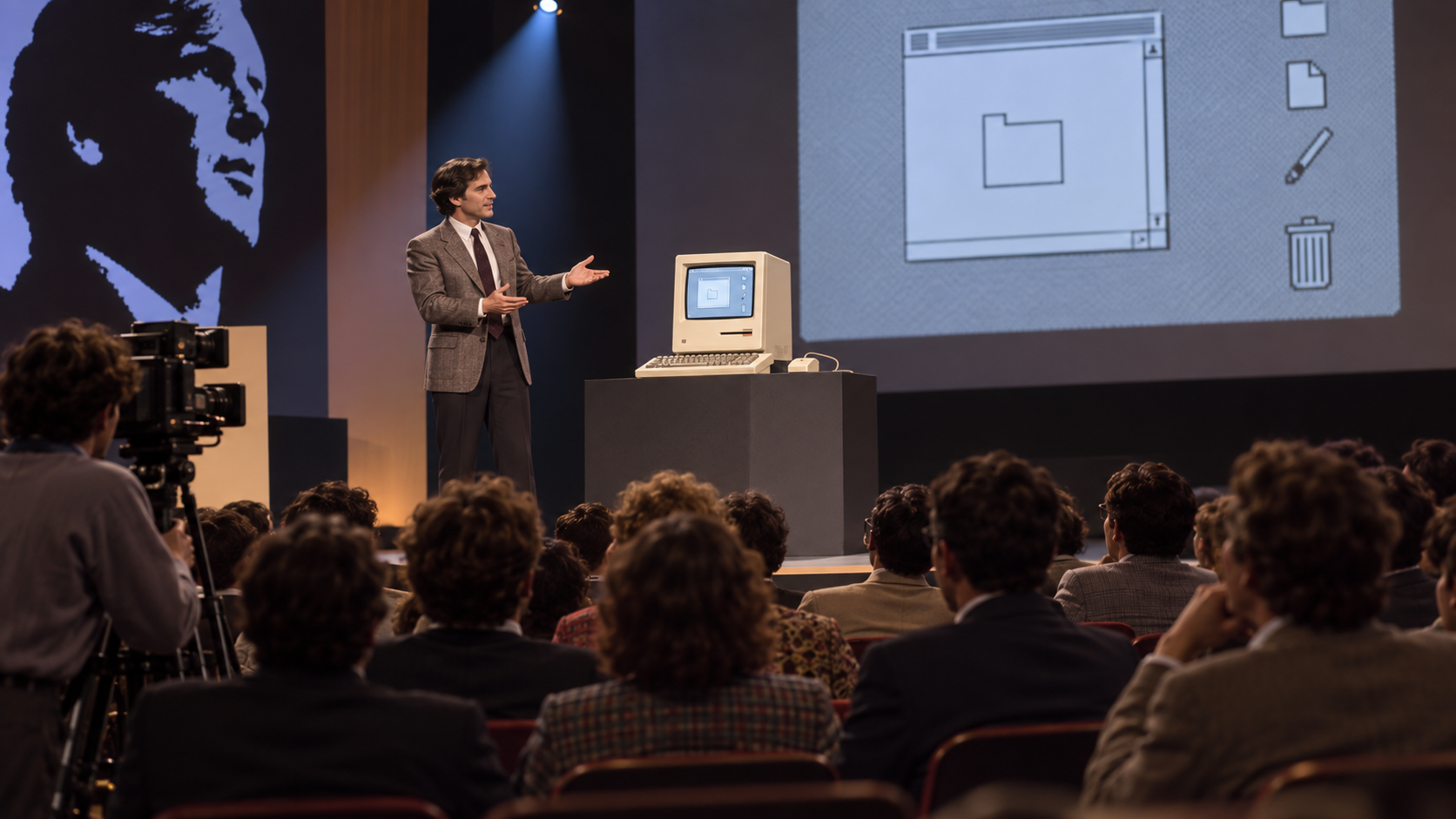
On This Day in News: January 24, 1984
On January 24, 1984, Apple Inc. made a monumental leap in the world of personal computing with the launch of the first Macintosh computer. This iconic moment in tech history was heralded as the dawn of a new era for computing, emphasizing user-friendly design and innovative graphical interfaces. Apple’s introduction of the Macintosh was more than just a new computer—it represented a vision for personal computing that would resonate for decades.
The Macintosh, with its distinctive 9-inch black-and-white display and compact design, was revolutionary. At the time, most personal computers relied on text-based command interfaces, which required users to type in specific commands to operate the machine. The Macintosh, by contrast, featured a graphical user interface (GUI), making it more intuitive for people to interact with computers using a mouse and icons. This marked a major shift in how computers were used, bringing them closer to mainstream audiences.
The launch event, held at the Flint Center for the Performing Arts in Cupertino, California, was a spectacle in itself. Apple co-founder Steve Jobs introduced the Macintosh with his trademark flair, emphasizing its revolutionary features. The presentation, paired with a memorable commercial directed by Ridley Scott, showcased the Macintosh as a tool that could transform industries and empower individuals. The commercial, titled “1984,” depicted a dystopian world that the Macintosh promised to free its users from, and it remains one of the most iconic advertisements in history.
Despite the initial excitement, the Macintosh’s journey in the market was not without its challenges. Early sales were slower than expected, largely due to its high price point and limited software options. However, over the following years, Apple continued to refine and expand the Macintosh, leading to its eventual dominance in the personal computer market. The Macintosh laid the groundwork for Apple’s later success with products like the iPhone and iPad, helping the company solidify its position as one of the most influential technology firms in the world.
Today, the legacy of the Macintosh continues to shape personal computing. Its emphasis on design, simplicity, and user experience has become a defining characteristic of modern technology. The Macintosh was not just a computer—it was the first step in creating the sleek, accessible devices we use today.
On January 24, 1984, Apple Inc. launched the first Macintosh, marking a pivotal moment in the history of personal computing. This groundbreaking computer introduced a graphical user interface (GUI) to the mainstream, a feature that would go on to define the personal computer revolution. The Macintosh was Apple's answer to the growing demand for user-friendly, efficient computers that could be used by everyone, not just technical experts.
The event, held in Cupertino, California, was attended by thousands, with Apple co-founder Steve Jobs leading the presentation. The debut of the Macintosh would forever change the technology landscape, paving the way for future innovations in computing.
While the Macintosh was revolutionary, its early adoption was slower than anticipated. One of the primary barriers to its success was its high price point and limited software available at launch. However, the Macintosh's GUI was quickly recognized as a game-changer, eventually leading to a broader acceptance of personal computers with graphical interfaces.
In the short term, Apple's Macintosh revolutionized the way users interacted with computers, making them more accessible and intuitive. It also set the stage for future Apple products, such as the iPod, iPhone, and iPad, which would continue to focus on simplicity and user experience.
The launch of the Macintosh had long-term effects on the personal computing industry. It solidified Apple's reputation as a leader in innovative design and technology, a status that would continue with products like the iPhone. The Macintosh was the first major product to push forward the idea of personal computing as a mainstream tool, ultimately contributing to the shift from command-line interfaces to graphical interfaces, which are standard today.
The success of the Macintosh also laid the foundation for Apple's iconic brand, which emphasizes intuitive design, innovation, and a seamless user experience. This shift not only impacted the computing world but also influenced how future technology would be developed and marketed.
Explore more of "On This Day ..."
Discover more events from the same date across news, politics, technology, sports, and other fields. Each link highlights significant moments that shaped history on different fronts.