

On This Day in News: January 25, 1971
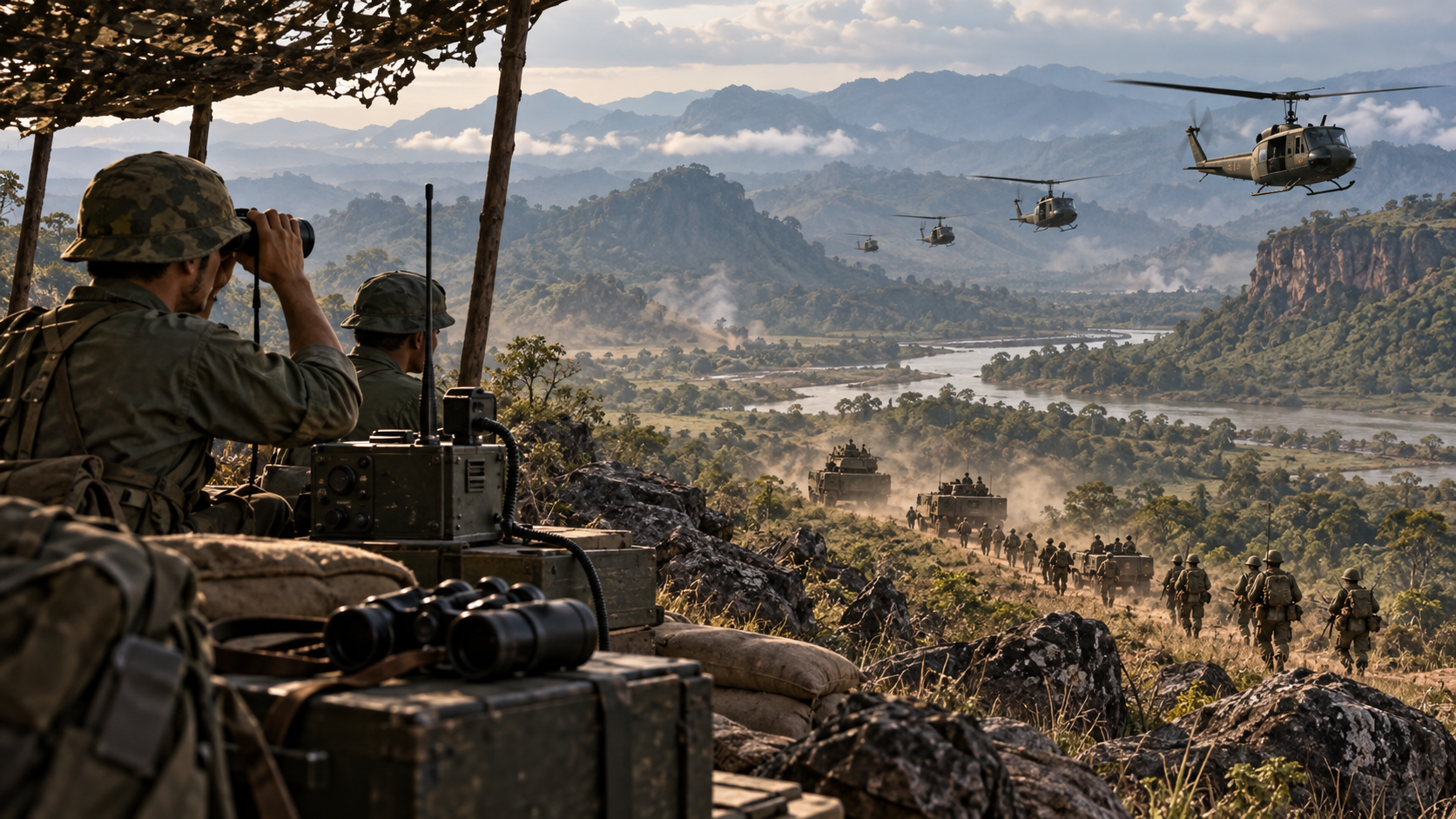
On January 25, 1971, the United States and South Vietnam launched Operation Lam Son 719, a major military offensive aimed at interdicting the North Vietnamese Army (NVA) supply lines and disrupting their presence in southern Laos during the Vietnam War. The operation, which took place in the area surrounding the Ho Chi Minh Trail, represented one of the largest combined ground assaults conducted by South Vietnamese forces, with extensive air and artillery support from the United States.
The operation began with the deployment of over 20,000 South Vietnamese troops, supported by American airpower, to strike at the NVA’s logistical routes running through Laos into South Vietnam. The goal was to destroy enemy supply depots, deny North Vietnamese forces the ability to move troops and supplies, and weaken the infrastructure critical to the NVA’s war effort. Despite heavy airstrikes and artillery bombardments, the operation faced numerous obstacles, including rugged terrain, dense jungle, and fierce resistance from entrenched North Vietnamese forces. The South Vietnamese Army struggled to maintain momentum, and the operation eventually became bogged down in a protracted fight.
Although Operation Lam Son 719 was initially seen as a tactical success due to the large-scale destruction of NVA logistical networks, it quickly turned into a military and political embarrassment for the South Vietnamese forces. The campaign culminated in a disastrous retreat, with significant casualties on both sides. In the aftermath, many questioned the ability of the South Vietnamese Army to operate independently without direct U.S. military support. Additionally, the operation led to widespread criticism of U.S. strategy in Southeast Asia, particularly its reliance on South Vietnamese forces to take on more combat responsibilities.
The long-term impact of the operation was felt throughout the remaining years of the Vietnam War. It illustrated the challenges faced by the South Vietnamese in combat situations without sufficient American assistance, ultimately contributing to the growing sense that the war was unwinnable without an escalation of U.S. military involvement. For the North Vietnamese, the operation was a tactical success, allowing them to maintain control of vital supply lines and demonstrate their resilience in the face of a major offensive.
On January 25, 1971, the United States and South Vietnam launched Operation Lam Son 719, a major military offensive aimed at disrupting the North Vietnamese Army's (NVA) supply routes through Laos. This operation was part of a larger strategy to interdict the Ho Chi Minh Trail, a critical logistical network used by the North Vietnamese forces to transport supplies into South Vietnam during the Vietnam War.
The operation involved over 20,000 South Vietnamese troops, who were supported by American air and artillery support. The primary goal was to cripple the NVA’s ability to maintain their presence in southern Laos, thus weakening their influence over the Ho Chi Minh Trail, which was vital for their war effort in the south.
Despite initial optimism, Operation Lam Son 719 ultimately ended in failure for South Vietnamese forces. While they managed to destroy some supply depots and disrupt enemy logistics, the operation faced significant obstacles, including difficult terrain, heavy resistance from the entrenched NVA, and a lack of coordination between South Vietnamese and American forces. The operation resulted in heavy casualties, and many of the South Vietnamese forces were unable to achieve their objectives.
The U.S. also faced criticism for its reliance on South Vietnamese forces to conduct operations without sufficient American troop presence. The operation's failure underscored the limitations of the South Vietnamese military and led to further questions about the effectiveness of the U.S. strategy in Southeast Asia.
In the long term, Operation Lam Son 719 highlighted the weaknesses of the South Vietnamese military in handling major offensives without direct U.S. support. The operation also demonstrated the growing difficulties of the Vietnam War, which would eventually lead to the signing of the Paris Peace Accords in 1973 and the eventual fall of Saigon in 1975.
The failure of the operation contributed to the growing belief that the South Vietnamese were not prepared to defend themselves against North Vietnam without substantial U.S. military backing. This realization influenced U.S. public opinion, leading to the eventual reduction of American military involvement in Vietnam and the shift toward "Vietnamization" – the policy of transferring more combat responsibility to South Vietnamese forces.
Explore more of "On This Day ..."
Discover more events from the same date across news, politics, technology, sports, and other fields. Each link highlights significant moments that shaped history on different fronts.