

On This Day in News: August 18, 1920
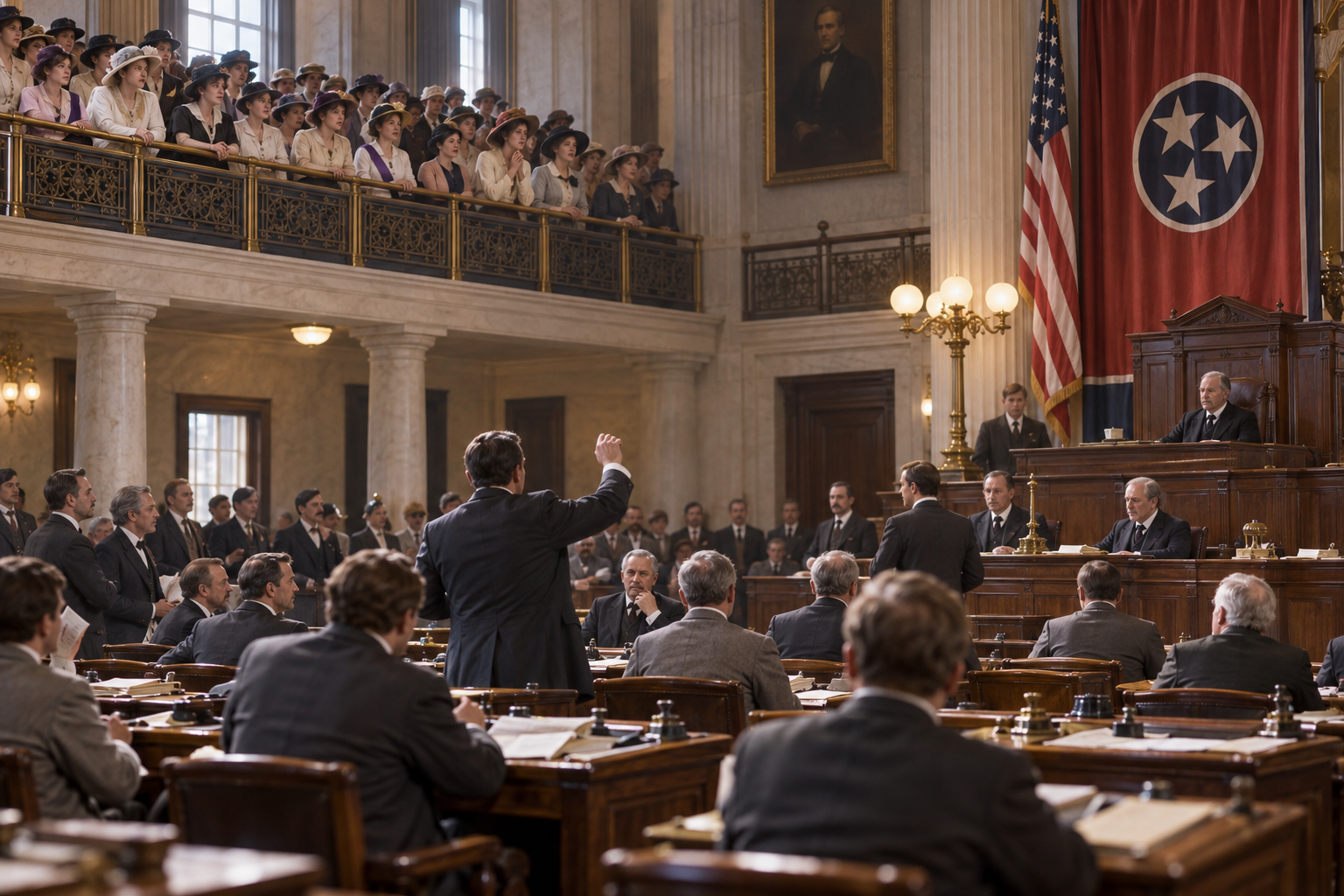
On August 18, 1920, the Tennessee legislature approved the Nineteenth Amendment, providing the final state ratification needed to add women's voting rights to the United States Constitution. The moment quickly became a major news event because it joined an immediate public development to larger questions of power, responsibility, and change. Contemporary audiences did not yet know every consequence, but the central facts were clear enough to command attention. Reporting from the day placed Tennessee's ratification of the Nineteenth Amendment within a rapidly moving story whose meaning extended beyond the people and institutions directly involved.
The deeper setting was more than seventy years of organizing, petitions, civil disobedience, state campaigns, racial divisions within the movement, and resistance from antisuffrage forces. Those conditions shaped the choices available to leaders, participants, and communities, and they explain why the event unfolded as it did. They also show why a single anniversary cannot be understood as an isolated date. Institutions had been responding to long-running pressures, while citizens encountered the effects through daily life, public debate, and the news media. Reconstructing that context helps separate documented causes from simplified hindsight.
The immediate result was that the amendment reached the constitutional ratification threshold, although formal certification followed on August 26 and discriminatory barriers continued to exclude many women. Officials, journalists, and affected communities then had to interpret events with incomplete information and under intense pressure. Early accounts often emphasized the most visible developments, while later investigations supplied additional evidence and corrected parts of the initial narrative. That pattern matters because public understanding is formed in stages: first through urgent reports, then through records, testimony, policy decisions, and historical analysis.
The long-term importance is that the vote expanded constitutional political rights while reminding later generations that legal change, voter access, and equal participation require continuing enforcement and organizing. The anniversary still invites scrutiny because its consequences reached law, institutions, culture, or public memory well beyond the original day. It also demonstrates why historical news benefits from precise dates, careful sourcing, and attention to people whose experiences may have been minimized in early coverage. Remembering the event means examining both what happened and how later generations used its lessons, symbols, and unresolved questions. For readers today, the most useful approach is to compare contemporary reporting with official records and later scholarship, while recognizing that memory changes as new evidence and perspectives emerge. That method keeps the anniversary connected to verifiable history instead of turning it into a simple celebration or condemnation. Accuracy is the foundation of remembrance.
The immediate event was straightforward: the Tennessee legislature approved the Nineteenth Amendment, providing the final state ratification needed to add women's voting rights to the United States Constitution. Its importance came from the way a specific action or crisis intersected with wider public concerns.
The main background was more than seventy years of organizing, petitions, civil disobedience, state campaigns, racial divisions within the movement, and resistance from antisuffrage forces. This setting helps explain why the event drew attention and why competing interpretations emerged.
In the short term, the amendment reached the constitutional ratification threshold, although formal certification followed on August 26 and discriminatory barriers continued to exclude many women. People responding in real time had limited information, making verification and responsible reporting especially important.
Early narratives could not capture every consequence. Later records, testimony, investigations, and scholarship added detail and sometimes corrected assumptions formed during the first news cycle.
The central legacy is that the vote expanded constitutional political rights while reminding later generations that legal change, voter access, and equal participation require continuing enforcement and organizing. That consequence connects the anniversary to institutions and debates that continued long afterward.
The event should be remembered with proportion and context rather than as a slogan. Its lasting value comes from examining evidence, affected communities, and the decisions that followed.
Explore more of "On This Day ..."
Discover more events from the same date across news, politics, technology, sports, and other fields. Each link highlights significant moments that shaped history on different fronts.