

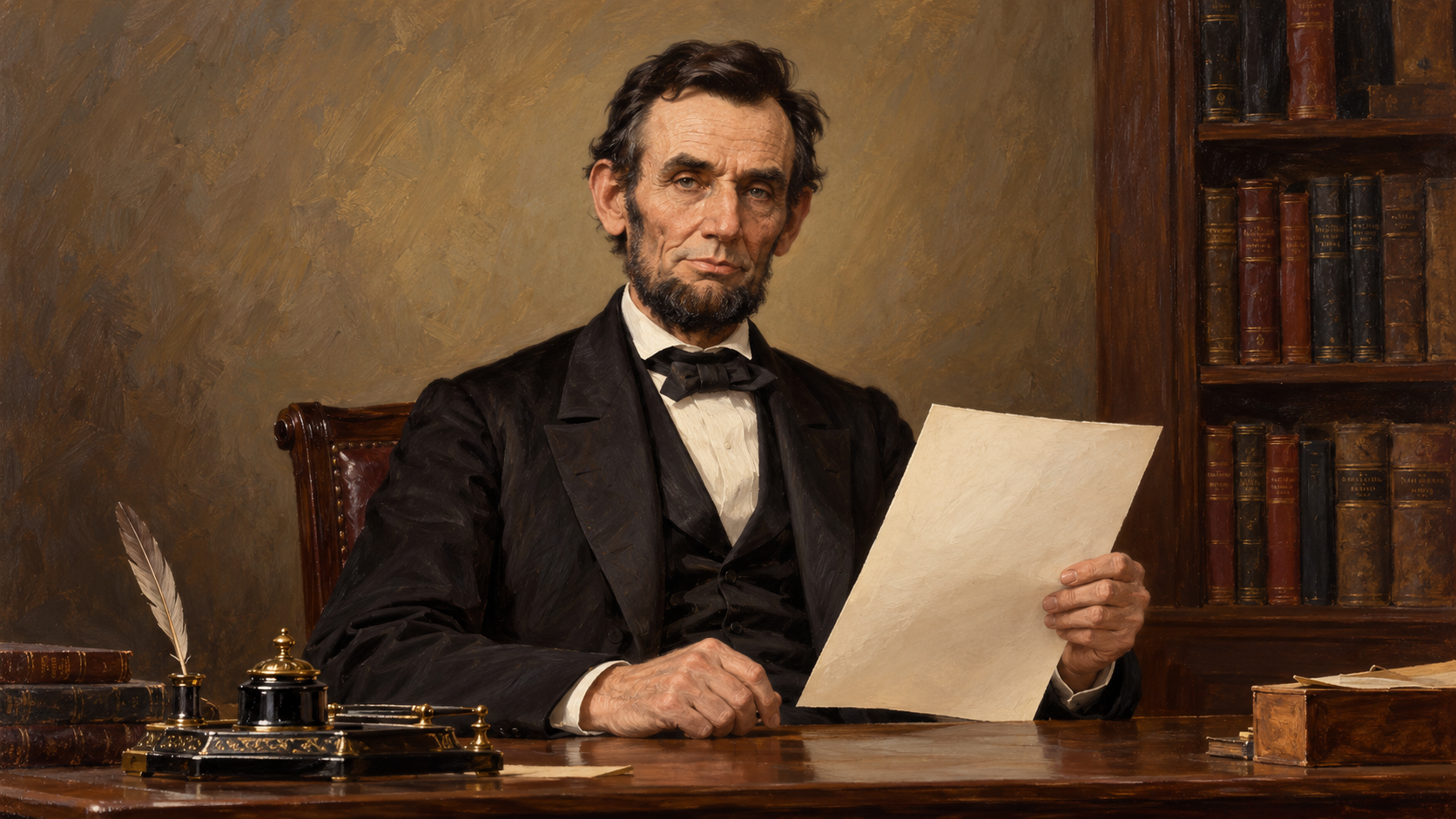
On This Day in Politics: January 01, 1863
On January 1, 1863, President Abraham Lincoln issued the Emancipation Proclamation, a landmark political and moral declaration that forever altered the course of American history. Signed during the height of the Civil War, the document proclaimed that “all persons held as slaves” within the rebellious Confederate states “are, and henceforward shall be free.” While it did not immediately free all enslaved people, it fundamentally changed the character of the war—shifting its focus from preserving the Union to a crusade for human liberty. The proclamation redefined the nation’s political purpose and gave the Union cause a powerful moral foundation.
The Proclamation applied only to areas under Confederate control, leaving slavery untouched in loyal border states and parts of the South already under Union occupation. However, its symbolic power was immense. It allowed the enlistment of formerly enslaved men into the Union Army and Navy, adding nearly 180,000 Black soldiers and sailors to the war effort by the end of the conflict. Their courage and service not only strengthened the Union’s military position but also proved decisive in altering public opinion about African Americans’ role in society. The Proclamation became a political turning point, reinforcing the principle that freedom was a right—not a privilege—to be recognized and protected by the federal government.
Internationally, the document carried far-reaching diplomatic consequences. By framing the Union’s cause as one of emancipation, Lincoln effectively discouraged European powers, particularly Britain and France, from recognizing or supporting the Confederacy. Few governments wished to align themselves with a nation openly fighting to preserve slavery. This shift isolated the South and bolstered the Union’s standing on the global stage. Domestically, the Emancipation Proclamation laid the groundwork for the eventual abolition of slavery through the Thirteenth Amendment, ratified in December 1865.
The Emancipation Proclamation remains one of the most important political acts in American history—a declaration not only of freedom but of purpose. It transformed the Civil War into a battle for human rights and redefined the nation’s identity. On that New Year’s Day in 1863, Lincoln’s words did more than alter the law; they reshaped the moral fabric of the United States, ensuring that liberty would stand at the center of its political promise for generations to come.
By January 1, 1863, the United States was deep into the Civil War, and slavery had become the central moral and political issue. Earlier in September 1862, President Abraham Lincoln issued a preliminary Emancipation Proclamation, warning that enslaved people in rebelling states would be declared free if those states did not return to the Union by the new year.
When the deadline passed, the final proclamation took effect. It applied to areas still in rebellion, reframing the conflict as not only a struggle to preserve the Union but also a fight to end slavery in those territories.
The Emancipation Proclamation did not instantly free all enslaved people. It did not apply to slaveholding border states that remained in the Union, nor to areas already under Union control. Its power was strongest where federal authority was still being contested on the battlefield.
Still, it changed the character of the war. Enslaved people in Confederate areas used the proclamation as a signal to seek freedom behind Union lines, and it allowed Black men to enlist in the Union Army and Navy, giving the North both a moral cause and a larger fighting force.
In the long term, the proclamation became a step toward permanent abolition. It helped pave the way for the 13th Amendment, ratified in 1865, which formally abolished slavery throughout the United States, including in states that had not been covered by the proclamation itself.
The document also reshaped how Americans viewed the role of the federal government in questions of freedom, citizenship, and rights. Later debates over Reconstruction, civil rights, and equal protection drew on the shift in federal responsibility that began with Lincoln’s decision on this day.
Explore more of "On This Day ..."
Discover more events from the same date across news, politics, technology, sports, and other fields. Each link highlights significant moments that shaped history on different fronts.