

On This Day in Politics: January 28, 1986
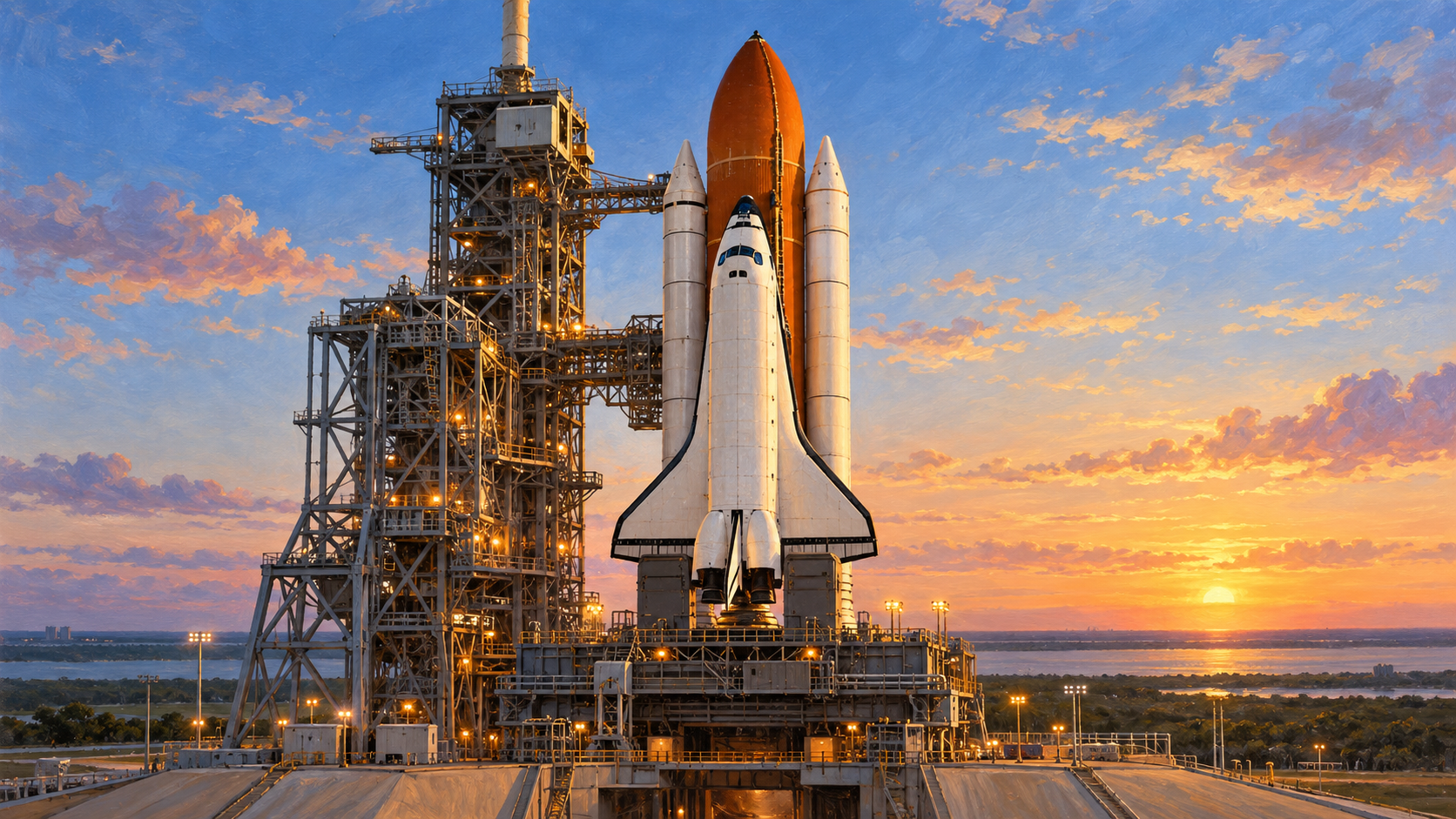
On January 28, 1986, the Space Shuttle Challenger disintegrated 73 seconds after liftoff from Cape Canaveral, killing all seven crew members on board and shocking the nation. The tragedy occurred during what was intended to be a landmark mission, highlighted by the inclusion of Christa McAuliffe, a schoolteacher selected to become the first civilian in space under NASA’s Teacher in Space Program. Millions of Americans—many of them schoolchildren—watched the launch live, making the disaster one of the most publicly witnessed national tragedies of the decade. In the immediate aftermath, President Ronald Reagan addressed the country, honoring the crew and pledging a full investigation.
The political implications of the Challenger disaster were immediate and far-reaching. The Reagan administration suspended all shuttle flights and created the Rogers Commission, an independent panel tasked with identifying the cause of the failure and assessing NASA’s internal practices. The commission revealed that cold weather had compromised rubber O-ring seals on the shuttle’s solid rocket boosters, a long-known engineering concern that had repeatedly been flagged by engineers. It also uncovered significant communication failures within NASA and its contractors, noting that pressure to maintain an ambitious launch schedule had overshadowed proper safety protocols. These findings not only reshaped public perceptions of NASA but also raised broader questions about government oversight, bureaucratic culture, and accountability in high-risk federal programs.
The disaster also influenced national policy on space exploration. The shuttle program, once envisioned as a routine transportation system for scientific and commercial missions, was restructured to place greater emphasis on safety and realistic scheduling. NASA shifted away from using the shuttle for launching commercial satellites, encouraging the growth of a private-sector launch industry that would later play a major role in American space capabilities. At the same time, the investigation reinforced congressional interest in stronger oversight of federal agencies engaged in complex scientific and technological work. The Challenger tragedy subsequently became a case study in risk management, institutional pressure, and the importance of transparent communication within government organizations.
Looking back, January 28, 1986, remains a defining moment in the history of U.S. space policy. The disaster reshaped NASA’s trajectory, prompting reforms that influenced future programs including the shuttle’s successors and the International Space Station. It reinforced the notion that technological ambition must be balanced with rigorous safety standards and honest internal dialogue. For many Americans, the loss of the Challenger crew marked a somber reminder of the dangers inherent in exploration—not just in space, but in any government endeavor where innovation and risk intersect. The legacy of the event continues to inform debates about how federal institutions manage complex missions, safeguard public trust, and pursue scientific progress responsibly.
By January 28, 1986, NASA’s Space Shuttle program had become a symbol of American technological ambition and was increasingly presented as a routine vehicle for carrying satellites, experiments, and even civilians into orbit. The launch of Space Shuttle Challenger on mission STS-51-L was meant to highlight this new era with the Teacher in Space Program, sending schoolteacher Christa McAuliffe into space as a civilian crew member.
That morning, millions of Americans, including many students watching live in classrooms, tuned in to see the launch from Cape Canaveral, Florida. Just 73 seconds after liftoff, Challenger broke apart, killing all seven astronauts on board and instantly transforming what had been billed as a moment of inspiration into a national tragedy that demanded political and institutional scrutiny.
In the immediate aftermath, President Ronald Reagan postponed his scheduled State of the Union address and instead delivered a televised message honoring the crew and promising a full investigation. The federal government grounded the shuttle fleet, and the Rogers Commission was established to determine what had gone wrong and how NASA’s decision-making processes had contributed to the disaster.
The commission concluded that a failure of rubber O-ring seals on the solid rocket booster, exacerbated by unusually cold weather, caused the vehicle’s destruction. It also documented extensive organizational and communication problems within NASA and its contractors, including ignored warnings from engineers. These findings raised serious questions about how federal agencies balance safety, schedule, and political expectations in high-risk programs.
Over the long term, the Challenger disaster reshaped U.S. space policy and federal oversight of complex technological projects. NASA restructured aspects of the shuttle program, strengthened safety reviews, and scaled back plans to use the shuttle as a general-purpose launch vehicle, opening space for a larger role by commercial rocket providers and altering how the United States approached access to orbit.
Challenger also became a case study in public administration and organizational behavior, frequently cited in discussions about risk management, whistleblowing, and the dangers of allowing schedule pressure to override technical concerns. The events of January 28, 1986, left a lasting imprint on how policymakers, engineers, and the public think about government-led exploration, reminding future leaders that national prestige and innovation must be matched by transparency, caution, and accountability.
Explore more of "On This Day ..."
Discover more events from the same date across news, politics, technology, sports, and other fields. Each link highlights significant moments that shaped history on different fronts.