

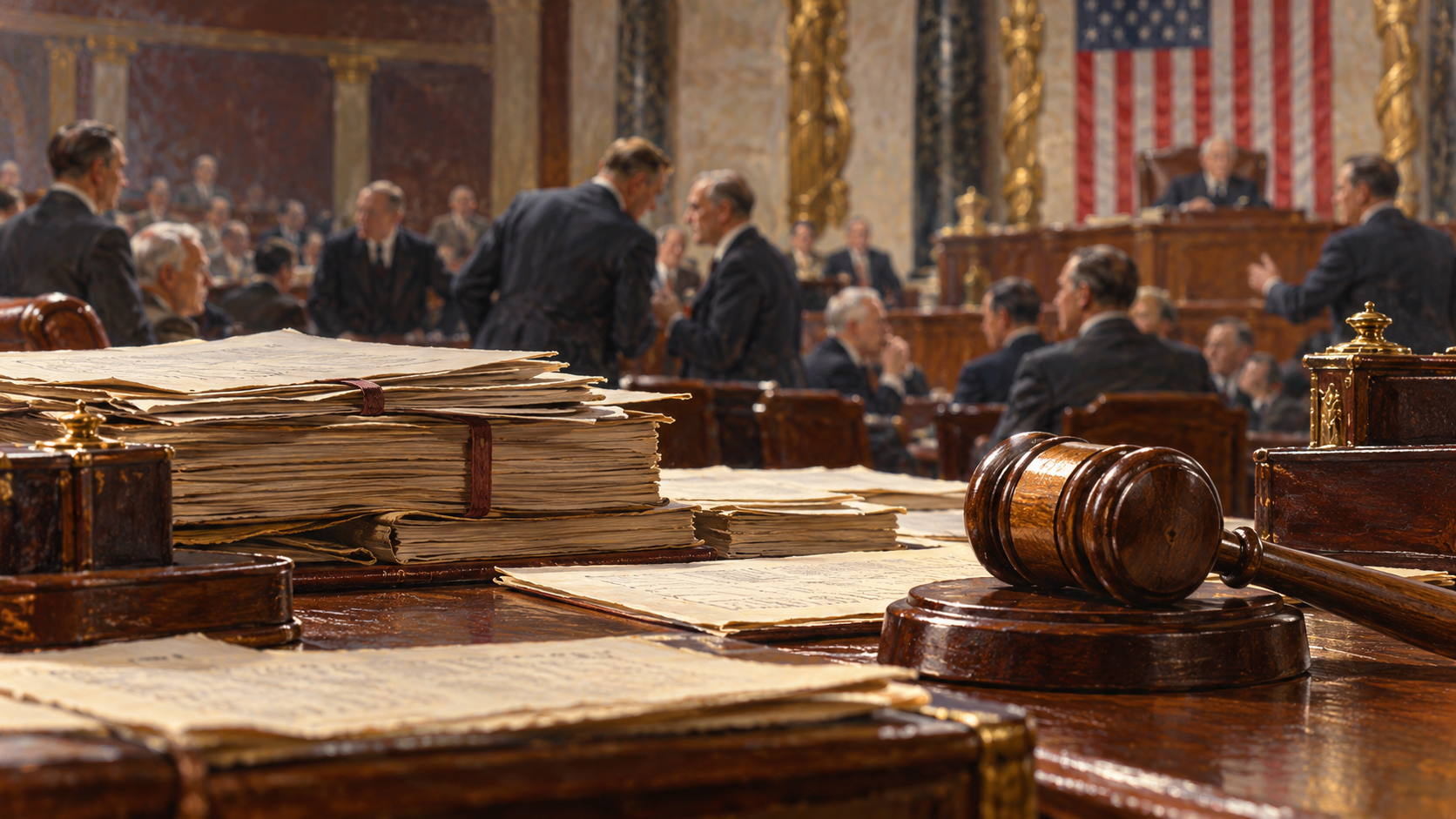
On This Day in Politics: February 20, 1933
On February 20, 1933, Congress completed its approval of the proposed Twenty-first Amendment, sending the repeal of national Prohibition to the states. The House’s action followed the Senate’s vote four days earlier. It was a decisive reversal of the constitutional policy established by the Eighteenth Amendment, but it did not itself make repeal effective. State ratification was still required. The distinction separates this date from December 5, 1933, when the necessary number of states approved the amendment. February 20 marks the point at which the federal legislature formally opened the constitutional route out of Prohibition.
The proposal addressed a policy embedded in the Constitution rather than merely in an ordinary federal statute. That made repeal a two-stage process involving both Congress and the states. Changing enforcement priorities or passing a conflicting law could not remove the Eighteenth Amendment from the constitutional framework. Congress therefore used the amendment procedure to submit a new article that expressly repealed the earlier one. This was a substantial political admission that a national policy once given the highest legal standing should be reversed. It also demonstrated that constitutional permanence was not absolute: the same system that authorized a major change could provide a lawful means of reconsidering it.
Congress selected ratifying conventions in the states rather than the usual method of approval by state legislatures. The proposed amendment required conventions in three-fourths of the states to agree within seven years. It also preserved protection for state laws governing the transportation or importation of alcohol, so repeal did not mean that every local restriction would disappear. The structure reflected a shift away from a single nationwide constitutional ban toward a larger role for state choices. Voters and convention delegates would still have to act, and the federal decision could not substitute for those separate stages of consent.
The necessary ratifications arrived within the year, and national Prohibition ended in December. In the meantime, Congress also changed the law governing certain lower-alcohol beverages, another reminder that the transition involved several distinct legal steps. The Twenty-first Amendment remains exceptional because it repealed another constitutional amendment and used state conventions for ratification. February 20 is therefore an instructive date in the history of political accountability. It shows elected institutions confronting an established national policy through the procedures required to change it, while leaving room for disagreement among states. The episode illustrates both the difficulty of reversing constitutional commitments and the capacity of a constitutional system to respond when political judgment changes.
Because Prohibition rested on the Eighteenth Amendment, ending it required another constitutional amendment. Ordinary legislation could not simply erase it.
The Senate approved the proposal on February 16, and the House followed on February 20. The latter date marks completed congressional action.
The proposal went to state conventions, not state legislatures. Three-fourths of the states had to ratify it before it became effective.
The amendment retained a role for state alcohol laws. Repeal removed the national constitutional ban without making every restriction disappear.
Ratification was completed on December 5, 1933. That is the date of repeal itself, distinct from Congress’s February proposal.
The episode demonstrates how the amendment process can reverse an earlier constitutional policy through a new combination of national and state consent.
Explore more of "On This Day ..."
Discover more events from the same date across news, politics, technology, sports, and other fields. Each link highlights significant moments that shaped history on different fronts.