

On This Day in Politics: March 15, 1965
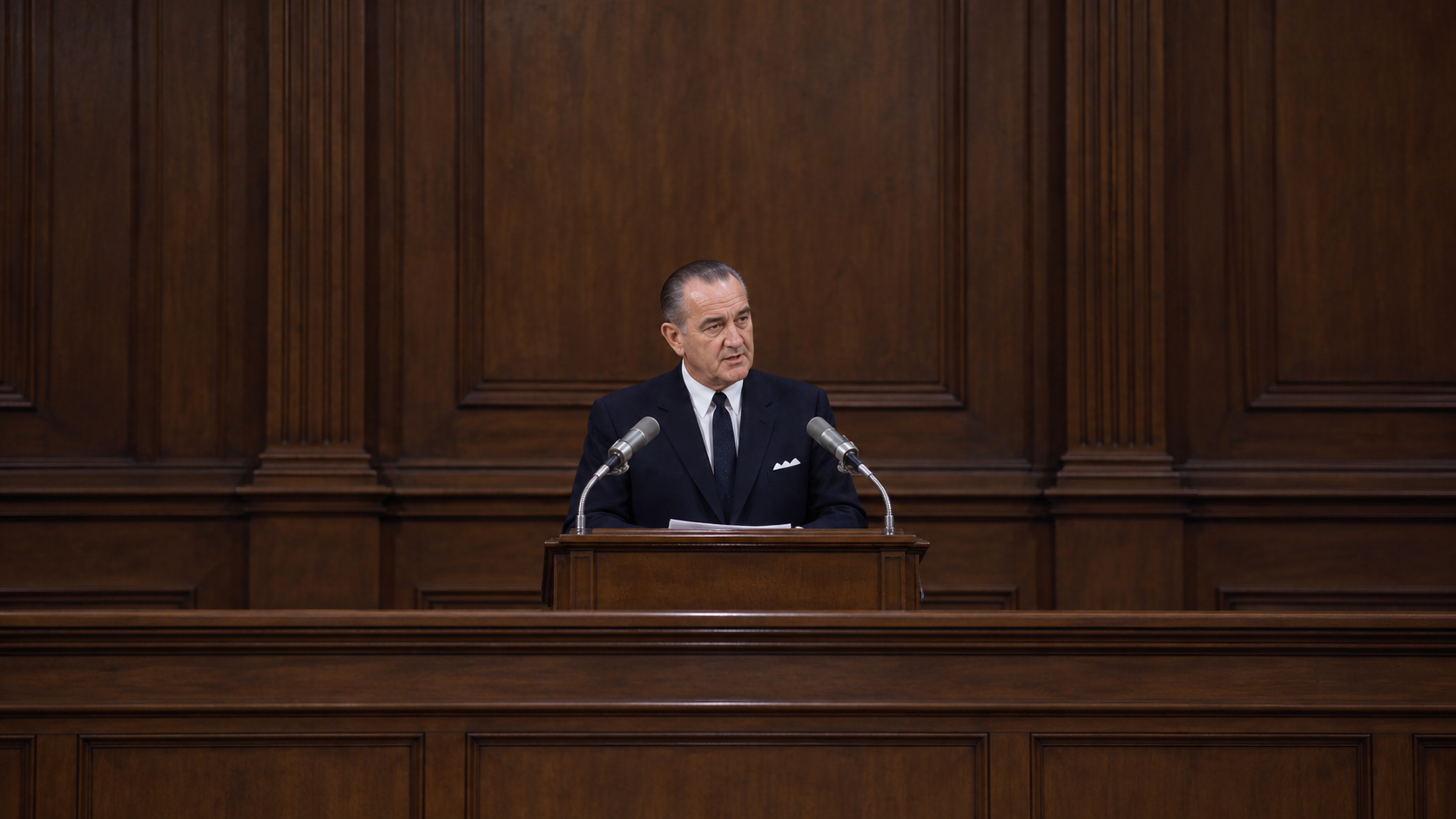
On March 15, 1965, President Lyndon B. Johnson addressed a joint session of Congress to demand stronger federal protection for voting rights. His speech followed the attack on peaceful marchers in Selma, Alabama, eight days earlier, when state troopers and other officers used violence to stop their march toward Montgomery. Johnson treated the crisis as a test of the country’s democratic commitments. By adopting the movement’s words, “we shall overcome,” he placed the presidency behind an urgent legislative effort. The address did not itself change election law, but it helped turn the demands of voting-rights activists into a central congressional priority.
Johnson described how officials could prevent Black citizens from registering through evasions, arbitrary decisions, and discriminatory tests. A person might satisfy one requirement only to encounter another barrier. The president argued that existing remedies were too slow and that constitutional promises required practical enforcement. His proposed legislation would establish clearer standards, remove discriminatory restrictions, and allow federal officials to assist registration when local authorities refused to act. The speech connected specific administrative practices to a larger principle: citizenship and the right to participate in elections should not depend on whether a local official chose to honor them.
The congressional appeal grew out of years of organizing and resistance to racial exclusion. Earlier civil-rights laws had provided tools against discrimination, but case-by-case litigation had not ended widespread obstruction. The images from Selma brought renewed national attention to the dangers faced by people seeking to vote. Johnson’s intervention therefore came after sustained work by local residents, civil-rights organizations, and demonstrators, rather than beginning the struggle. Federal legislation still needed to be introduced, debated, and passed. That distinction matters because a forceful presidential address could support the movement and influence Congress without immediately making registration safe or accessible in every community.
Johnson signed the Voting Rights Act on August 6, 1965. The law prohibited racial discrimination in voting nationwide and created stronger enforcement mechanisms, including federal examiners in covered jurisdictions. It also required specified jurisdictions to obtain federal approval before changing voting procedures. These provisions addressed the ability of officials to replace one discriminatory practice with another. Registration increased substantially after enactment, expanding opportunities for Black citizens to exercise political power. March 15 is remembered as an important public commitment on the road to that law. Its significance rests both in the president’s language and in the connection between public pressure, congressional action, and the federal government’s responsibility to enforce constitutional rights.
Johnson called for stronger voting-rights legislation before a joint session of Congress on March 15, 1965.
The address followed Bloody Sunday in Selma and years of work against discriminatory registration barriers.
The president proposed federal help when local officials obstructed eligible voters and argued that existing remedies were inadequate.
The speech was a legislative appeal; Congress still had to consider and pass a bill.
The Voting Rights Act became law on August 6, 1965, with nationwide protections and stronger federal enforcement.
The address connected civil-rights organizing with presidential support and congressional action.
Explore more of "On This Day ..."
Discover more events from the same date across news, politics, technology, sports, and other fields. Each link highlights significant moments that shaped history on different fronts.