

On This Day in Politics: May 11, 1858
On May 11, 1858, Minnesota entered the United States as the thirty-second state. President James Buchanan approved the congressional act of admission, completing a process that had required both a state constitution and federal acceptance. The new state joined the Union on the same constitutional footing as the existing states. The decision was made in Washington, however, and its practical effects did not arrive in St. Paul instantly. News traveled through Wisconsin and then up the Mississippi River by steamboat. Minnesota’s state officers took their oaths on May 24, illustrating the distance between a legal decision and its local implementation.
The road to admission had exposed sharp partisan divisions. At the 1857 constitutional convention, Republican and Democratic delegates met separately in the capitol rather than working together in a single chamber. A compromise committee eventually reconciled their proposals, but the parties still signed separate copies of the agreed constitution. Voters approved the constitution in October 1857 and elected Henry Sibley as the first governor. These events show that statehood emerged from negotiation within the territory as well as action by Congress. Agreement on creating a state did not mean that its political leaders agreed about the rules, procedures, or competing interests involved.
National politics added another obstacle. Minnesota’s admission became entangled with the controversy over admitting Kansas under the proslavery Lecompton constitution. The struggle over slavery and the balance of power between free and slave states made admission bills matters of national conflict. Minnesota was to enter as a free state, while the disputed Kansas proposal generated resistance and delay. Congress ultimately accepted Minnesota, but the months between the constitution’s approval and admission were not merely administrative waiting time. They reflected the sectional tensions that were reshaping American party politics in the years immediately before the Civil War.
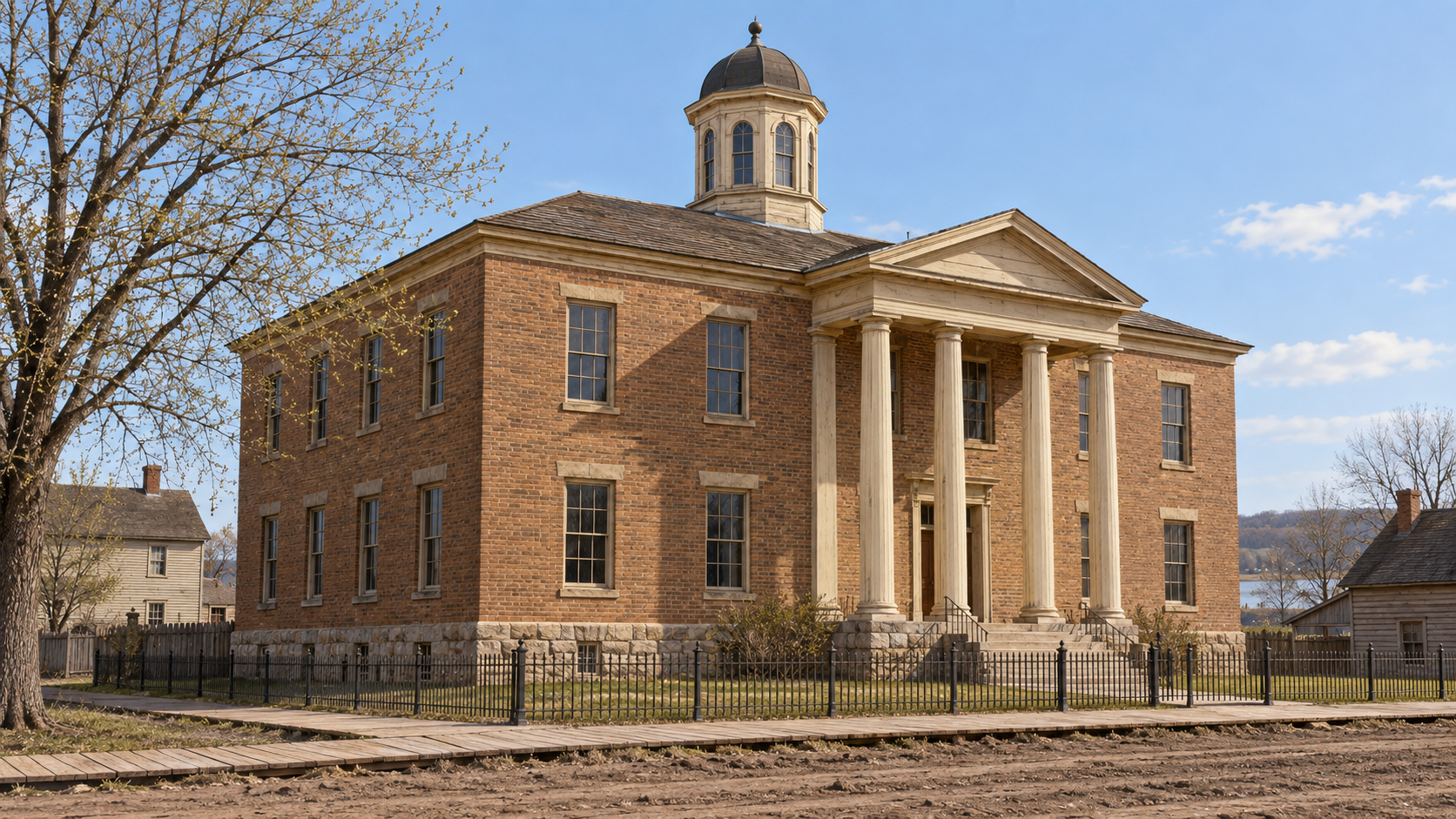
St. Paul already possessed a capitol built for the territorial government, which continued to house the early state government. Minnesota Territory had been established in 1849, and its governmental institutions therefore preceded the admission date. Statehood changed the territory’s constitutional status and its place in the federal system; it did not create the region’s communities or political history from nothing. The May 11 anniversary is best understood as a milestone in that institutional development. Its story combines a divided convention, a national dispute over slavery, and the practical challenge of receiving news from Washington. Together those details explain why admission was both a formal act of Congress and a consequential transition for the people governed by the new state.
Minnesota became the thirty-second state on May 11, 1858.
President James Buchanan approved the act admitting Minnesota to the Union.
Republican and Democratic delegates signed separate copies of the compromise constitution in 1857.
Voters ratified the constitution in October 1857 and elected Henry Sibley governor.
The admission process was delayed amid the national controversy over Kansas and slavery.
State officers took their oaths on May 24 after news of admission reached St. Paul.
Explore more of "On This Day ..."
Discover more events from the same date across news, politics, technology, sports, and other fields. Each link highlights significant moments that shaped history on different fronts.