

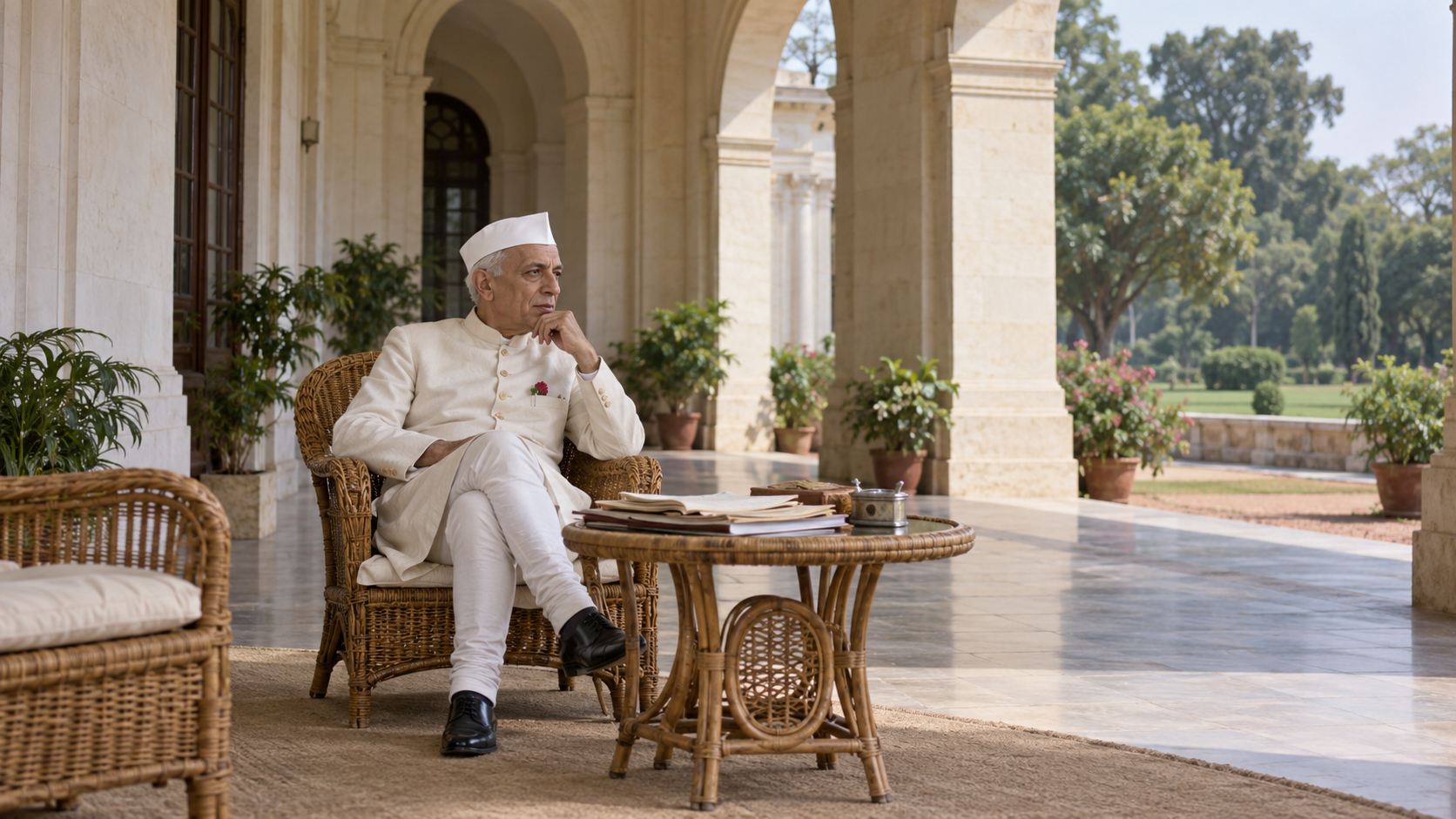
On This Day in Politics: May 27, 1964
On May 27, 1964, Jawaharlal Nehru died while serving as India’s prime minister. He had held the office since independence on August 15, 1947, making his death the end of nearly seventeen years of national leadership. For a country whose independent political life had developed alongside his premiership, the loss carried both personal and institutional significance. India now faced the task of transferring executive authority after the death of its founding prime minister. Gulzarilal Nanda was sworn in that day, providing an immediate bridge while the governing Congress party moved toward a longer-term choice of leader. The transition began within the existing parliamentary system.
Nehru’s political career had started decades before independence. After studying in England and qualifying as a lawyer, he returned to India in 1912 and became involved in nationalist politics. His meeting with Mahatma Gandhi in 1916 helped shape his commitment to the independence movement. He served in important Congress positions and spent years organizing and campaigning against British rule. That background connected the government he later led to the struggles that had preceded the creation of independent India. His lengthy tenure also meant that an entire generation had known no other national prime minister, increasing the symbolic weight of the succession in 1964.
Foreign policy was a central part of Nehru’s public identity. He defended nonalignment as a refusal to join the principal military blocs, rather than a requirement to avoid all cooperation with other countries. In a December 1962 press conference, held after the war with China, he discussed both international assistance and the military reverses India had suffered. His answers addressed difficult terrain, supply problems, and the challenge of defending a long frontier. The exchange illustrates the pressures surrounding his later years in office. It also shows why assessments of his leadership include disagreements over security and preparedness alongside recognition of his efforts to preserve freedom of diplomatic action.
Nanda brought experience in labor, planning, and home affairs to the temporary premiership. He had served in the national cabinet and represented constituencies in successive elected parliaments. His short tenure ended when Lal Bahadur Shastri became prime minister on June 9, 1964. The sequence mattered because a leader’s death did not suspend the operation of government or require the creation of a new constitutional order. May 27 is therefore remembered as both the close of the Nehru era and the beginning of a major test of political continuity. The institutions of independent India had to demonstrate that they could outlast the individual most closely associated with their earliest years.
Jawaharlal Nehru died in office on May 27, 1964.
He had served as prime minister since independence in August 1947.
Gulzarilal Nanda was sworn in on the day of Nehru’s death.
The transfer maintained continuity while Congress selected a successor.
Lal Bahadur Shastri became prime minister on June 9, 1964.
The succession tested institutions built during India’s first years of independence.
Explore more of "On This Day ..."
Discover more events from the same date across news, politics, technology, sports, and other fields. Each link highlights significant moments that shaped history on different fronts.