

On This Day in Politics: July 22, 1952
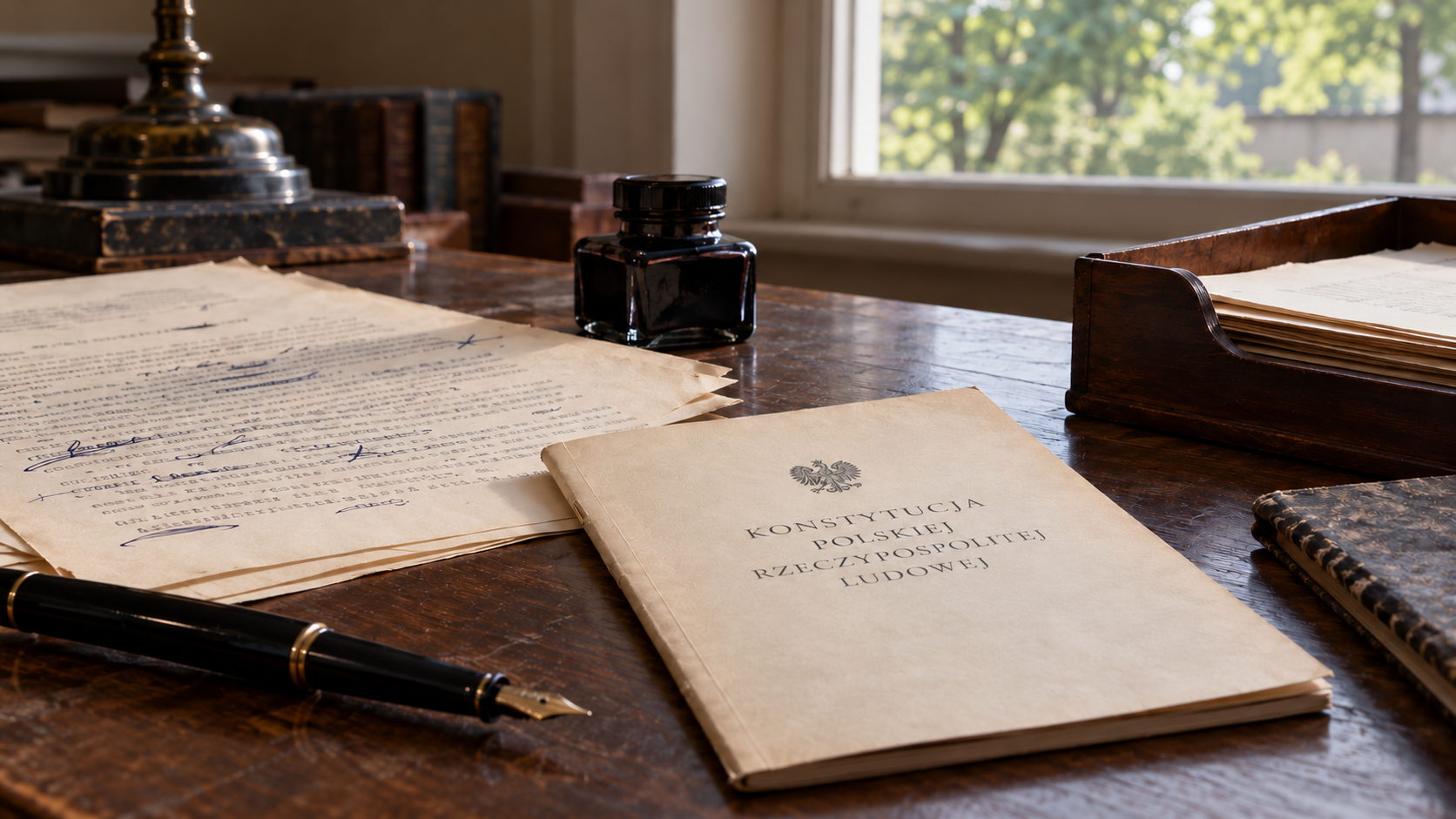
On July 22, 1952, Poland’s Legislative Sejm adopted a new constitution for the Polish People’s Republic. The document gave the communist state a formal governing framework and a new official name. Its language presented authority as belonging to working people, while its institutional design followed the Soviet constitutional model. The date also carried a political message: July 22 recalled the 1944 manifesto associated with the beginnings of communist rule. Adoption of the constitution therefore combined a change in the state’s legal structure with a commemorative claim about its origins. It did not mark the beginning of communist control, which was already established.
The constitution designated the Sejm as the highest organ of state power. It authorized parliament to enact legislation, approve national economic plans and adopt the budget. Rather than organizing government around a separation of independent branches, the framework treated state authority as unified. A collective Council of State, chosen from the Sejm’s members, assumed the constitutional position that displaced the presidency. Its responsibilities included calling parliamentary sessions and elections, representing the state in diplomatic matters and issuing decrees between sessions. Those decrees had to be submitted to parliament for approval. The provisions show how the formal machinery of government was supposed to operate.
The text also set out a substantial catalogue of social and civic commitments. It recognized rights to work, rest, education and health protection, and declared equality between women and men. These statements formed part of the state’s public account of its purpose. Reading them alongside the institutional chapters helps distinguish constitutional promises from the practical ability to hold rulers accountable. In political life, the Polish United Workers’ Party remained the central source of authority, although its leading role was not explicitly written into the original 1952 constitution. The legal document did not itself establish competitive politics or remove the coercive features of communist rule.
The constitution changed repeatedly during the following decades. Amendments in 1976 explicitly identified the party’s leading position and the state’s socialist character, giving written recognition to an existing political order. The transition of 1989 brought a different direction: constitutional changes restored the Senate and presidency, and later removed key communist references. These revisions demonstrate why the 1952 text should not be treated as an unchanged document throughout its long history. July 22 remains a useful point for examining the relationship between written institutions, declared rights and actual power. A constitution can describe representative bodies and ambitious protections while leaving decisive political control elsewhere; understanding the gap requires attention to both the text and its setting.
The new constitution formalized an existing communist order. Its adoption did not begin communist control of Poland.
July 22 connected the legal change to the 1944 manifesto. The anniversary supplied a deliberate commemorative setting.
The Sejm was declared the highest organ of state power. The constitution followed a principle of unified authority rather than separated branches.
A collective Council of State displaced the presidency in the new structure. Its decrees between parliamentary sessions required subsequent Sejm approval.
The original document promised extensive social rights. Written guarantees did not establish competitive politics or end party control.
Amendments in 1976 and 1989 substantially altered the framework. The constitution’s later versions should be distinguished from its original provisions.
Explore more of "On This Day ..."
Discover more events from the same date across news, politics, technology, sports, and other fields. Each link highlights significant moments that shaped history on different fronts.