

On This Day in Politics: September 20, 1870
On September 20, 1870, troops of the Kingdom of Italy entered Rome after artillery opened a breach in the city's walls near Porta Pia. General Raffaele Cadorna commanded the Italian forces, whose infantry and Bersaglieri advanced through the opening against papal defenses. The operation brought Rome under Italian control and ended the pope's territorial government over the city. It was a decisive moment in the process of Italian unification, but it did not immediately settle relations between the Italian state and the Holy See. Military possession, formal annexation and the establishment of a capital were connected developments with different dates.
The conflict concerned more than the ownership of a strategically important city. Rome was the seat of the papacy and a central objective for supporters of a united Italy. Those aims created a difficult dispute about sovereignty: national leaders wanted Rome within the kingdom, while the papacy defended the territorial independence it considered necessary for its position. The creation of the Kingdom of Italy had therefore left a major political question unresolved. Earlier attempts to reconcile the competing claims had not produced an agreement acceptable to both sides. By 1870, the confrontation could no longer be contained through the arrangements that had previously kept Rome outside Italian national control.
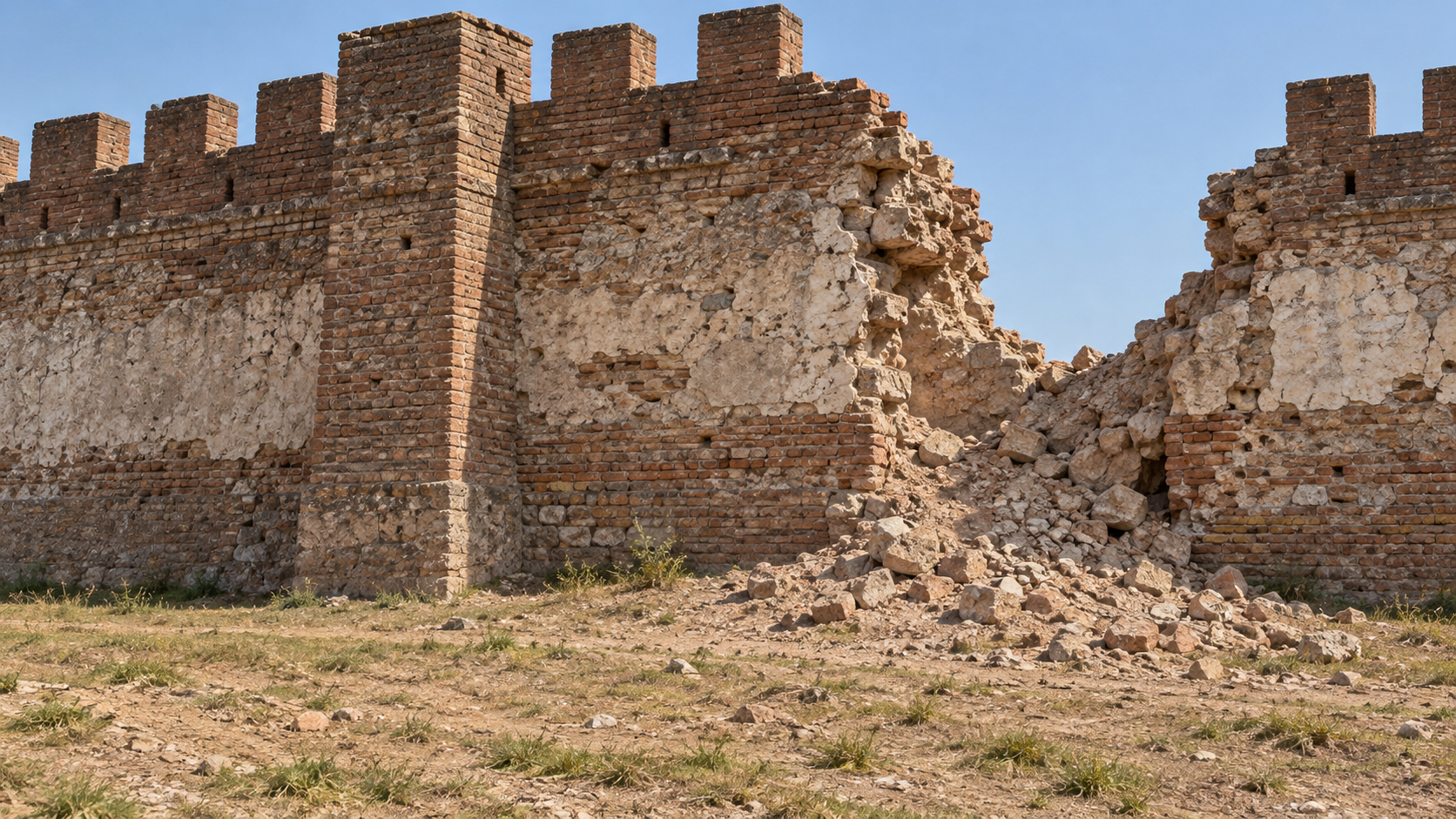
The September attack made that contest physical. Artillery damaged the fortifications near Porta Pia, allowing Italian units to pass through a breach in the Aurelian Walls. The opening, rather than a ceremonial transfer agreed by both governments, became the lasting image of the capture. Period photographs require care: a well-known scene of soldiers aiming rifles before the gate was staged after the conquest. A different photograph by Ludovico Tuminello recorded the damaged wall itself. The distinction matters because commemorative imagery can appear to show the precise moment of an event when it actually presents a later reconstruction. The core outcome on September 20 was the establishment of Italian control after armed resistance.
An annexation plebiscite followed on October 2, 1870, and Rome became the kingdom's capital in 1871. These later steps gave political and administrative form to the military result. Pope Pius IX did not accept the new relationship, and the dispute known as the Roman Question continued for decades. The Lateran agreements of 1929 eventually established a negotiated settlement, including recognition of Vatican City as a sovereign state. That outcome should not be projected backward onto the capture of Rome. September 20 marks the end of one territorial order and the opening of a prolonged conflict over the place of the papacy within a national capital. Understanding the anniversary requires recognizing both the unification achieved and the unresolved sovereignty dispute left behind.
Rome was both the papacy's seat and a central goal of Italian unification. Claims about national territory conflicted with papal claims to political independence.
The city's incorporation into Italy therefore involved a dispute over sovereignty, not simply a routine change of administration.
Italian artillery opened a breach near Porta Pia on September 20. Troops under General Raffaele Cadorna entered the city, ending papal territorial control there.
Military capture came before the October annexation plebiscite and the designation of Rome as capital in 1871. These were separate stages.
Pius IX rejected the new situation, and the Roman Question continued. The Lateran agreements of 1929 created a later negotiated settlement.
A famous photograph of attacking soldiers was staged after the conquest. Tuminello's photograph of the damaged wall is a different record, illustrating the need to distinguish documentation from reenactment.
Explore more of "On This Day ..."
Discover more events from the same date across news, politics, technology, sports, and other fields. Each link highlights significant moments that shaped history on different fronts.