

On This Day in Politics: October 18, 1898
On October 18, 1898, Puerto Rico passed from Spanish administration to United States military government. The withdrawal of Spanish forces and the raising of American flags marked the formal transfer of control after the Spanish-American War. General John R. Brooke became the American military governor. The change ended centuries of Spanish rule, but it did not establish an independent Puerto Rican state. Authority moved between imperial powers, placing the island's government under American military command while the wider peace settlement was still being completed. For residents, the event began a new political relationship whose practical terms remained to be worked out.
Puerto Rico had experienced demands for reform, independence and greater self-government before American forces arrived. A late Spanish grant of autonomy had only recently opened a different constitutional possibility when war transformed the island's position. The United States' military campaign and the negotiations with Spain displaced that experiment with a new external authority. An August armistice had set the transfer process in motion, but the handover required time. October 18 marked its completion on the island. The Treaty of Paris, signed in December, followed as part of the international settlement; it should not be described as a document signed during the October flag-raising.
Military government meant more than the presence of troops at forts. American commanders administered civil affairs and exercised authority over laws, courts, customs and taxation. Brooke's governorship began on the transfer date, followed by other military governors before civilian administration was introduced. These arrangements concentrated important powers in officials selected through the United States' chain of command. They did not give Puerto Ricans the same relationship with Washington as residents of a newly admitted state. The distinction between a transfer of control and a settlement based on local political choice is central to understanding the handover's significance and the expectations surrounding the incoming government.
A civilian framework followed under the Foraker Act in 1900, with presidential appointments and a limited representative structure replacing direct military administration. That later change did not erase the questions raised by the original transfer: who would govern, how residents would be represented and how much authority the island's own institutions could exercise. Those questions developed through subsequent legislation and political movements, rather than receiving a final answer on October 18. The anniversary marks a specific beginning of American military rule. It illustrates how the conclusion of a war can transform the government of a territory while leaving the inhabitants' political status and powers dependent on decisions still to come.
The transfer followed an August armistice and the withdrawal of Spanish forces. October 18 marked the handover on the island rather than the start of the war.
Puerto Rico had recently received a Spanish autonomy arrangement. American military administration replaced that political setting with a different external authority.
Brooke became military governor on October 18. The new government exercised civil powers as well as directing military forces.
The Treaty of Paris was signed in December 1898. Its place in the peace settlement should remain distinct from the October transfer ceremony.
Civilian administration followed under the Foraker Act in 1900. That transition was a later institutional change rather than an immediate feature of the military handover.
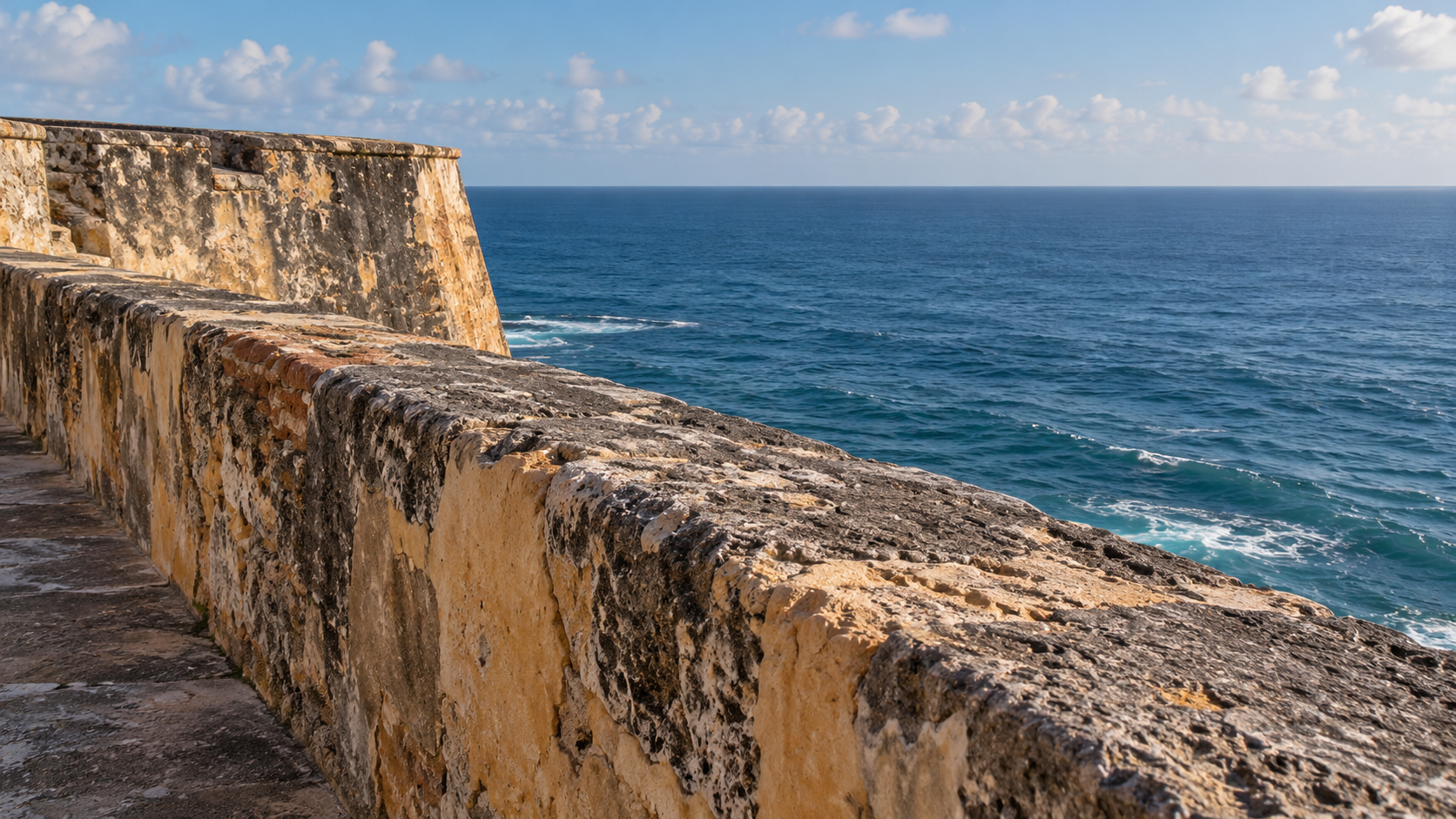
The image is a limited detail of Old San Juan's historic fortification setting. It does not reconstruct the flag-raising, identify an exact 1898 viewpoint or show later military installations.
Explore more of "On This Day ..."
Discover more events from the same date across news, politics, technology, sports, and other fields. Each link highlights significant moments that shaped history on different fronts.