

On This Day in Politics: October 21, 1969
On October 21, 1969, elements of Somalia's army and police seized power from the elected civilian government. Troops took control of government offices, radio facilities, transport centers and other important installations. A revolutionary council announced emergency rule, dissolved the National Assembly and suspended the constitution. The takeover followed the assassination of President Abdirashid Ali Shermarke six days earlier and the struggle to agree on a successor. It changed more than the person occupying the presidency. Authority moved from civilian institutions to a military leadership that would reshape the country's political life and its relationships across the Horn of Africa.
Somalia had become independent in 1960 through the union of the former British Somaliland and Italian-administered territory. Its parliamentary system offered a framework for civilian competition, but allegations of corruption and disputes over political influence weakened confidence in the government. Prime Minister Mohamed Ibrahim Egal and Shermarke had also pursued a less confrontational relationship with neighboring Kenya and Ethiopia. That policy involved sensitive questions about Somali populations outside Somalia's borders. Military dissatisfaction therefore developed in a setting where domestic leadership and regional ambitions were closely connected. The president's death opened a succession crisis that the armed forces used to displace the existing political process.
The first reports of the coup described an apparently bloodless seizure of power, although that description concerned the takeover rather than the record of the regime that followed. Army commander Mohamed Siad Barre emerged as its leading figure. The council presented its actions as an answer to corruption and division, while its suspension of constitutional government removed the institutions through which civilian leaders could contest those claims. Contemporary foreign reports contained substantial uncertainty about the council's membership and intentions. They should be read as assessments made during a developing situation, rather than proof that every later policy was already settled on the first morning.
Military rule subsequently became associated with authoritarian socialist government and the repression of political opponents. The regime's eventual collapse in 1991 belonged to a much longer history and should not be treated as an outcome completed in October 1969. The immediate turning point was the destruction of the civilian constitutional framework and the concentration of power in a revolutionary council. It also altered the calculations of neighboring states and foreign governments concerned with security in the region. October 21 illustrates how a crisis over political succession can become an opportunity for armed institutions to replace, rather than participate in, the established process of government.
The coup followed Shermarke's assassination on October 15. His death and the subsequent seizure of power were separate events.
Somalia's civilian system had operated since independence in 1960. Disputes over corruption and regional policy formed part of the background.
The revolutionary council suspended the constitution and dissolved the assembly. These measures removed central mechanisms of civilian political competition.
Early descriptions of a bloodless takeover do not describe the later government's human-rights record. The scope of that claim matters.
Siad Barre's military government developed into authoritarian rule. Its later collapse in 1991 occurred more than two decades after the coup.
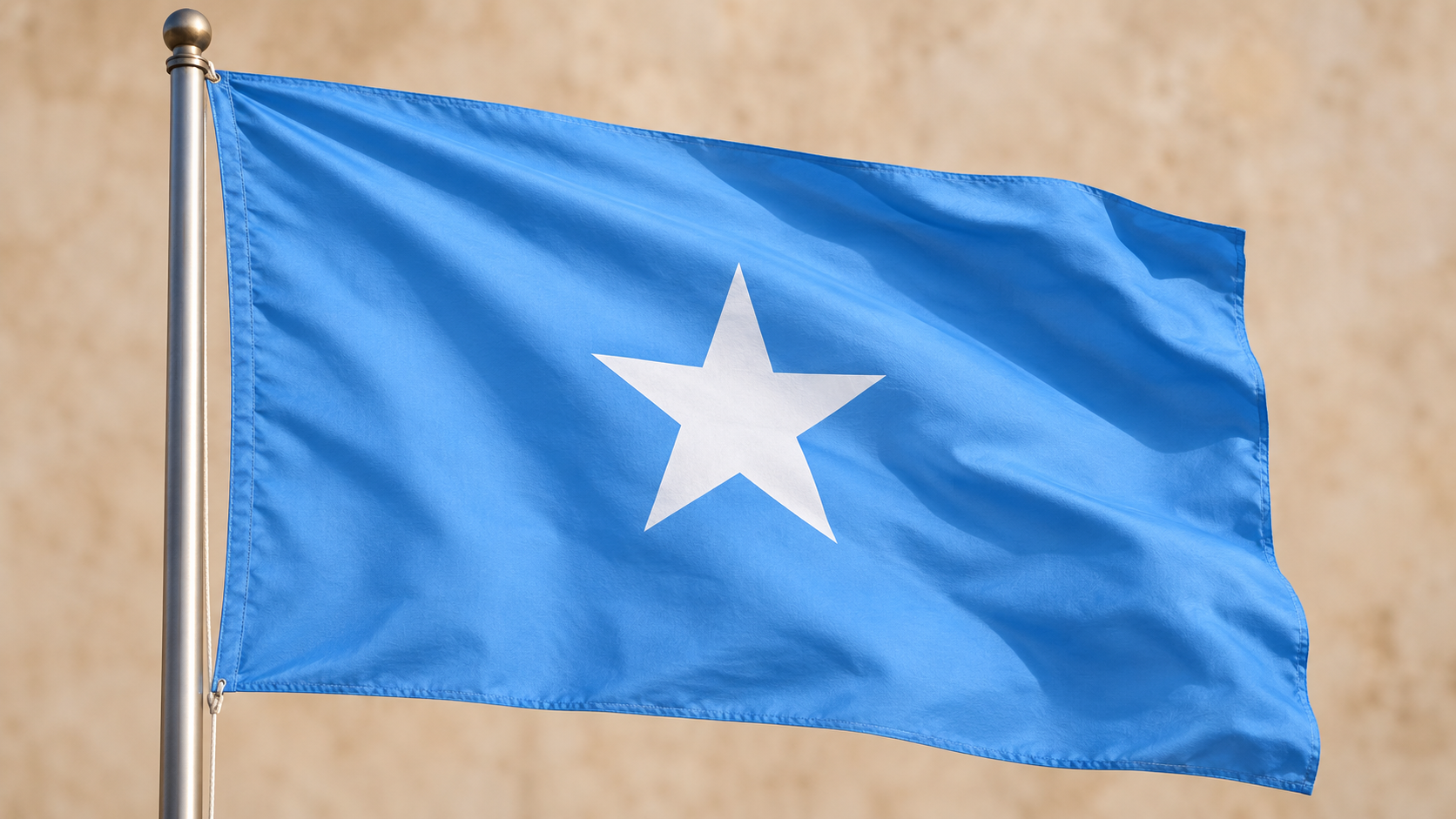
The flag illustration represents a national emblem introduced in 1954. It does not document a particular flag raised during the takeover.
Explore more of "On This Day ..."
Discover more events from the same date across news, politics, technology, sports, and other fields. Each link highlights significant moments that shaped history on different fronts.