

On This Day in Politics: October 25, 1971
On October 25, 1971, the United Nations General Assembly adopted Resolution 2758 on the representation of China. The vote recognized the representatives of the People's Republic of China as China's legitimate representatives at the United Nations and removed the representatives of Chiang Kai-shek from the place they occupied. The resolution passed with 76 votes in favor, 35 against and 17 abstentions. It changed who exercised China's place within the organization, including its permanent seat on the Security Council. The decision was a major diplomatic turning point after years of argument over representation, rather than an ordinary vote to add a newly independent country to the membership.
The dispute had developed after the Chinese civil war left rival governments claiming to represent China. The government of the People's Republic controlled the mainland, while the Republic of China government operated from Taiwan. For years, the latter's representatives continued to occupy China's UN seat. Changes in international recognition and the growing support for seating Beijing made that arrangement increasingly difficult to maintain. The issue brought the General Assembly's membership into a confrontation over which government could speak for an existing member. The outcome also mattered to the Security Council because China already held a permanent place under the UN Charter.
Governments debated alternatives before the final vote, including proposals that would have preserved a place for the Republic of China while seating the People's Republic. The adopted resolution followed a different course. Its operative language addressed recognition of representatives and the removal of the existing delegation. Keeping that wording in view helps distinguish the documented decision from later arguments about its wider implications. The resolution should not be rewritten as a new-member admission or treated as a detailed settlement of every question concerning Taiwan. The vote established the representation arrangement within the United Nations; broader political claims have continued to be disputed.
The decision had consequences across the UN system as agencies and other bodies responded to the new representation. The People's Republic's participation gave a major power a direct role in proceedings from which its government had previously been excluded. It also changed the diplomatic position of the authorities in Taiwan. Those institutional changes did not resolve the underlying disagreements between the two sides or erase the different policies of other governments. October 25 is remembered because a long-running representation dispute reached a decisive vote. Its lasting importance lies in the relationship between recognition, membership and political authority inside an international organization, where a change in who speaks for a state can carry worldwide consequences.
The dispute concerned representation of China, an existing UN member. The permanent Security Council seat was already part of the organization's structure.
The rival governments emerged from the Chinese civil war. Their claims and their control over different territories shaped the diplomatic controversy.
Resolution 2758 passed on October 25, 1971, by 76 votes to 35, with 17 abstentions. The UN's contemporary photo record independently confirms the date and tally.
The decision recognized the People's Republic's representatives and removed Chiang Kai-shek's delegation. It was not a routine new-state admission.
The representation change affected UN bodies and related organizations. Broader disputes concerning Taiwan continued beyond the resolution's adoption.
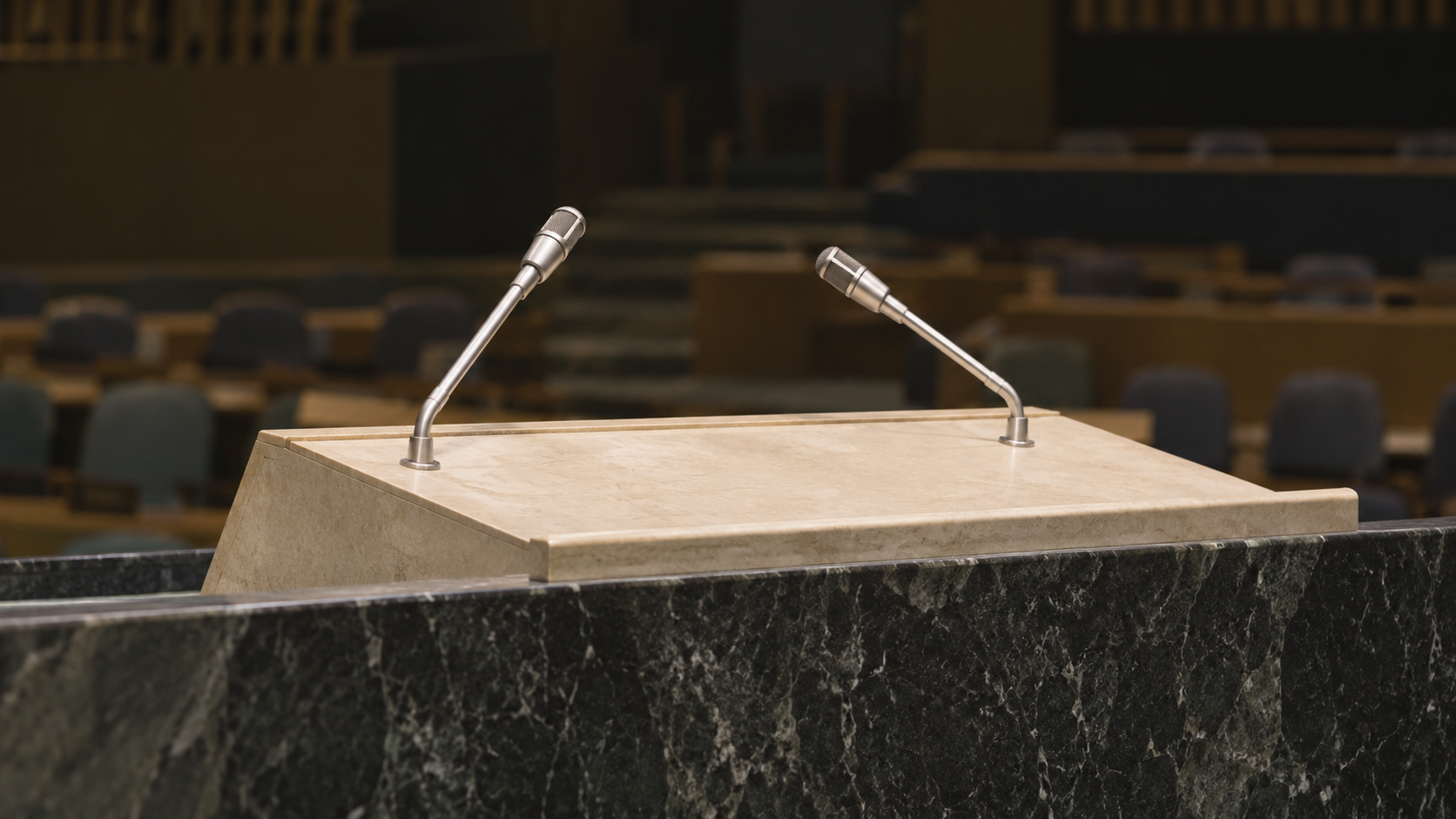
The lectern illustration uses two inspected 1971 UN photographs as period references. It reconstructs an empty institutional object, not the vote or a delegate's appearance.
Explore more of "On This Day ..."
Discover more events from the same date across news, politics, technology, sports, and other fields. Each link highlights significant moments that shaped history on different fronts.