

On This Day in Politics: November 18, 1918
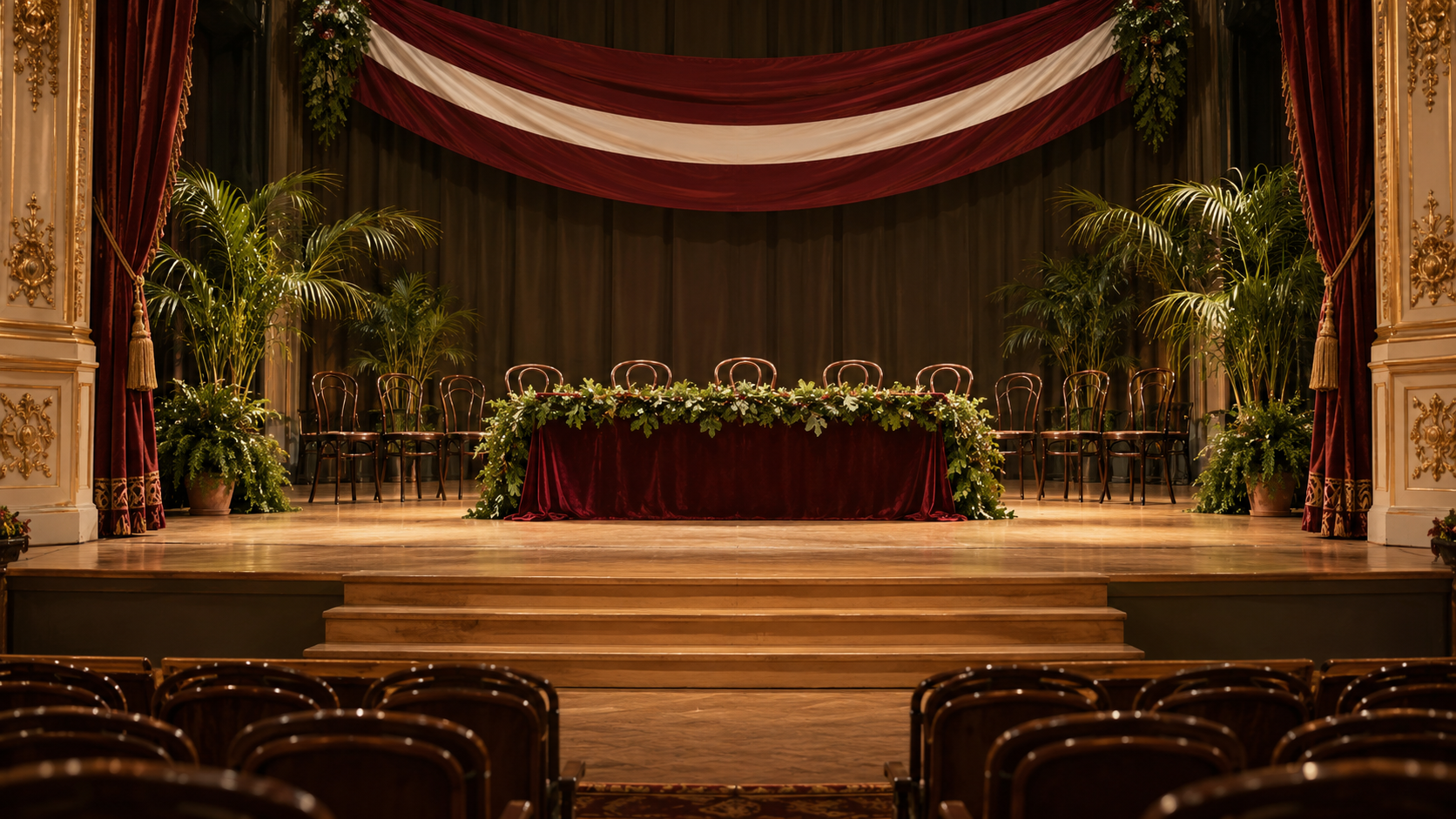
On November 18, 1918, Latvia proclaimed independence at the Second Riga City Theatre, now the Latvian National Theatre. The People's Council announced a sovereign democratic republic as the First World War ended and the region's imperial order collapsed. Janis Cakste had been chosen to chair the council, while Karlis Ulmanis headed the provisional government. The proclamation established the political claim on which the new state would be built. It did not mean that the government already controlled all the territory it claimed or that the struggle to secure independence had ended. The declaration and the defense of the republic were connected but separate tasks.
Latvian political organization had developed amid the disruption of war, Russian imperial collapse and German military occupation. Different groups debated the form and future of national government, and representatives came together in the People's Council shortly before the proclamation. The armistice in western Europe changed the international setting, but it did not immediately produce stable authority around the Baltic. Military forces, rival political projects and outside interests continued to compete. The choice to proclaim a republic therefore expressed an ambition that still had to survive in practice. It gave a provisional government a public foundation while leaving the security and diplomatic position of the state unsettled.
The theatre ceremony supplied a focal point for that claim to sovereignty. The new leadership committed itself to a representative political order rather than restoring an imperial administration under a different name. Establishing effective institutions required more than ceremonial recognition, however. The independence struggle continued through fighting involving Latvian forces and several competing armies. The government also needed foreign relationships, resources and acceptance as an international actor. These practical demands explain why the anniversary should not be narrated as an immediate transition to secure peacetime government. The proclamation created a constitutional and political starting point from which authority, defense and diplomatic recognition had to be developed.
Latvia's war of independence continued into 1920, and major Allied powers granted de jure recognition in January 1921. These later achievements helped secure the state proclaimed in November 1918. Soviet occupation in 1940 interrupted its independent functioning, while the restoration of independence in 1991 drew on the continuity of the republic's legal identity. Those later chapters should remain distinct from the original founding ceremony. November 18 is significant because it established Latvia's republican claim to self-government at a moment of profound uncertainty. The anniversary records both a declaration of national political purpose and the beginning of the difficult work needed to turn that declaration into durable public institutions and international standing.
The People's Council brought together political representatives during the collapse of imperial rule. It supplied the framework for the proclamation.
The ceremony took place at the Second Riga City Theatre. The building is now known as the Latvian National Theatre.
Ulmanis led the provisional government. Declaring sovereignty did not immediately give it secure control across the country.
Military struggle and diplomacy continued after November 18. The end of the world war did not instantly settle the Baltic region.
Major Allied de jure recognition followed in January 1921. That was a later diplomatic milestone.
The republic's restoration in 1991 is a separate anniversary. Its claim of legal continuity connected it to the state proclaimed in 1918.
Explore more of "On This Day ..."
Discover more events from the same date across news, politics, technology, sports, and other fields. Each link highlights significant moments that shaped history on different fronts.