

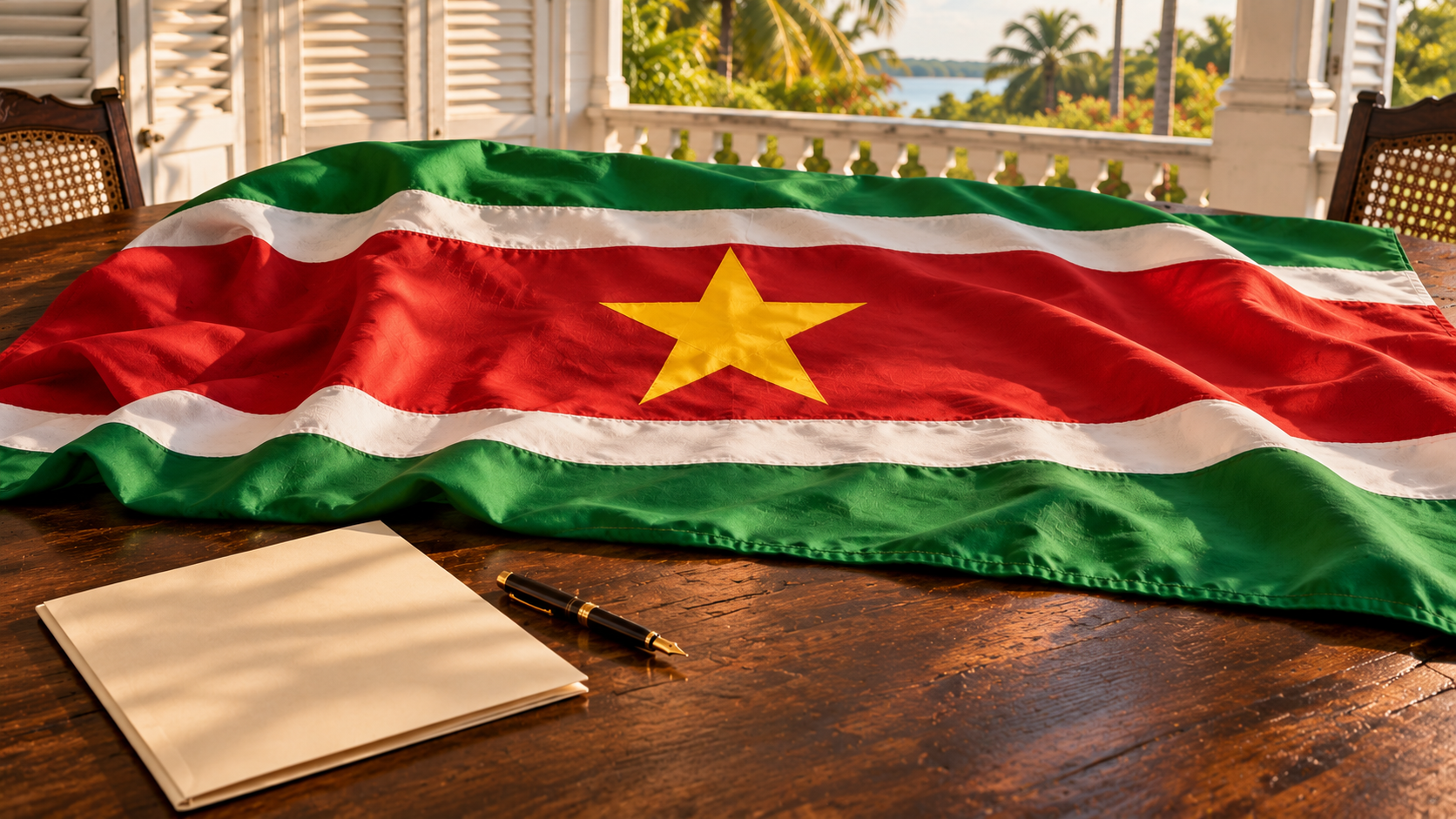
On This Day in Politics: November 25, 1975
On November 25, 1975, Suriname became an independent republic, ending its constitutional place within the Kingdom of the Netherlands. Independence ceremonies in Paramaribo marked the transfer to sovereign statehood, with Johan Ferrier becoming the country's first president and Henck Arron continuing as prime minister. The change gave the South American country responsibility for its own international relations and national government. It was the outcome of a negotiated constitutional process, rather than a military victory on the anniversary itself. The new republic began with established domestic institutions but also faced difficult questions about political confidence, economic development and the relationship with its former colonial power.
Suriname had been under Dutch rule for centuries before gaining internal autonomy within the kingdom in the twentieth century. The arrangements established in 1954 allowed substantial domestic self-government while retaining kingdom responsibilities in other areas. Arron's administration pursued full independence after taking office in 1973, and negotiations with the Dutch government moved the process toward a November 1975 date. Political opinion within Suriname was divided over the timing and conditions. Concerns about security, opportunity and the future contributed to substantial migration to the Netherlands. Independence consequently involved both the legal reorganization of the state and personal decisions by families assessing an uncertain transition.
The final settlement established the republic and was accompanied by arrangements concerning nationality, development assistance and continuing relations with the Netherlands. Dutch representatives attended the ceremonies, reflecting a negotiated departure from the kingdom rather than a complete break in contact. Ferrier's transition from governor to president also linked the existing administration with the new constitutional order. These continuities did not diminish sovereignty, but they help explain how independence was put into operation. The country did not have to invent every public office on a single day. It had to adapt institutions, establish an independent international position and manage expectations about what self-government would deliver for a diverse population.
Suriname entered the United Nations soon afterward, while its subsequent political history included military intervention and later efforts to restore and sustain civilian democracy. Those developments should be distinguished from the independence agreement and its ceremonies. November 25 remains the founding anniversary of the sovereign republic, without implying that the transition guaranteed a stable or prosperous future. Its significance lies in the transfer of ultimate governmental responsibility and the creation of an independent national voice. The event also demonstrates the continuing connections left by decolonization: legal separation can coexist with migration, financial cooperation and close social ties, while the new state assumes responsibility for decisions that will shape its own public life.
The 1954 kingdom arrangements had provided internal autonomy. Full independence in 1975 changed Suriname's international and constitutional status.
Arron pursued the transition through negotiations with the Netherlands. Political opinion over its timing remained divided.
Ferrier moved from governor to the republic's first presidency. Existing institutions supplied part of the new state's administrative foundation.
Nationality and development assistance formed part of the wider settlement. Sovereignty did not end all ties with the Netherlands.
Migration connected the transition to choices made by individual families. The effects extended beyond the formal ceremonies.
Later military and democratic developments belong to the independent republic's subsequent history. They should not be narrated as events completed on November 25.
Explore more of "On This Day ..."
Discover more events from the same date across news, politics, technology, sports, and other fields. Each link highlights significant moments that shaped history on different fronts.