

On This Day in Pop: February 17, 1936
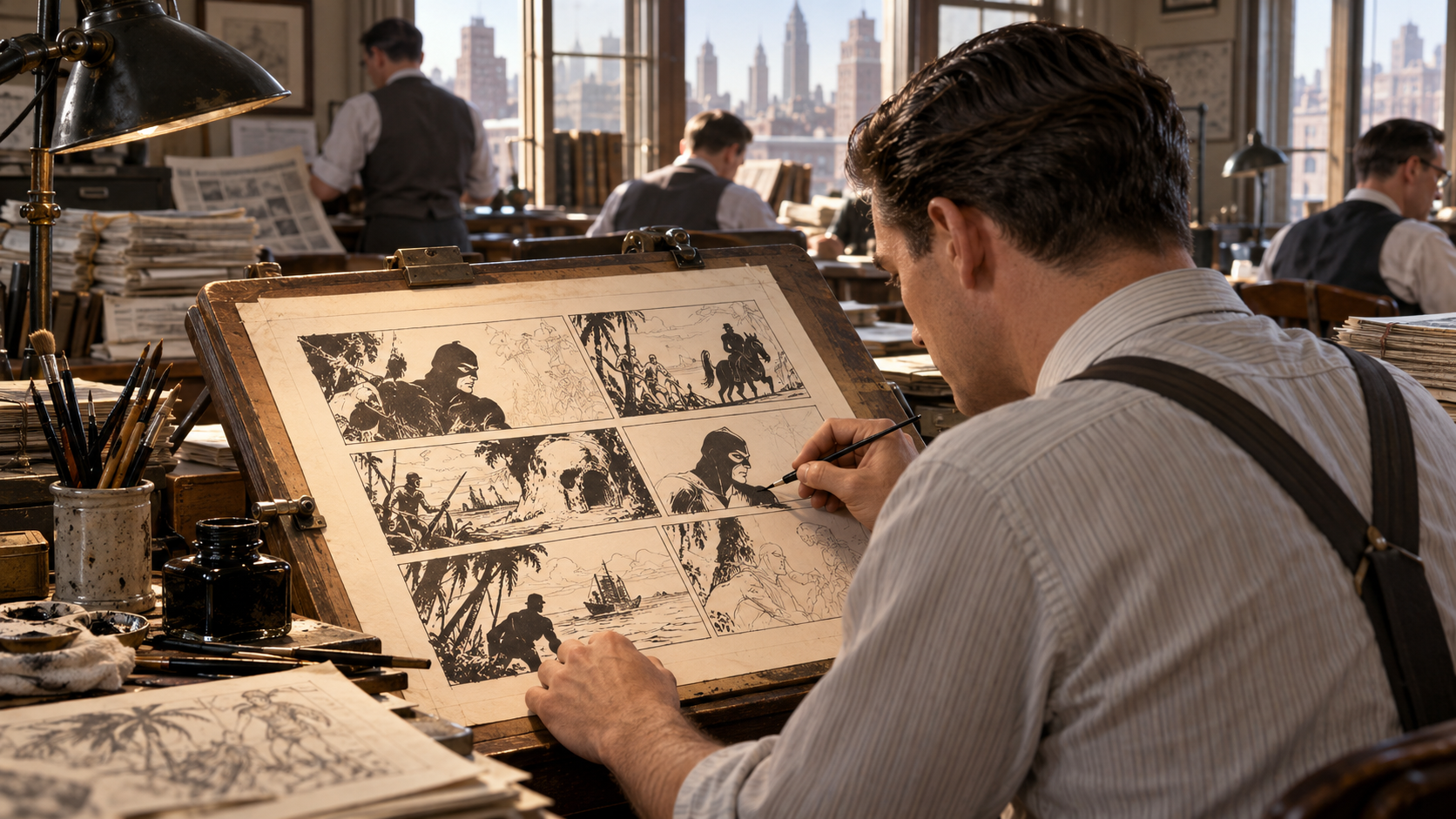
On February 17, 1936, newspaper readers first encountered The Phantom, an adventure strip created and written by Lee Falk and initially drawn by Ray Moore. Its hero appeared to enemies as an immortal figure, the “Ghost Who Walks,” but the legend concealed a human succession: each Phantom inherited the role from an earlier generation. That device gave the character a past stretching centuries while preserving physical vulnerability. He relied on training, reputation, allies and a carefully maintained mythology rather than supernatural powers. Viewed in its own time, the occasion was more than a neat calendar marker. It sat where entertainment, technology, publicity and public appetite met, and each of those forces helped determine who encountered it and what they made of it. Remembering the setting keeps the story grounded in decisions made by artists, producers, distributors and audiences rather than turning a complicated cultural shift into a single flash of inevitability.
The strip arrived during a fertile period for serialized adventure, when daily newspapers could build suspense one panel sequence at a time. The Phantom’s mask, tight costume and concealed civilian identity anticipated visual conventions that would soon become common in superhero comics. At the same time, the stories drew on pulp ideas about remote lands and colonial adventure that deserve scrutiny today. Artists and writers expanded the setting, supporting cast and iconography while syndication carried the feature far beyond its American origin. The response also shows how popular culture accumulates momentum. A performance, release or institutional choice can feel self-contained on the day it happens, yet its meaning expands through reviews, broadcasts, sales, conversation and imitation. Those channels do not affect every person in the same way, but together they can turn a dated event into a shared reference point, one that later work either follows, revises or pushes against.
The Phantom remained especially popular in countries including Australia, India and parts of Scandinavia, where publishers developed long traditions around the character. Film serials, television, animation and a feature movie extended the concept, but the newspaper strip remained its foundation. The debut matters because it shows an archetype being assembled before the superhero genre had settled into familiar rules. It also demonstrates how global audiences can adopt, reinterpret and sometimes challenge an American cultural export, giving a continuing character different meanings in different publishing traditions. That longer view is why the date remains useful. It provides a precise doorway into changes that unfolded unevenly and involved many contributors, including people whose labor was less visible than the headline names. The surviving recordings, films, photographs and documents let new audiences reconsider both the achievement and its limits. Pop history is strongest when celebration is paired with context, and this anniversary offers room for both.
The Phantom, created and written by Lee Falk, began newspaper publication on February 17, 1936, with art by Ray Moore.
The setting and sequence matter because they show how the newspaper debut of The Phantom reached the public on this particular date.
The strip presented a masked, costumed crime fighter without superpowers, supported by an inherited identity and an elaborate legend.
The first response came through the era’s available channels, from press and broadcast coverage to ticket buyers, listeners or viewers.
Its visual language and international circulation helped shape later adventure comics and the public image of the costumed hero.
Its reputation has continued to develop through preservation, scholarship, revival and the interpretations of later audiences.
Explore more of "On This Day ..."
Discover more events from the same date across news, politics, technology, sports, and other fields. Each link highlights significant moments that shaped history on different fronts.