

On This Day in Pop: March 20, 1969
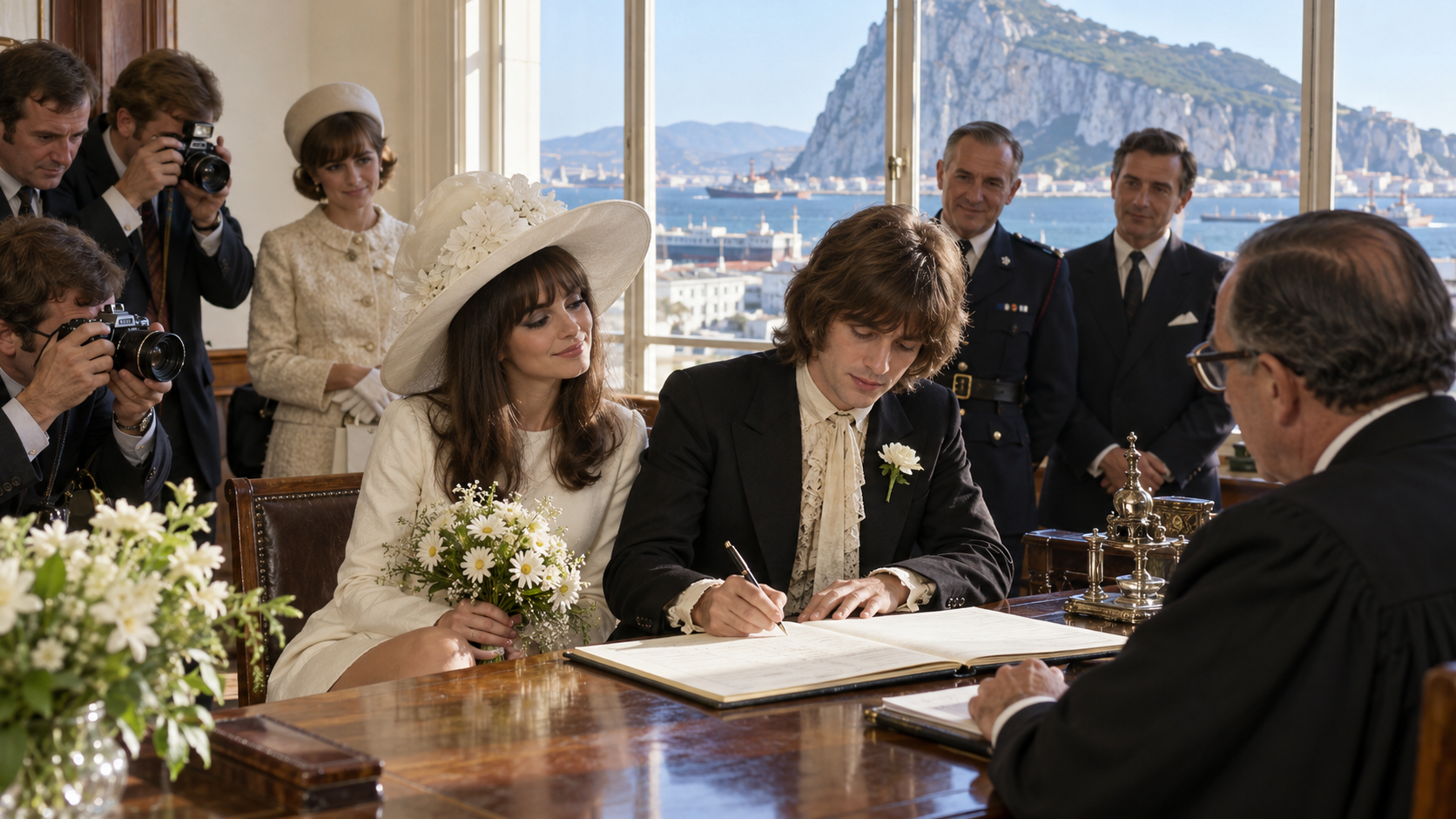
On March 20, 1969, John Lennon and Yoko Ono married in Gibraltar in a brief civil ceremony. Their efforts to wed elsewhere had run into residency and travel complications, making the British territory a practical destination. Lennon wore a white jacket and Ono a white minidress, knee socks and broad hat. Photographs turned the small ceremony into one of the era’s most recognizable celebrity weddings. Seen in its own time, the occasion was more than a tidy calendar entry. It emerged from choices by performers, writers, technicians, executives and audiences, each working within the opportunities and constraints of the period. Restoring that setting keeps the story human and specific instead of treating a complicated cultural shift as inevitable.
The couple treated their honeymoon as a platform, inviting reporters to their Amsterdam hotel room for the first Bed-In for Peace. The action combined sincere antiwar advocacy, performance art and an instinctive understanding of publicity. Lennon and Ono knew photographers would follow them, so they redirected attention toward a message. Their partnership nevertheless attracted hostility that often fell on Ono through racism, sexism and blame for the Beatles’ internal fractures. The reaction also shows how popular culture gathers momentum. A premiere, broadcast, release or public appearance can feel self-contained on the day, yet its meaning expands through reviews, radio, television, sales, conversation and imitation. Those channels reach people unevenly, but together they can turn one event into a reference point that later work follows, revises or rejects.
The wedding entered music through “The Ballad of John and Yoko,” recorded soon afterward by Lennon and Paul McCartney. More broadly, the date begins a period when art, marriage, politics and celebrity promotion became difficult to separate in their work. Revisiting it means recognizing both the clever media strategy and the unfair narratives aimed at Ono, whose own avant-garde practice long predated the relationship. That longer view is why the date still matters. It opens a door onto changes involving many contributors, including people whose labor was less visible than the headline names. Recordings, films, photographs and documents allow later audiences to reconsider both the achievement and its limits. Pop history is strongest when celebration is paired with context, and this anniversary leaves room for both. Its afterlife also shows that cultural memory is active: anniversaries, restorations, reissues and fresh criticism keep changing which details receive attention and which assumptions are questioned. Looking back does not mean pretending everyone experienced the moment alike; it means noticing the distance between a public milestone, the industry around it and the private reactions beyond the spotlight. The tension between the immediate event and the story later told about it is part of what makes this episode worth revisiting instead of merely listing.
After encountering legal obstacles in other locations, Lennon and Ono held a short civil ceremony in Gibraltar.
The setting and sequence matter because they show how John Lennon and Yoko Ono’s Gibraltar wedding reached the public on this particular date.
They immediately used the attention surrounding their marriage to stage the Amsterdam Bed-In and promote a message of peace.
The immediate response traveled through the era’s available channels, from press and broadcast coverage to ticket buyers, listeners and viewers.
Their partnership fused music, conceptual art and activism while public hostility toward Ono exposed persistent racial and gender bias.
Its reputation has kept developing through preservation, scholarship, revival and the interpretations of later audiences.
Explore more of "On This Day ..."
Discover more events from the same date across news, politics, technology, sports, and other fields. Each link highlights significant moments that shaped history on different fronts.