

On This Day in Pop: May 4, 1959
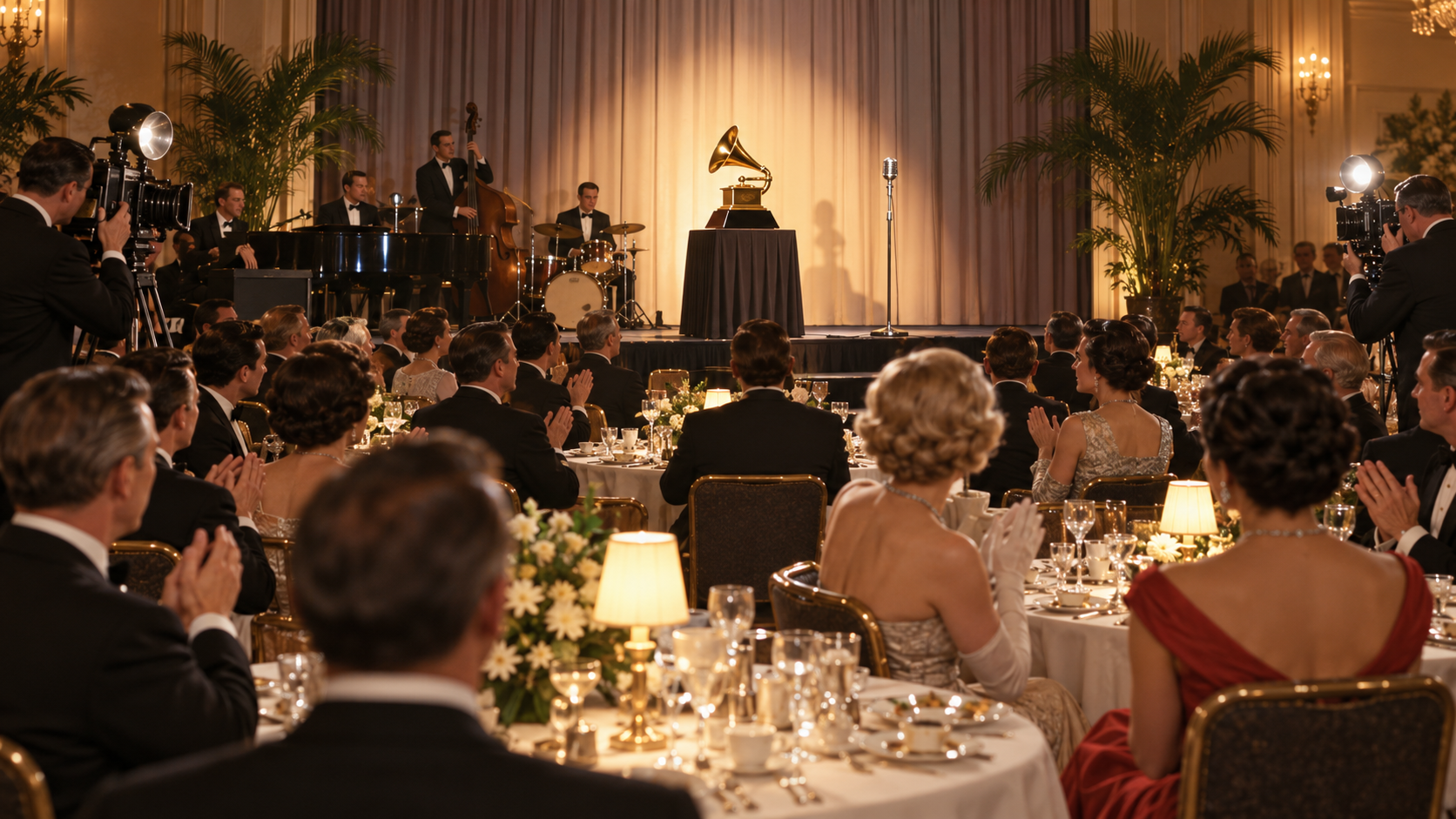
On May 4, 1959, the first Grammy Awards were presented at black-tie dinners in Los Angeles and New York. The new National Academy of Recording Arts and Sciences honored recordings released during 1958 across pop, classical, jazz, country, rhythm and blues, spoken word and other fields. Henry Mancini’s music from the television series Peter Gunn won Album of the Year, while Domenico Modugno’s Nel blu, dipinto di blu, widely known as Volare, received Record and Song of the Year. Ella Fitzgerald, Count Basie, Frank Sinatra, Peggy Lee and the Kingston Trio were among the winners. Unlike the later television spectacle, this inaugural presentation was an industry dinner without a live national broadcast, and its two-city arrangement reflected recording centers on opposite coasts rather than a single centralized show.
The awards emerged at a moment when the record business was changing rapidly. Long-playing albums had expanded the market for complete programs, the 45 rpm single helped accelerate youth-oriented hits, and improved home equipment made recorded sound a more visible consumer product. The Academy organized peer voting so musicians and recording professionals could recognize work that might not fit film, theater or broadcasting awards. The first field was broad but not yet settled: there was no Best New Artist award, category names would change repeatedly, and the boundaries between pop, jazz, R&B and country reflected the industry’s own divisions. The gramophone-shaped trophy linked the institution to the history of recording even as the music business moved toward stereo, television promotion and new forms of mass youth culture.
The Grammys became a televised annual institution and a powerful marker of commercial prestige, though arguments about genre definitions, representation and the difference between peer recognition and popular taste never disappeared. The first ceremony already displayed that tension by placing classical virtuosi, jazz ensembles, novelty records and mainstream singers inside one awards system. Mancini’s victory also signaled the growing exchange among television, film and the record market. Revisiting May 4 shows that today’s elaborate broadcast began as a relatively intimate professional experiment. Its legacy lies not only in the careers it honored, but in the durable idea that recording itself—performance, composition, arrangement, engineering and production—deserved a dedicated public history. Every later rule change and controversy rests on the institution created at those two dinners in 1959. The physical trophy and the peer-voting system gave the young organization symbols that could survive these changes. Categories would come and go, but professional recognition of a recorded performance remained the ceremony’s defining promise.
The first presentations took place at formal dinners in Los Angeles and New York.
The awards recognized recordings released in 1958 and were not nationally televised live.
Henry Mancini's Peter Gunn music won the inaugural Album of the Year.
Domenico Modugno won both Record and Song of the Year for Volare.
The first program covered many fields but did not yet include Best New Artist.
Later broadcasts, category changes and debates grew from this industry-run beginning.
Explore more of "On This Day ..."
Discover more events from the same date across news, politics, technology, sports, and other fields. Each link highlights significant moments that shaped history on different fronts.