

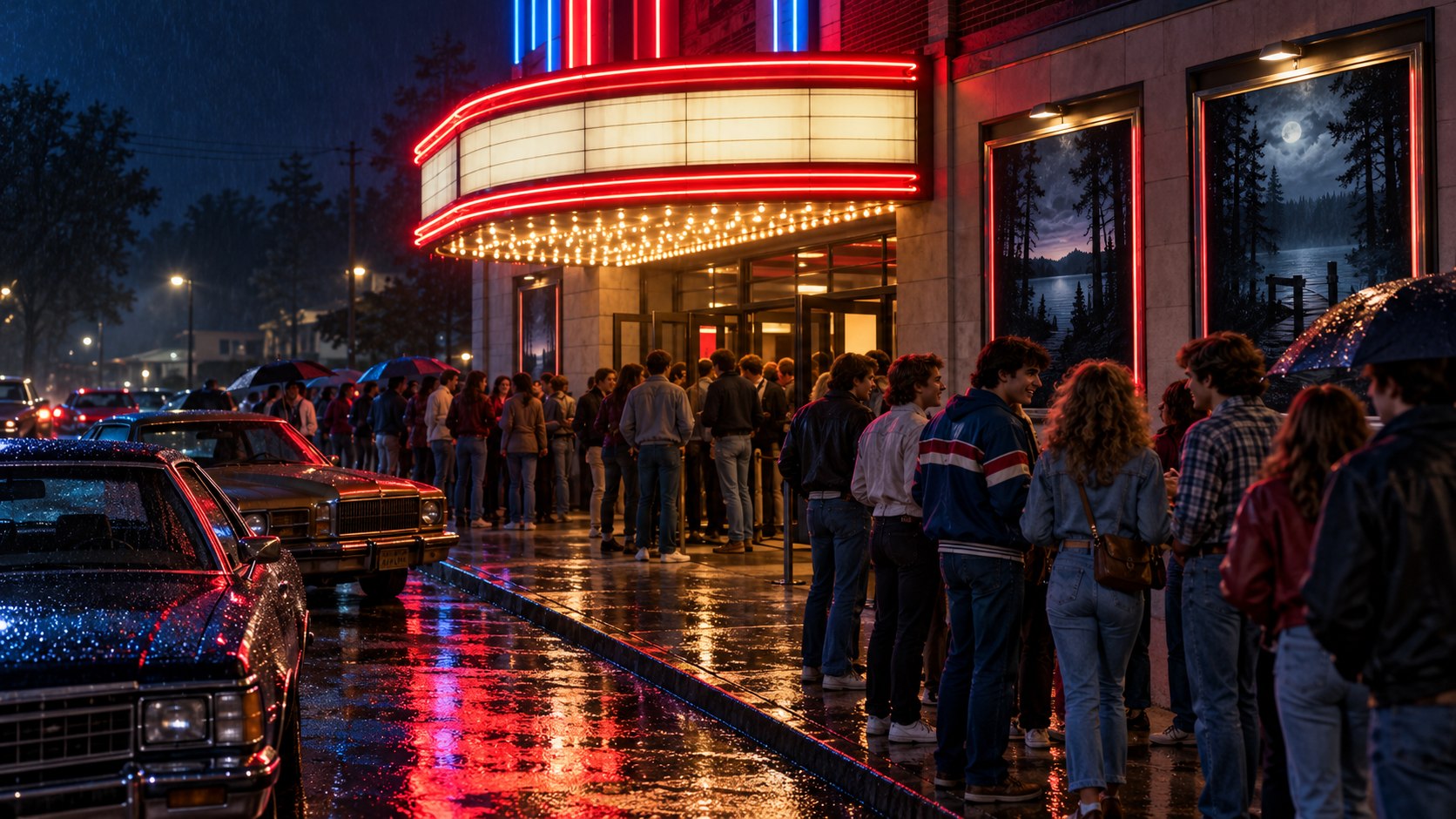
On This Day in Pop: May 9, 1980
On May 9, 1980, Friday the 13th opened in Los Angeles, one day before its New York engagement. Directed and produced by Sean S. Cunningham from Victor Miller’s screenplay, the independently made horror film sends a group of young counselors to reopen the long-abandoned Camp Crystal Lake. Adrienne King played final survivor Alice, Betsy Palmer appeared as Pamela Voorhees, and special-effects artist Tom Savini created the film’s graphic shocks. The title and marketing promised a date associated with bad luck, but the story initially offered no masked Jason stalking the camp. Its killer, motive and final revelation differ from the imagery later used to sell the franchise. The opening introduced a relatively contained mystery whose commercial success would rapidly expand into a much larger body of sequels and merchandise.
The production followed the breakthrough of Halloween and borrowed the emerging slasher structure of an isolated setting, youthful victims, subjective camera movement and a final confrontation. Cunningham promoted the title before a complete script existed, recognizing that a bold name and poster could secure attention for a low-budget feature. Filming took place at a New Jersey camp, where ordinary cabins, woods and lake water gave the violence a plausible geography. Harry Manfredini’s score used whispered syllables as a rhythmic warning, helping audiences anticipate danger even when the screen appeared empty. Contemporary reviews were often hostile to the film’s violence and treatment of characters, and those objections remain important. Its popularity does not erase the formula’s gender politics or the way graphic effects turned fear into a repeatable attraction.
Friday the 13th became a major box-office success and launched one of horror cinema’s longest-running franchises. Later installments elevated Jason Voorhees, eventually giving him the hockey mask that became the series’ central visual emblem. Summer camps, calendar superstition and the sound of Manfredini’s score entered a shared vocabulary that could be recognized even by people who had not seen the original. The film also demonstrated how an independent production could use a major distributor and an aggressive campaign to compete with more expensive releases. May 9 marks the beginning of that commercial and cultural chain, but returning to the first film reveals how much the franchise changed after its debut. What audiences remember as a fixed icon was assembled across sequels, each adding details until the mask and machete displaced the original movie’s mystery. The franchise’s annual-date logic also became a marketing tool of its own. A calendar superstition that supplied the first title kept returning as sequels, release campaigns and fan rituals taught viewers to associate the date with horror.
The Los Angeles opening was May 9, 1980; New York followed on May 10.
Sean S. Cunningham directed and Victor Miller wrote the screenplay.
The original film's killer is Pamela Voorhees, not the later masked version of Jason.
Tom Savini's practical effects and Harry Manfredini's score shaped the film's impact.
Critics objected strongly to the violence even as audiences made the film a hit.
Sequels gradually created the hockey-mask icon most associated with the series.
Explore more of "On This Day ..."
Discover more events from the same date across news, politics, technology, sports, and other fields. Each link highlights significant moments that shaped history on different fronts.