

On This Day in Pop: May 15, 1928
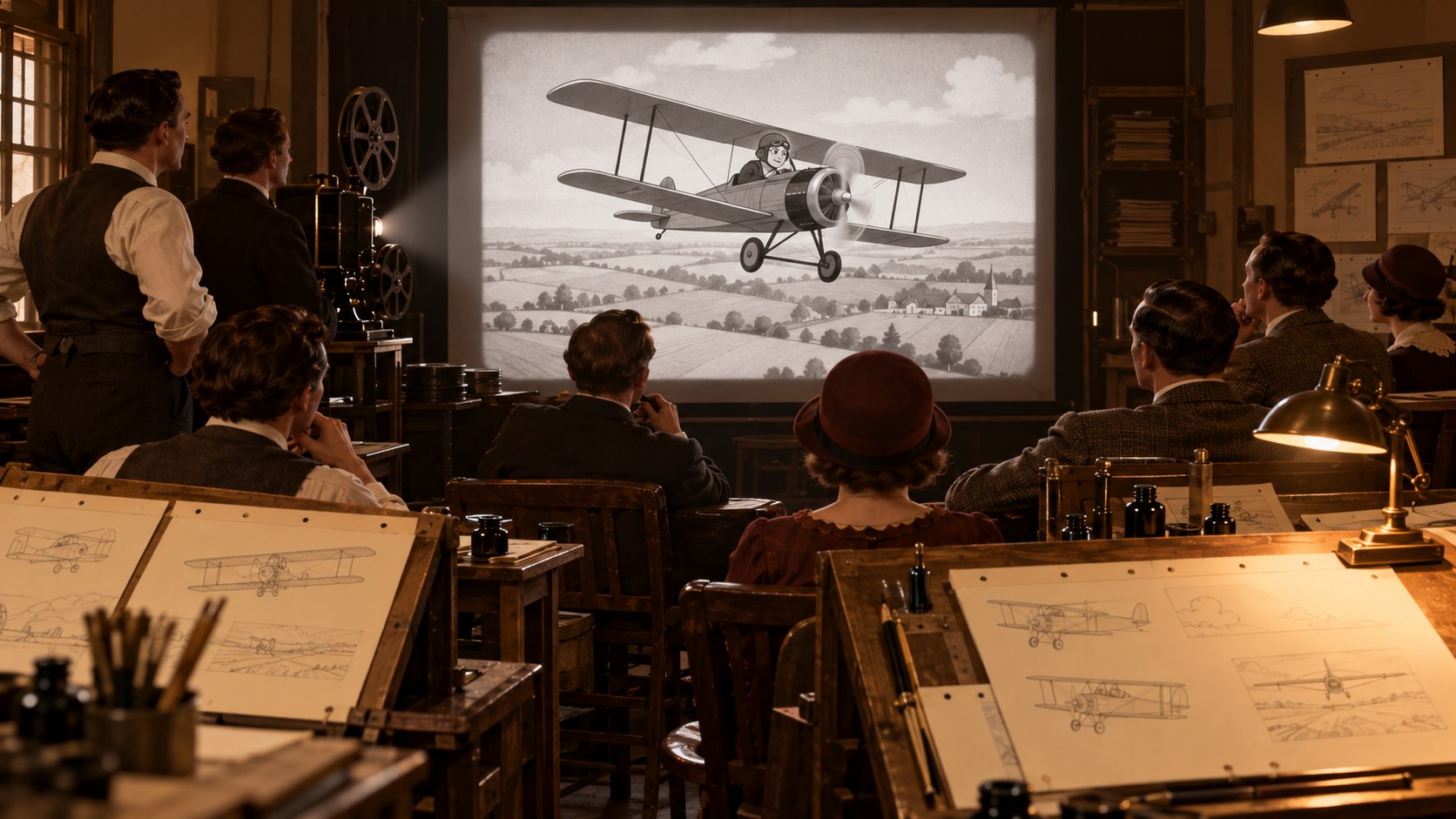
On May 15, 1928, the silent cartoon Plane Crazy received a test screening in Hollywood. It was the first completed film to feature Mickey and Minnie Mouse, created after Walt Disney lost control of his earlier Oswald the Lucky Rabbit character. Ub Iwerks performed much of the animation at remarkable speed, while Disney and a small circle of relatives and staff helped get the drawings inked, painted and photographed. Inspired by public fascination with Charles Lindbergh, the short has Mickey build a makeshift airplane and take Minnie on a chaotic flight. The preview failed to attract a distributor, so the film did not become the public debut that later histories sometimes imply. Its importance lies in production and testing: the characters existed on screen months before synchronized sound made another cartoon the studio’s breakthrough.
The failure pushed Disney and his collaborators to keep experimenting. A second silent Mickey short, The Gallopin’ Gaucho, also did not secure release. The team then made Steamboat Willie with synchronized sound, and its November 1928 opening in New York drew the attention the earlier efforts lacked. Plane Crazy was subsequently equipped with sound and released in 1929. The sequence complicates the idea of a single birthday for Mickey Mouse: first conception, first completed cartoon, first test screening and first successful public release occurred at different moments. The film itself also contains behavior, particularly Mickey’s unwanted attempt to kiss Minnie, that modern viewers read differently from audiences of the late 1920s. Historical significance does not require smoothing away those details.
Mickey became the foundation of a vast entertainment company and one of the most recognizable designed figures in the world. Plane Crazy shows that the icon did not arrive fully stabilized. The early Mickey has bare hands and feet, a rougher temperament and movements still being defined through Iwerks’s animation. The short also demonstrates the fragile circumstances of independent production: a few people working quickly, a preview that went nowhere and a technological change that redirected the project. May 15 matters because it preserves the unsuccessful step before the famous success. Without the test screening’s failure, the urgent turn toward synchronized sound might have unfolded differently. The anniversary therefore belongs not only to a character but to creative iteration—the practice of finishing, showing, learning and rebuilding when an audience or distributor does not respond as hoped. The surviving short therefore records both a character and a workflow under pressure. Pencil drawings, hand-painted cels and a test print carried an idea from a concealed studio effort to its first uncertain audience.
The Walt Disney Family Museum dates the Hollywood test screening to May 15, 1928.
Plane Crazy was the first Mickey cartoon completed, though not the first widely released.
Ub Iwerks carried much of the animation work for the small studio.
The silent test did not win a distributor.
Steamboat Willie later succeeded with synchronized sound in November 1928.
Plane Crazy received sound and a wider release in 1929.
Explore more of "On This Day ..."
Discover more events from the same date across news, politics, technology, sports, and other fields. Each link highlights significant moments that shaped history on different fronts.