

On This Day in Pop: May 17, 2009
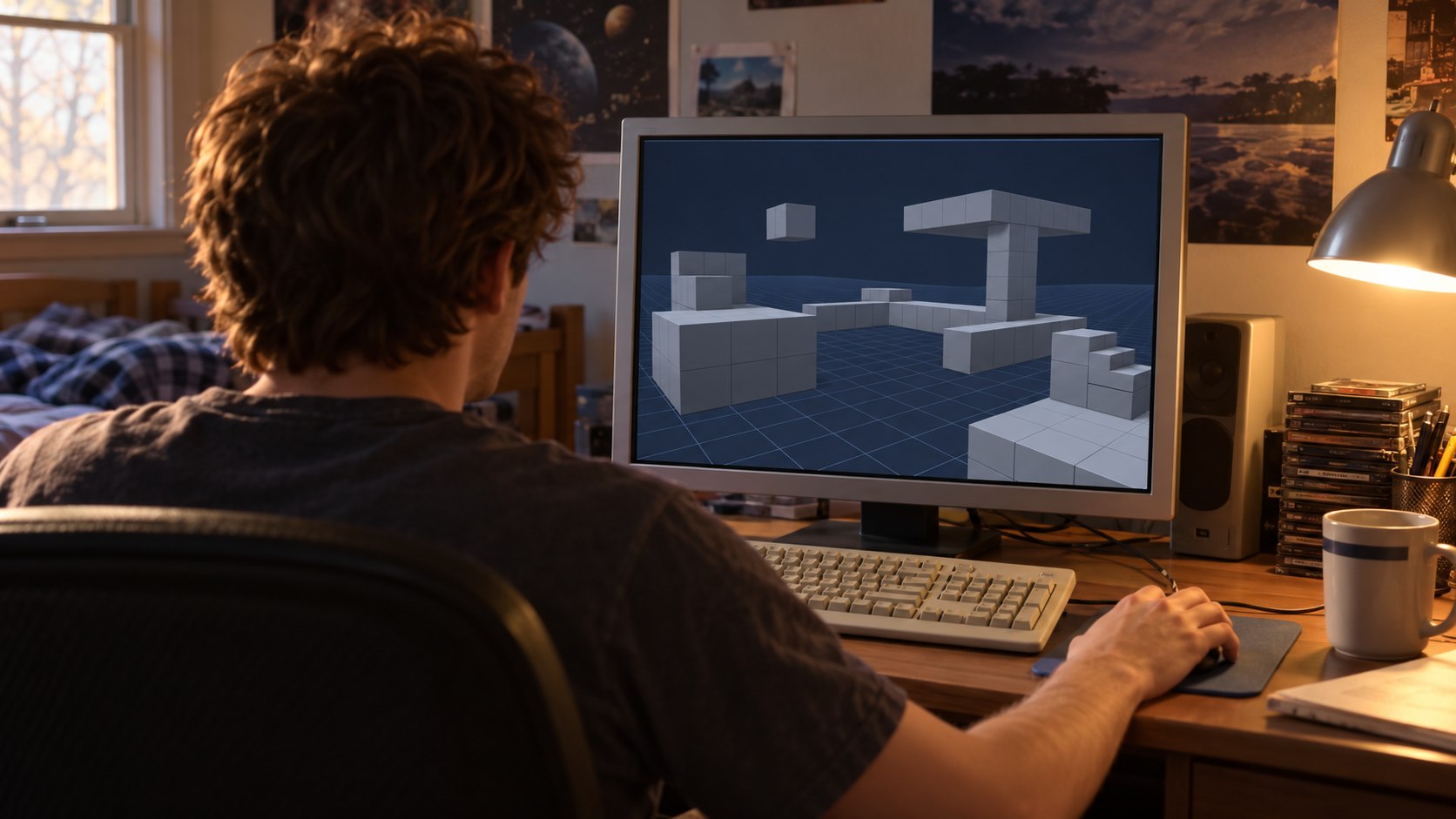
On May 17, 2009, Markus Persson released the first public version of the block-building game that became Minecraft. Initially known as Cave Game during development, the early Java program offered a limited set of blocks and a simple generated landscape, but its basic action was already clear: players could remove pieces of the world and place them elsewhere. There was no finished story, elaborate tutorial or fixed path. The release invited people to experiment with a system and share what they made, while Persson updated the game in public response to a rapidly forming community. Mojang now treats May 17 as Minecraft’s birthday, distinguishing this first playable public version from the fuller 1.0 release that followed in 2011.
Minecraft drew on construction games, roguelike exploration and Persson’s interest in procedural worlds. Its intentionally blocky visual language reduced technical complexity while making every material immediately legible. Survival systems, crafting, creatures, underground resources and multiplayer arrived through continued development, turning an open construction toy into a place for risk, cooperation and discovery. YouTube videos, forums, modifications and community servers were not peripheral to its growth; they taught players what was possible and converted private play into public performance. The development model also carried risks, because features changed while customers were already invested. Yet that openness made the game feel responsive and gave players a sense that they were participating in the formation of a world rather than waiting for a sealed product.
Minecraft became one of the best-selling games ever, spread across computers, consoles and mobile devices, and entered classrooms, museums and design workshops. Microsoft acquired Mojang in 2014, bringing the once-small project into a global corporate ecosystem while continuing updates and spin-offs. The game’s cultural reach comes less from a single authored narrative than from the structures players build and the communities they create around them. Its simple cubes can support replicas, survival challenges, sculptures, concerts or basic lessons in programming and collaboration. May 17 marks a release whose incompleteness was part of its power. The first version did not contain the full phenomenon, but it established the reversible act—break a block, place a block—from which millions of different experiences could grow. The game’s birthday also honors a development process rather than a finished object. Each later feature changed what Minecraft could be, yet the original public build established an expectation that the world would keep expanding after purchase. That continuing revision remains part of the game’s identity and of the community’s relationship with its creators.
Minecraft's official anniversary material dates the first public Cave Game release to May 17, 2009.
The early Java version offered only a small block set and basic generated terrain.
The complete 1.0 release came later, in 2011.
Public updates and player feedback were central to development.
Videos, mods and multiplayer servers helped turn private play into a shared culture.
The game expanded to education and many platforms after becoming a global commercial success.
Explore more of "On This Day ..."
Discover more events from the same date across news, politics, technology, sports, and other fields. Each link highlights significant moments that shaped history on different fronts.