

On This Day in Pop: May 20, 1873
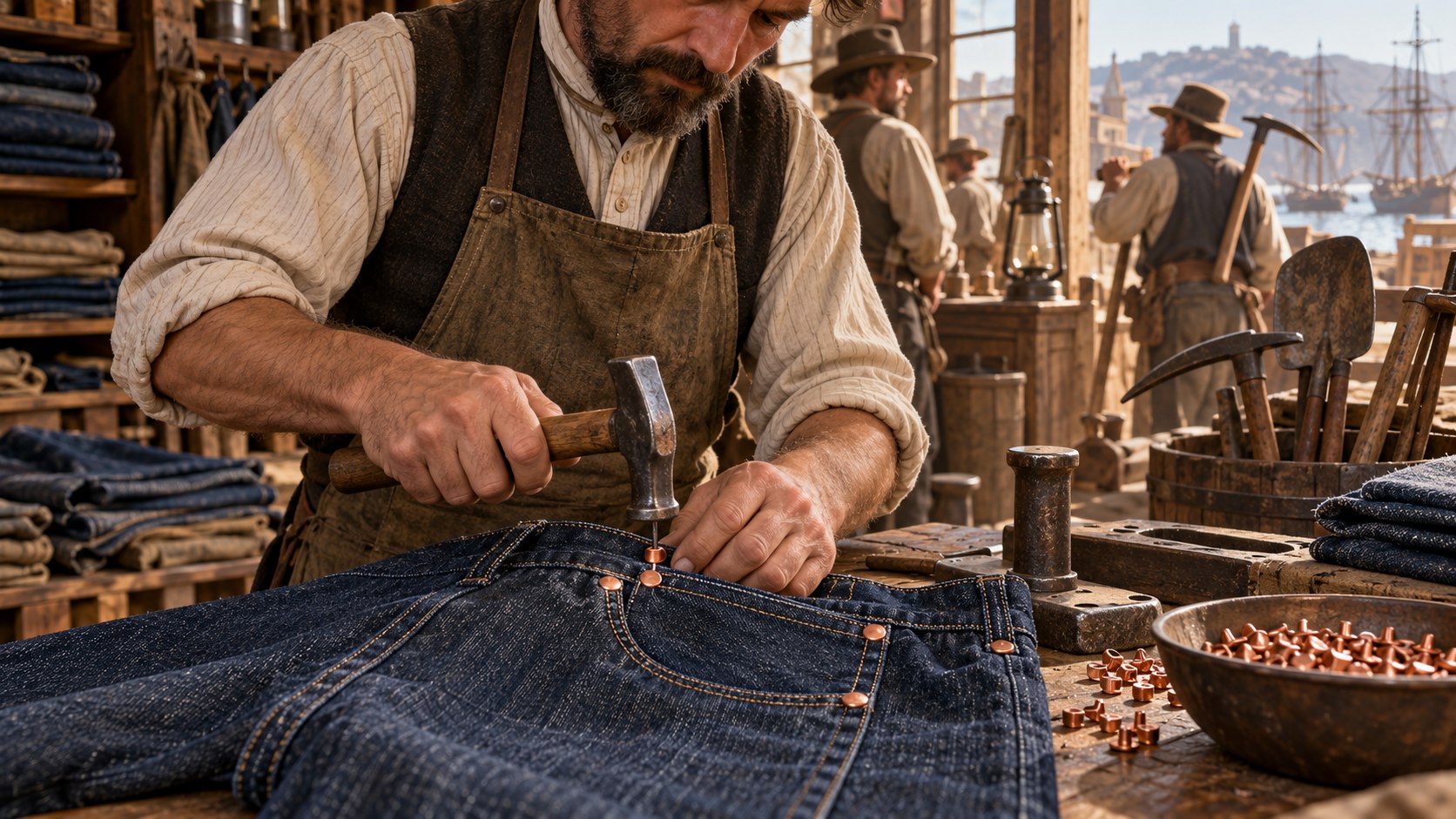
On May 20, 1873, the U.S. Patent Office granted patent number 139,121 to Levi Strauss & Co. and tailor Jacob Davis for an improvement in fastening pocket openings. Davis had begun reinforcing work pants with metal rivets at stress points for customers in Reno, Nevada, and approached San Francisco dry-goods merchant Levi Strauss when he needed a business partner to secure a patent. The protected method was applied to cotton duck and blue denim waist overalls made for demanding labor. No surviving pair can be identified as the single first example from that day, and the familiar five-pocket 501 design evolved later. The anniversary marks legal recognition of a practical construction technique rather than the sudden appearance of every feature now associated with blue jeans.
Denim and other sturdy work fabrics predated the patent, but rivets addressed the problem of pockets and seams tearing under strain. Strauss provided capital, materials and distribution, while Davis brought tailoring experience and the reinforcement idea. Early garments were tools for miners, railroad workers, mechanics and others who needed durable clothing in the American West. Details changed across the following decades: lot numbers, arcuate pocket stitching, leather patches, belt loops and standardized fits accumulated gradually. The word jeans also became common later than the original term waist overalls. That layered development matters because brand histories often compress invention into a single object. May 20 is well documented, but it represents the start of a product family whose form and meaning continued to change.
Blue jeans moved from workwear into Western films, youth rebellion, music, high fashion and everyday dress around the world. Different cuts have marked generations and subcultures, while wear, fading and repair give mass-produced garments an individual surface. Their global popularity also raises questions about factory labor, cotton production, water use and the environmental cost of finishing processes. The patent’s practical rivet thus sits at the origin of both a durable design and a vast industry. May 20 remains a useful anniversary because it ties an ordinary piece of clothing to two identifiable collaborators and a specific document. It also shows how pop icons can begin without symbolic ambition: a tailor and merchant solved a problem for workers, and later wearers turned the solution into a language of identity. The patent document also prevents the story from becoming a vague legend. It identifies the collaborators, mechanism and legal date while leaving room to study the many manufacturing and cultural changes that followed.
Patent 139,121 was granted to Levi Strauss & Co. and Jacob Davis on May 20, 1873.
The invention reinforced pocket openings and other stress points with rivets.
Davis developed the method as a working tailor and sought Strauss as a business partner.
Early waist overalls used denim and cotton duck and differed from modern five-pocket jeans.
Features associated with the 501 accumulated over later decades.
Workwear became a global symbol through film, music, fashion and everyday use.
Explore more of "On This Day ..."
Discover more events from the same date across news, politics, technology, sports, and other fields. Each link highlights significant moments that shaped history on different fronts.