

On This Day in Pop: June 7, 1955
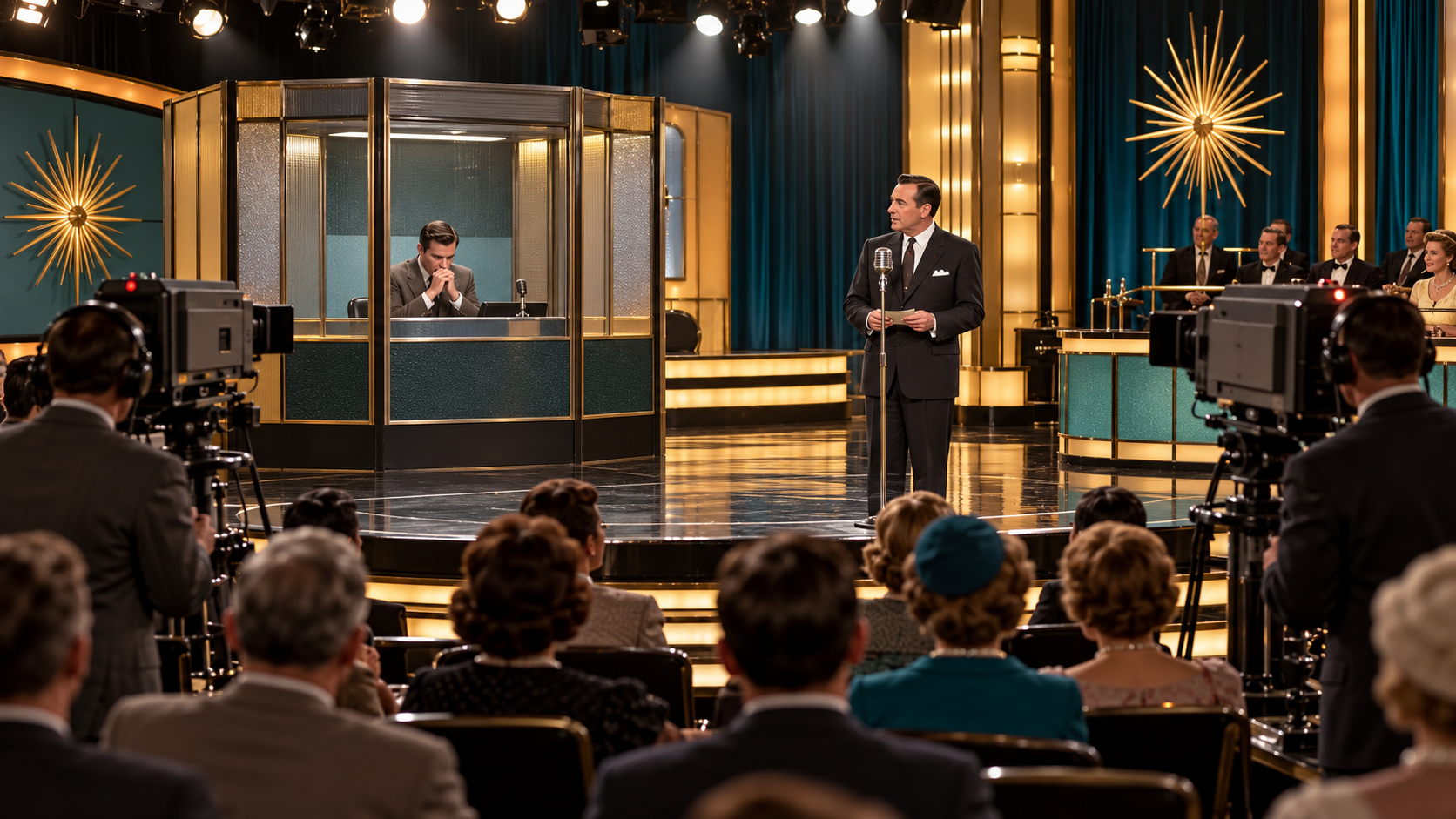
On June 7, 1955, CBS premiered The $64,000 Question, a prime-time quiz show that transformed specialized knowledge into high-stakes weekly suspense. Hosted by Hal March and sponsored by Revlon, the program asked contestants to select a subject and answer increasingly difficult questions, with the top prize far exceeding the sums offered by earlier radio and television games. At crucial stages, a contestant entered an isolation booth while the studio audience watched in silence. The format stretched a decision across commercial breaks and across weeks, encouraging viewers to follow ordinary people who became temporary experts and national personalities. Its first major champion, psychologist Joyce Brothers, mastered boxing trivia and challenged assumptions about who could possess authoritative knowledge in a male-coded field.
The show mattered because it revealed television’s ability to turn information into melodrama. Knowledge alone did not create the event; lighting, music, the booth, the host’s pacing and the visible strain of contestants produced emotional stakes. The enormous prize suggested that expertise could change a life, while sponsorship connected that promise directly to consumer culture. Ratings soared, rival networks launched their own big-money contests and quiz programs filled schedules. Audiences discussed answers at home and formed attachments to returning champions, giving the format elements of serial storytelling. For a brief period, the quiz show offered an unusually direct television fantasy: a person could become famous and wealthy not through performance or social status but by knowing more than anyone expected.
That golden moment was damaged by the quiz-show scandals of the late 1950s, when investigations exposed how some programs had coached contestants or manipulated outcomes. The $64,000 Question was not the only show under scrutiny, but the collapse of public trust changed regulation, sponsorship and the relationship between networks and producers. Big-money quizzes disappeared for a time, then returned in forms designed to make rules and chance more visible. The original program’s structure nevertheless endured: escalating ladders, specialist categories, isolation, lifelines and suspenseful pauses remain standard tools of television games. Its history carries both the thrill and warning of early commercial TV. The format made knowledge spectacular, but it also showed how quickly a medium built on apparent authenticity could turn audience faith into another element of production.
Remembering the $64,000 question premieres on cbs on June 7 is valuable because anniversaries turn a familiar cultural object back into a specific decision, release or broadcast. The surrounding technology, business and audience conditions explain why the moment could happen then, while its later uses show that meaning never stops changing. Seen at that scale, the date is not trivia. It is a checkpoint between creation and memory: a place to separate what occurred from the legend accumulated around it and to ask why the work still attracts attention.
The $64,000 Question premiered on CBS on June 7, 1955, hosted by Hal March.
The moment reached audiences through the media and distribution systems of 1955, influencing how the initial response developed.
Contestants answered questions in a chosen specialty and entered an isolation booth at the highest stakes.
Its early impact was substantial but not universal, and later retellings sometimes compressed a more complicated contemporary response.
Its success helped trigger a boom in big-money quizzes before scandal brought tighter oversight.
Anniversary coverage continues to place The $64,000 Question within the broader history of popular culture while distinguishing documented evidence from later legend.
Explore more of "On This Day ..."
Discover more events from the same date across news, politics, technology, sports, and other fields. Each link highlights significant moments that shaped history on different fronts.