

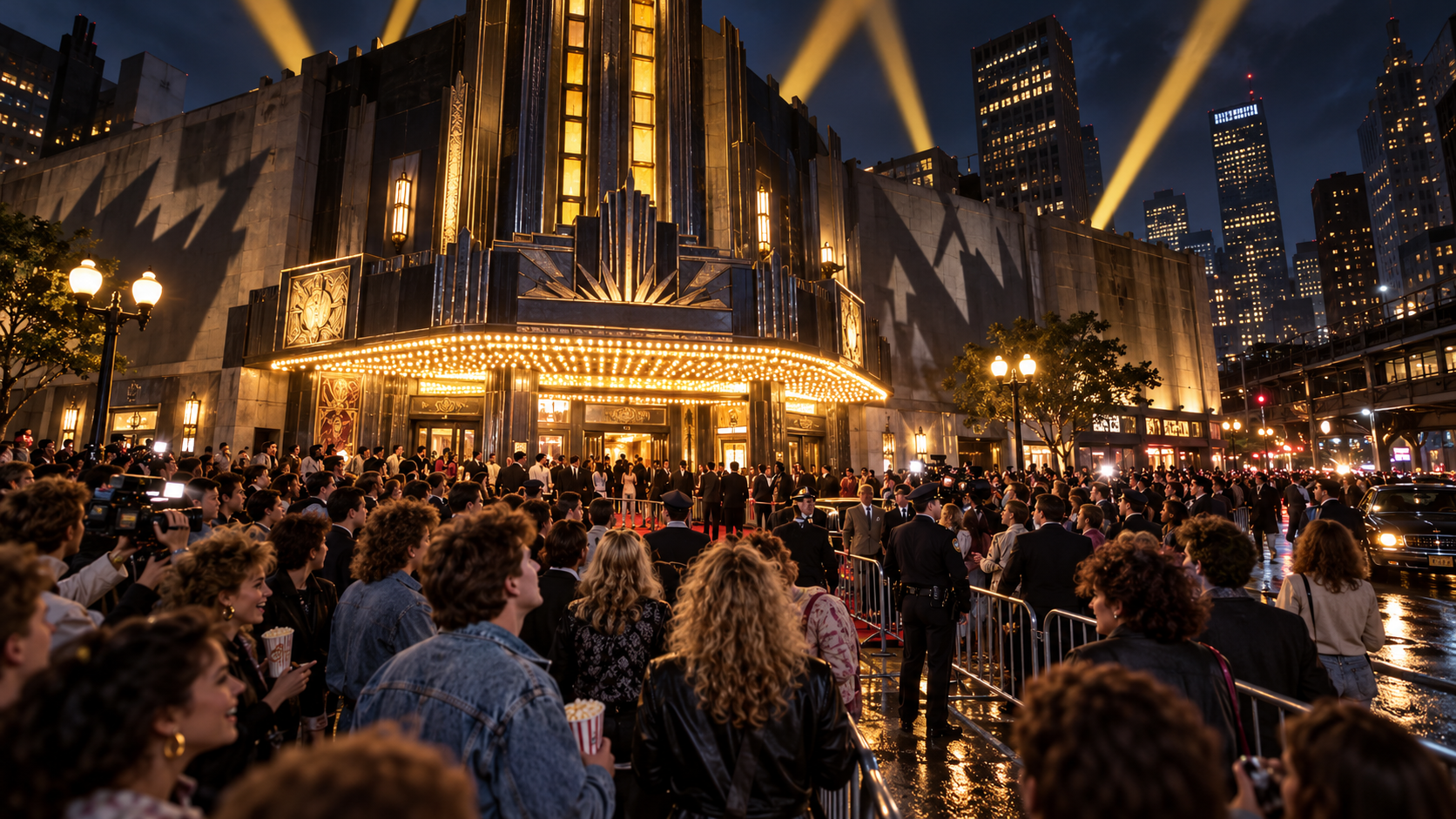
On This Day in Pop: June 23, 1989
On June 23, 1989, Batman opened in the United States after months of extraordinary anticipation. Tim Burton directed Michael Keaton as Bruce Wayne and Jack Nicholson as the Joker, with Kim Basinger as photojournalist Vicki Vale. Rather than reproduce the bright tone many viewers associated with the 1960s television series, the production built a stylized Gotham from towering sets, industrial decay and Gothic architecture. Anton Furst’s design, Danny Elfman’s score and Roger Pratt’s shadowed photography gave the city as much presence as any actor. Keaton’s casting had initially drawn fan protest, but his inward performance balanced Nicholson’s theatrical villainy. The film presented comic-book material as a world that could be heightened, psychologically strange and visually serious without surrendering spectacle.
The opening mattered because Batman was already a marketing event before reviews or word of mouth could shape it. Warner Bros. flooded stores and streets with a simple black-and-yellow emblem, licensing apparel, toys and products while Prince’s soundtrack extended the campaign across radio and MTV. Contemporary reports described public awareness higher than for any previous Warner release. Lines formed, merchandise sold and the opening weekend set a record. This saturation helped establish the modern pattern in which a franchise film occupies multiple media and retail spaces at once. It also demonstrated that the logo and tone of a comic property could attract a broad audience beyond habitual readers.
Batman influenced both superhero cinema and the business surrounding it. Its success accelerated development of other comic adaptations, encouraged darker production design and showed studios how event marketing could concentrate attention around an opening date. The animated television series that followed in 1992 borrowed the film’s noir atmosphere while developing its own influential voice and characterization. Later Batman movies alternated between Burton’s expressionism, brighter spectacle and grounded realism, but each worked in a marketplace the 1989 film helped create. Some elements have aged unevenly, including the limited agency given to Vicki and the dominance of merchandise over story in public memory. Still, June 23 remains a turning point: a masked hero did not simply arrive at theaters; an entire commercial and visual environment arrived with him.
Remembering tim burton’s batman opens on June 23 is valuable because anniversaries turn a familiar cultural object back into a specific decision, release or broadcast. The surrounding technology, business and audience conditions explain why the moment could happen then, while its later uses show that meaning never stops changing. Seen at that scale, the date is not trivia. It is a checkpoint between creation and memory: a place to separate what occurred from the legend accumulated around it and to ask why the work still attracts attention.
Batman opened on June 23, 1989, directed by Tim Burton and starring Michael Keaton and Jack Nicholson.
The moment reached audiences through the media and distribution systems of 1989, influencing how the initial response developed.
Its Gothic production design, Danny Elfman score and heavily marketed black-and-yellow identity shaped the event.
Its early impact was substantial but not universal, and later retellings sometimes compressed a more complicated contemporary response.
The film set an opening-weekend record and influenced decades of superhero filmmaking and franchise promotion.
Anniversary coverage continues to place Batman Takes Flight within the broader history of popular culture while distinguishing documented evidence from later legend.
Explore more of "On This Day ..."
Discover more events from the same date across news, politics, technology, sports, and other fields. Each link highlights significant moments that shaped history on different fronts.