

On This Day in Pop: August 14, 1975
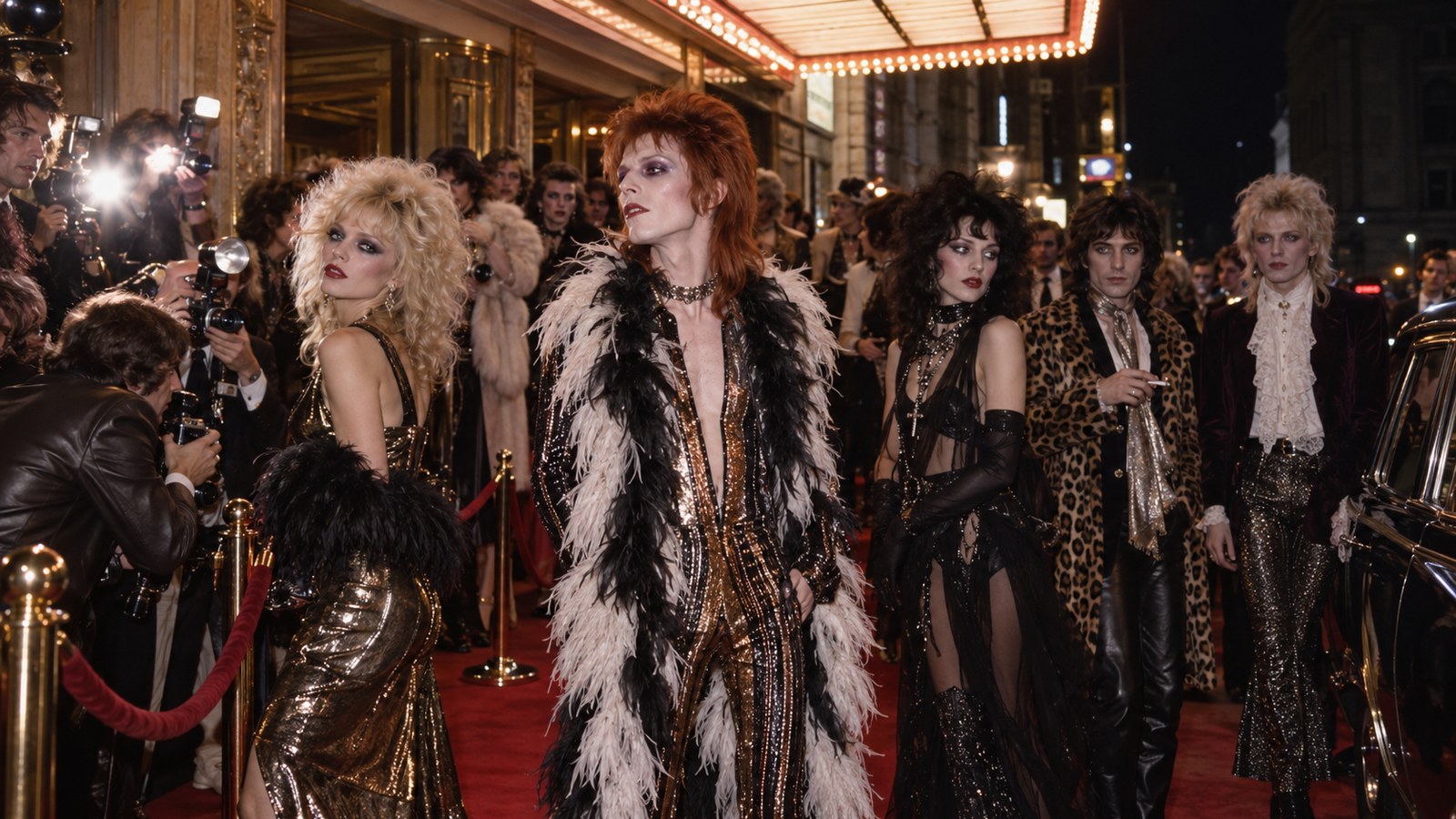
On August 14, 1975, The Rocky Horror Picture Show premiered in London. The film adaptation of Richard O’Brien’s stage musical opened in London with Tim Curry, Susan Sarandon, Barry Bostwick and an ensemble carrying the show’s collision of horror parody, glam rock, science fiction and sexual liberation onto the screen. Director Jim Sharman retained the theatrical production’s deliberately artificial sets and knowing references to old B movies. Songs, costumes and direct address encouraged viewers to recognize genre conventions even as the story gleefully overturned them. The date is a useful point of entry because it captures the event before later reputation made its consequences appear inevitable. Contemporary audiences encountered a new release, performance or public loss in real time, with incomplete information and expectations shaped by the media and institutions of the period.
The initial release did not immediately resemble the phenomenon that followed. Conventional screenings struggled, but late-night exhibitors discovered that repeat audiences wanted to talk back, dress as characters, use props and perform in front of the screen. Popular culture is created through more than the famous person at the center: producers, technicians, exhibitors, broadcasters, audiences and physical venues all affect what survives. Looking closely at those conditions prevents an anniversary from becoming a list of familiar names and restores the choices, limitations and competing interests that surrounded the moment.
Those rituals turned the movie into an unusually participatory event and sustained one of cinema’s longest theatrical runs. The culture created community for many queer viewers and outsiders, while arguments about language, consent and representation have grown alongside its canonical status. That later history matters because influence is not a straight line. Works are rediscovered, technologies change, communities attach new meanings and commercial owners repackage the past. The most durable pop events remain open to argument, allowing admiration for creative achievement to exist beside criticism of exclusion, labor, power or representation.
August 14 marks the first film opening, but Rocky Horror’s real history was made collectively in thousands of later rooms. It endures because audiences transformed a finished movie into a living performance with rules that could be learned, repeated and reinvented. Anniversaries can flatten history into celebration, but they can also reopen it. Returning to this August date means separating what participants knew then from what later audiences added, and noticing how recordings, photographs, broadcasts and personal memories keep the event active. That distance between the immediate moment and its long afterlife is what makes this episode worth revisiting as part of popular culture.
The film had its London premiere on August 14, 1975.
On August 14, 1975, The Rocky Horror Picture Show premiered in London. The film adaptation of Richard O'Brien's stage musical opened in London with Tim Curry, Susan Sarandon, Barry Bostwick and an ensemble carrying the show's collision of horror parody, glam rock, science fiction and sexual liberation onto the screen.
It adapted Richard O'Brien's stage musical under director Jim Sharman.
The initial release did not immediately resemble the phenomenon that followed. Conventional screenings struggled, but late-night exhibitors discovered that repeat audiences wanted to talk back, dress as characters, use props and perform in front of the screen.
Midnight screenings and audience participation created its lasting cultural institution.
Those rituals turned the movie into an unusually participatory event and sustained one of cinema's longest theatrical runs. The culture created community for many queer viewers and outsiders, while arguments about language, consent and representation have grown alongside its canonical status.
Explore more of "On This Day ..."
Discover more events from the same date across news, politics, technology, sports, and other fields. Each link highlights significant moments that shaped history on different fronts.