

On This Day in Pop: October 8, 1957
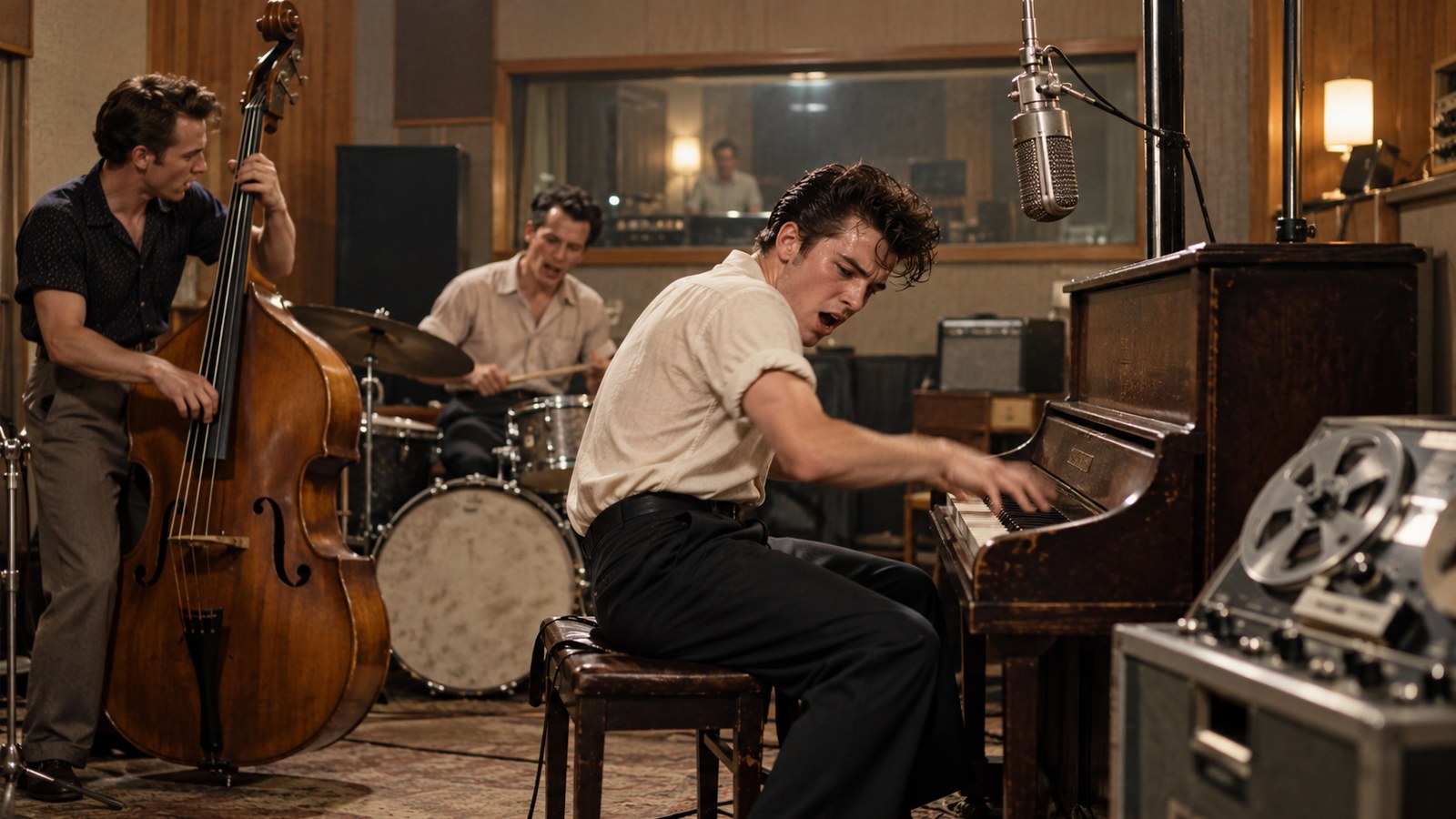
On October 8, 1957, Jerry Lee Lewis recorded Great Balls of Fire at Sun Studio in Memphis. Lewis attacked the piano with pounding left-hand rhythm, bright treble figures and a vocal that made the song feel both playful and dangerous. Producer Sam Phillips captured a compact performance driven by Lewis, bassist Sidney Stokes and drummer J. M. Van Eaton. Songwriters Otis Blackwell and Jack Hammer supplied material tied to the film Jamboree, but the recording’s identity came from the intensity Lewis brought to Sun’s small room. The session followed his breakthrough with ‘Whole Lotta Shakin’ Goin’ On.’ The date captures the event before later reputation made its consequences look inevitable, when audiences encountered a new release, performance or institution with only the expectations available at the time.
The track concentrated the generational alarm surrounding early rock and roll into less than two minutes. Its sacred exclamation, suggestive heat and explosive piano blurred the border between revival energy and nightclub rebellion. Popular culture is never made by a famous name alone. Writers, performers, producers, technicians, broadcasters, retailers, venues and audiences shape what becomes visible and what survives. Their collaboration also determines which experiments reach the public and which disappear before they can build momentum. Looking at those conditions turns an anniversary from a list entry into a record of choices, limits and competing interests.
Released later that year, the single became a major pop, country and R&B hit. Lewis’s career soon suffered from scandal, yet the record remained a core example of rock-and-roll piano style. That afterlife matters because influence does not move in a straight line. Reruns, reissues, new technology, criticism and community memory can change the meaning of a work long after its first appearance. Durable pop history therefore holds creative achievement beside questions of labor, access, power and representation.
The session endures because virtuosity sounds spontaneous without being careless. Every accent pushes forward, creating a performance that musicians could imitate but rarely make feel as volatile. Returning to this October date means separating what participants knew then from what later audiences added. Recordings, photographs, broadcasts and recollections keep the moment active, but they also select and reshape it. That distinction protects against hindsight: a chart position, premiere, publication, concert or opening may become a neat milestone later, but the people present still faced uncertainty. Reading the moment in both directions—through its original conditions and its accumulated meanings—keeps celebration from replacing history. The distance between the immediate event and its continuing interpretation is what makes this episode worth revisiting.
Jerry Lee Lewis recorded the song on October 8, 1957.
On October 8, 1957, Jerry Lee Lewis recorded Great Balls of Fire at Sun Studio in Memphis. Lewis attacked the piano with pounding left-hand rhythm, bright treble figures and a vocal that made the song feel both playful and dangerous.
The session took place at Sun Studio in Memphis.
The track concentrated the generational alarm surrounding early rock and roll into less than two minutes. Its sacred exclamation, suggestive heat and explosive piano blurred the border between revival energy and nightclub rebellion.
The single became one of Lewis's signature hits.
Released later that year, the single became a major pop, country and R&B hit. Lewis's career soon suffered from scandal, yet the record remained a core example of rock-and-roll piano style.
Explore more of "On This Day ..."
Discover more events from the same date across news, politics, technology, sports, and other fields. Each link highlights significant moments that shaped history on different fronts.