

On This Day in Pop: October 17, 1967
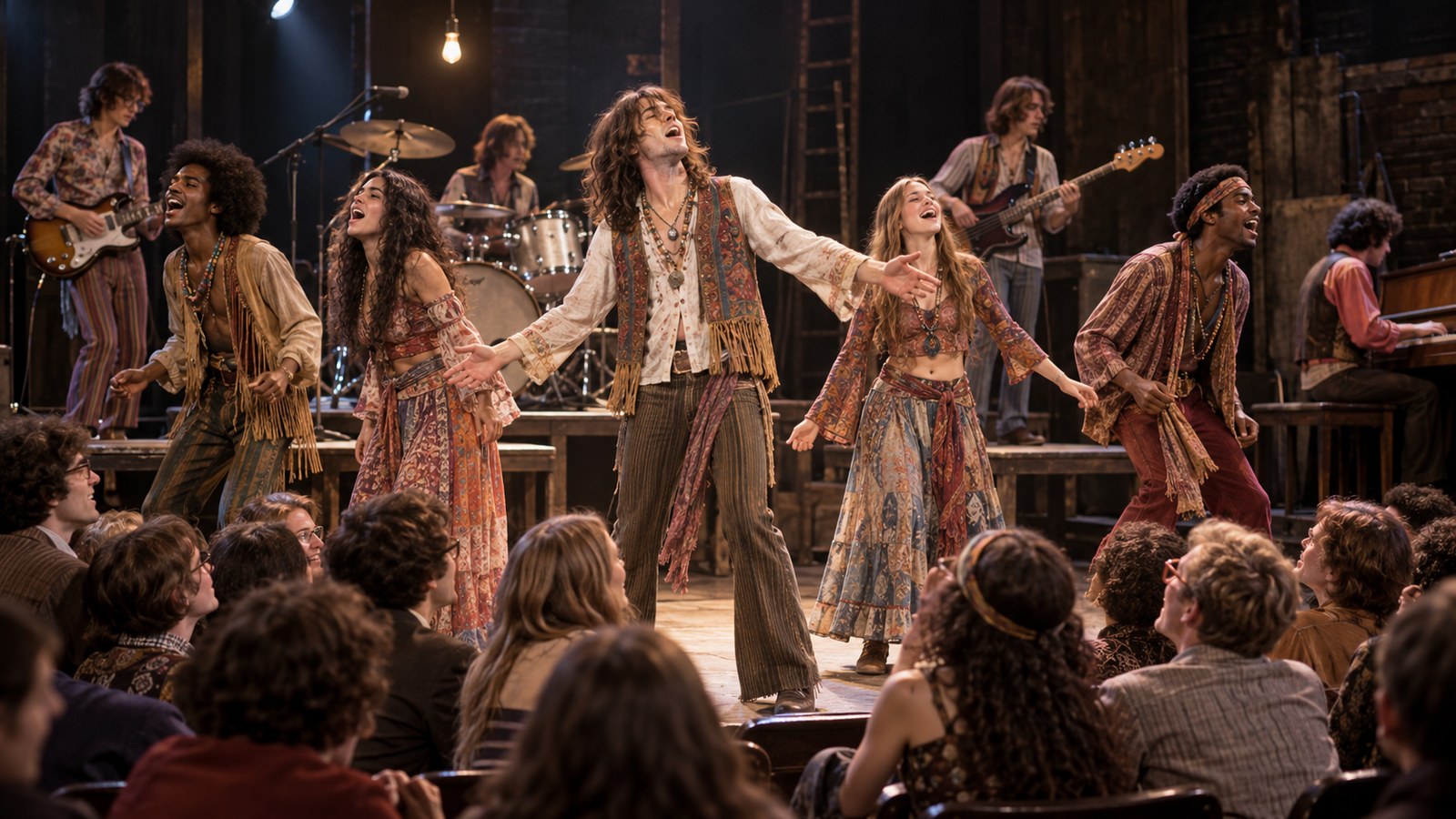
On October 17, 1967, Hair premiered at Joseph Papp’s new Public Theater in New York. A young ensemble played a loose tribe negotiating love, war, race, drugs and resistance through rock songs and direct address. The score by Galt MacDermot and lyrics by Gerome Ragni and James Rado brought contemporary street rhythms into musical theater. The production opened the Public Theater’s Astor Library building under director Gerald Freedman. Its structure was episodic and communal, reflecting downtown experimentation more than the tightly plotted Broadway book musical. The date captures the event before later reputation made its consequences look inevitable, when audiences encountered a new release, performance or institution with only the expectations available at the time.
Hair gave commercial-scale visibility to the counterculture and to opposition surrounding the Vietnam War. Its language, interracial casting and treatment of sexuality challenged theatrical convention while also packaging a living movement for paying audiences. Popular culture is never made by a famous name alone. Writers, performers, producers, technicians, broadcasters, retailers, venues and audiences shape what becomes visible and what survives. Their collaboration also determines which experiments reach the public and which disappear before they can build momentum. Looking at those conditions turns an anniversary from a list entry into a record of choices, limits and competing interests.
A heavily revised Broadway production opened in 1968 and became an international success. Songs including ‘Aquarius,’ ‘Good Morning Starshine’ and the title number moved onto pop charts and into protest-era memory. That afterlife matters because influence does not move in a straight line. Reruns, reissues, new technology, criticism and community memory can change the meaning of a work long after its first appearance. Durable pop history therefore holds creative achievement beside questions of labor, access, power and representation.
The first night marks the moment rock stopped being only a subject or accent in American theater and became an organizing musical language. Later productions must still decide whether its freedom feels historical, immediate or both. Returning to this October date means separating what participants knew then from what later audiences added. Recordings, photographs, broadcasts and recollections keep the moment active, but they also select and reshape it. That distinction protects against hindsight: a chart position, premiere, publication, concert or opening may become a neat milestone later, but the people present still faced uncertainty. Reading the moment in both directions—through its original conditions and its accumulated meanings—keeps celebration from replacing history. The distance between the immediate event and its continuing interpretation is what makes this episode worth revisiting.
Hair premiered on October 17, 1967.
On October 17, 1967, Hair premiered at Joseph Papp's new Public Theater in New York. A young ensemble played a loose tribe negotiating love, war, race, drugs and resistance through rock songs and direct address.
The first production opened the Public Theater's new downtown home.
Hair gave commercial-scale visibility to the counterculture and to opposition surrounding the Vietnam War. Its language, interracial casting and treatment of sexuality challenged theatrical convention while also packaging a living movement for paying audiences.
The musical moved to Broadway in 1968.
A heavily revised Broadway production opened in 1968 and became an international success. Songs including 'Aquarius,' 'Good Morning Starshine' and the title number moved onto pop charts and into protest-era memory.
Explore more of "On This Day ..."
Discover more events from the same date across news, politics, technology, sports, and other fields. Each link highlights significant moments that shaped history on different fronts.